Search for the best interior designers in Delhi and you get lists. Ten names, a paragraph each, a photograph of a drawing room. Lists are easy to write and almost useless to act on, because they never explain what a Delhi house asks of the people who design it, and Delhi asks more than most cities.
The numbers explain why. In the first half of 2025, JLL counted 5,168 luxury home sales above INR 5 crore across Delhi NCR, up about 9 percent on the year, and 91 percent of them were in Gurugram, on the Southern Peripheral Road and the Dwarka Expressway, in apartments. CBRE and ASSOCHAM put the region at around 4,000 luxury sales in the same six months, 57 percent of India's total. Delhi proper barely registers in either count. That is not because nothing is being built. It is because the city's luxury market is land: bungalows, plots and farmhouses that change hands privately and are rebuilt or restored one at a time.
That is the market the best interior designers in Delhi actually work in, and it is governed by four things no list mentions: a heritage zone with its own rules, a height cap that sends the house underground, the worst winter air of any major capital, and a craft supply chain within a day's drive that no other Indian city can match. This guide sets out all four, what each demands of a designer, and how to tell, before you sign, whether a studio can meet them.
Mumbai's luxury market lives in towers and Gurugram's increasingly does. Delhi's does not. The three housing types at the top of the Delhi market all sit on land, and each asks for a different kind of designer.
The Lutyens Bungalow Zone covers roughly 26 square kilometres of central New Delhi and holds about 1,000 bungalows, fewer than one in ten of them privately owned. Transactions have long run past INR 100 crore, and the INR 435 crore purchase on Prithviraj Road remains the national reference point. Interiors here are restoration work before they are design work. Verandahs, courtyards, high ceilings, lime plaster and teak joinery are the asset, and the zone's rules govern height, footprint and external character. A designer who has not worked inside those limits will either break them or spend a year learning them. We set the limits out in our guide to restoring a Lutyens Delhi bungalow.
Golf Links, Jor Bagh, Sundar Nagar, Vasant Vihar, Shanti Niketan, Westend, Anand Niketan and Panchsheel are the second tier and the most active one. Plots are smaller than the bungalow zone's, and the stock is a mix of original houses, rebuilt family homes and builder floors, where one plot carries one apartment per floor. Owners here want bungalow-scale amenity on a plot that will not take it, which is the problem the next section is about. Our ranking of Delhi NCR's most expensive residential areas explains what each address allows.
Chhatarpur, Mehrauli, Westend Greens, Sainik Farms and Pushpanjali are the only part of Delhi where acreage exists, and most luxury farmhouses sit on one to five acres. Here the interior designer is a landscape and architecture collaborator or is in the wrong job, because the house, the garden, the pool pavilion and the staff block are one composition. Our luxury farmhouse design guide covers the brief, and our survey of India's most expensive farmhouses covers what the land costs.
Delhi's building bye-laws cap what a city plot can carry above ground, and they do not count a basement against the floor area ratio when it is used for parking, storage and services. The result is a Delhi habit that surprises clients from other cities: the volume a family cannot build upwards is built downwards. Home cinemas, gyms, a second kitchen for large entertaining, staff rooms, plant rooms and the wine store all go below grade, and in a rebuilt South Delhi house the basement is often the largest single floor.
This is where interior design and engineering cannot be separated. A basement that will be lived in needs daylight from light wells and sunken courtyards, mechanical fresh air and dehumidification, a waterproofing system that was designed rather than hoped for, and a drainage plan that assumes a Delhi monsoon will test it. The bye-laws also ask for a buffer from the neighbour's boundary and a minimum clear height, and both have to be fixed before the interior is drawn, because a ceiling that loses 300 millimetres to a duct nobody planned for is the most common failure in Delhi basements. The best interior designers in Delhi draw the basement services first and the finishes second.
IQAir's 2024 World Air Quality Report again ranked Delhi the most polluted capital city in the world, with an annual PM2.5 average of 91.6 micrograms per cubic metre, almost unchanged from the year before. Summer temperatures pass 45 degrees, winter nights drop into single figures, and the pre-monsoon dust storms arrive in between. A luxury interior in Delhi that ignores this is a beautiful room that cannot be used in November.
The designers who understand the city specify the envelope before the finishes. That means sealed, properly gasketed windows and doors, an entrance vestibule that stops the street at the threshold, a fresh-air system with filtration and positive pressure so the house breathes clean air instead of leaking dirty air in, closed kitchens with real extraction so cooking does not travel, and surfaces that take dust and daily cleaning without complaint. It also means heating. Underfloor heating is now standard in the better Lutyens restorations and in rebuilt South Delhi homes, because a marble floor at six degrees is unpleasant however beautiful it is.
None of this is visible in a photograph, which is why lists never mention it, and all of it is the difference between a Delhi home that works and one that is admired from the lawn.
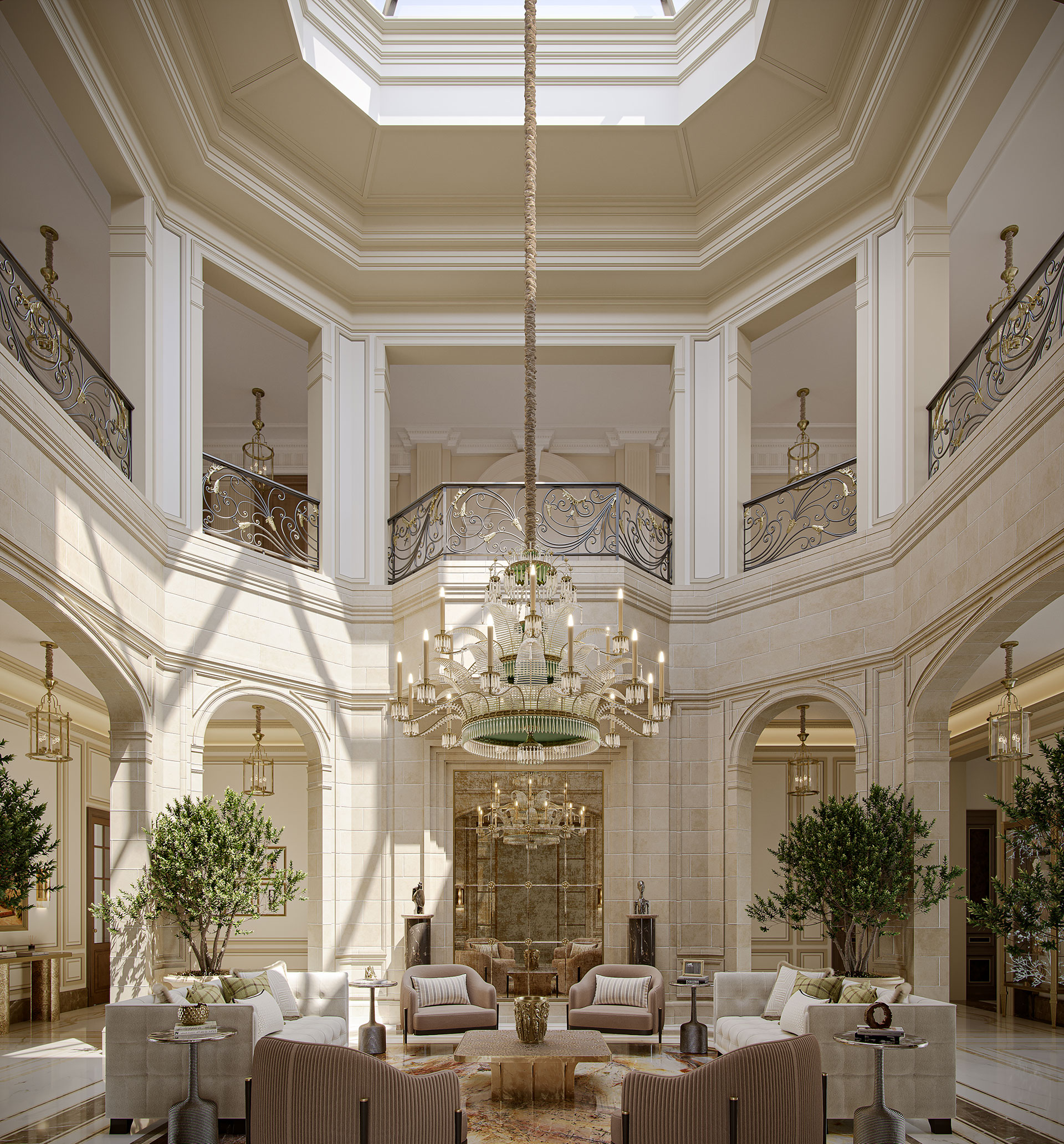
Delhi's second advantage is geography. Kishangarh in Rajasthan, widely described as Asia's largest marble market, is a morning's drive away and is where most of the stone in a Delhi home is selected and cut. Kirti Nagar, in west Delhi itself, is routinely called Asia's largest furniture market, with several hundred wholesalers and workshops. Saharanpur's wood carvers, a craft the government's handicrafts registry dates to the fourteenth century and that holds a Geographical Indication, work sheesham, mango and rosewood two hours to the north. Moradabad, the brass city, holds its own GI tag for metalware and supplies much of India's brassware. Jaipur and Jodhpur stone, Agra inlay and Firozabad glass all sit inside the same radius.
The best interior designers in Delhi use this network to commission rather than to buy. The difference matters. A sideboard copied in Kirti Nagar from a European catalogue is cheaper than the original and looks it within a year. A sideboard drawn by the studio, made by a workshop the studio has used for a decade, and inspected three times before it leaves, is a piece the family will keep. Our furniture design and art curation work runs on exactly this basis, and the stone for a Delhi project is reserved from a single block at Kishangarh before anything is laid.
Delhi's luxury client is more often a family than an individual. Three generations under one roof is normal, which means the plan needs wings rather than rooms, two or three living spaces at different levels of formality, and a kitchen large enough to feed forty when the occasion demands. Staff quarters are a given rather than an option, and the service routes, from the gate to the kitchen to the terrace, have to be planned so that a dinner for sixty is served without a guest seeing a trolley.
Privacy and security carry more weight here than anywhere else in India. Political and business families want the house invisible from the road, the gate controlled, the arrival sequenced, and the private floors separated from the entertaining floors. A puja room is expected and is often the most carefully placed room in the house. Vastu is a planning input for most Delhi clients, and the mature way to handle it is to reconcile it at the plan stage rather than to argue with it after the drawings are done. The Panther House in Delhi and the17,800 square foot Delhi home designed for a family of collectors show how those requirements become architecture rather than compromise.
Strip the lists away and the studios that deliver Delhi's finest homes share six traits.
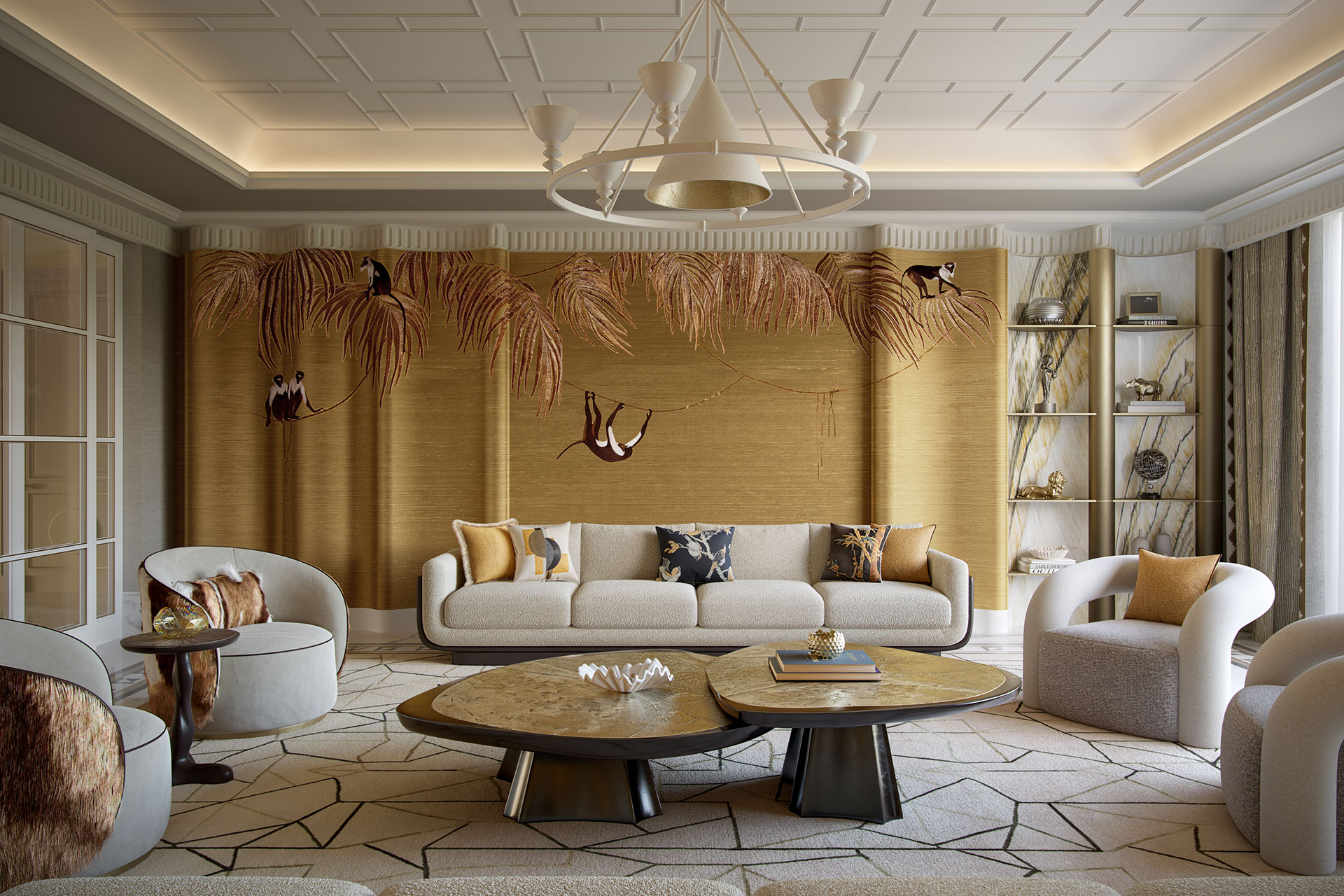
A studio that answers all five without reaching for a brochure is on your shortlist. Our wider guide to luxury interior designers in India explains how clients actually build that shortlist, and our notes on Gurgaon and Noida cover the two neighbouring markets, which are high-rise where Delhi is not.
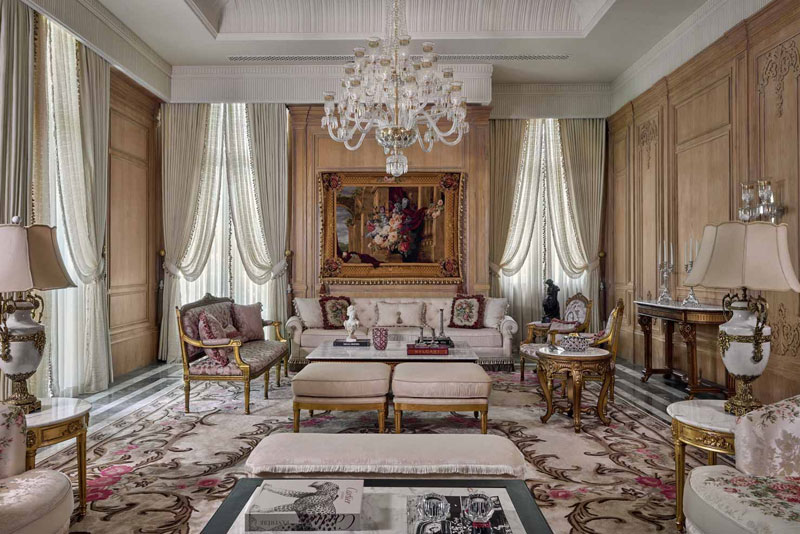
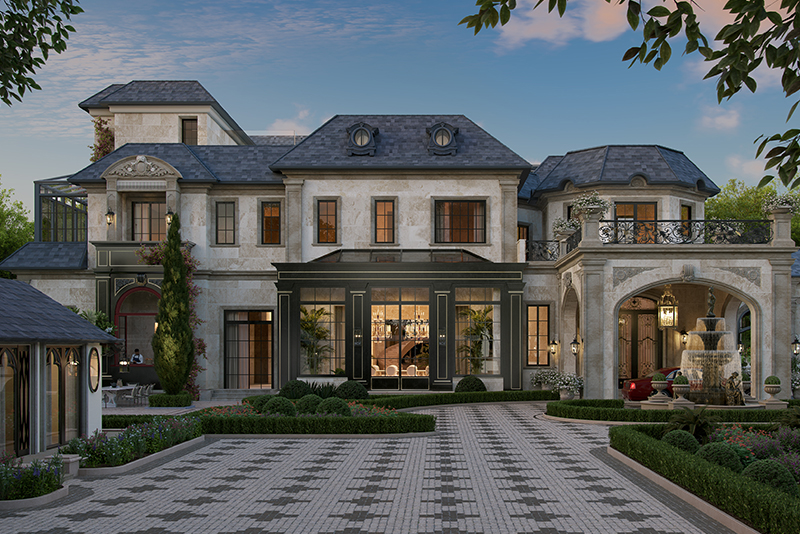
Aparna Kaushik Design Group has worked in Delhi since 2008 from its studio in Noida, across all three of the housing types above. Oaklane Villa is a contemporary classical house on a South Delhi plot. The Panther House is a modern villa in Delhi. A classical farmhouse in Delhi and a modernist Delhi residence with colonial-era character show the farmhouse and the restoration briefs. The complete portfolio is on our projects page.
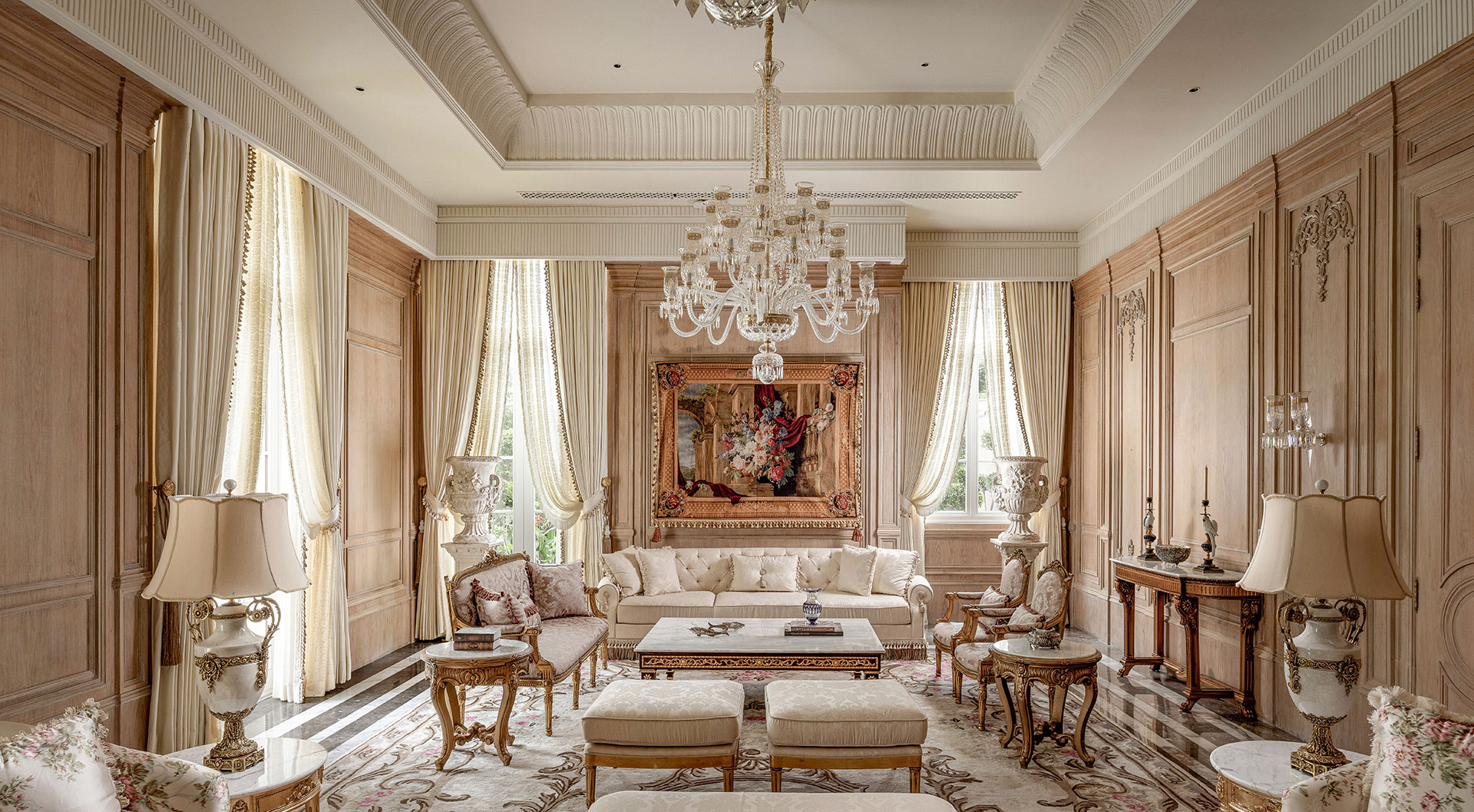
The studios that can show you finished Delhi homes, that handle architecture and interiors together, that know the Lutyens zone and the building bye-laws, that plan basements and air before finishes, and that control their own joinery and site supervision. Delhi's luxury market is bungalows, rebuilt plots and farmhouses, so a portfolio of apartments in another city is not evidence. Aparna Kaushik Design Group has delivered homes across all three types since 2008.
As a percentage of project value, usually 8 to 15 percent at the luxury end, as a design fee of roughly INR 250 to 1,200 per square foot, or as a fixed design fee with execution priced separately. A finished ultra-luxury interior generally costs between INR 4,000 and 15,000 per square foot depending on how much of the stone, joinery and furniture is bespoke. Lutyens restorations and farmhouses sit at the upper end because conservation work and landscape are part of the scope.
Nine to fifteen months from appointment to handover for a villa or a rebuilt plot house. A Lutyens bungalow takes longer, because approvals and conservation work set the pace, and a farmhouse takes longer again, because the house and the landscape are built together.
Yes, within strict limits. The zone's rules govern height, footprint and external character, so the work happens inside the existing envelope. Services, kitchens, bathrooms, climate control and automation can all be brought to a modern standard, provided the verandahs, courtyards, ceiling heights, lime plasters and teak joinery that make the house valuable are kept.
In both, differently. A builder floor is a fixed envelope, so planning, light, storage and services decide everything and there is no structure to change. A bungalow or a rebuilt plot house is a blank site, and the interior designer should be in the room when the structure is drawn, because the basement, the staircase, the ceiling heights and the service routes are interior decisions disguised as architecture.
The good ones treat the farmhouse as the Delhi commission that tests them most. On one to five acres the house, the landscape, the pool and the staff buildings are one composition, and the interior has to be designed with the architecture and the garden rather than after them. Ask to see a completed farmhouse, not a render of one.
The best interior designers in Delhi are not the ten names on a page. They are the few studios that can answer the questions this city asks: what happens below ground, how the house breathes in winter, where the stone comes from, and whether the family's life has been planned before the furniture has. Ask those questions first and the list writes itself. To talk about a Delhi home, see our home interior design and interior design services, or contact the studio.
Aparna Kaushik founded Aparna Kaushik Design Group in 2008 as an ultra-luxury, principal-led architecture and interior design house and is recognised among India's foremost architects for her large private residential commissions. Her studio's UAE practice serves UHNW clients across Dubai and Abu Dhabi, delivering architecture, interiors, furniture, lighting, landscape, art curation, and turnkey execution as one coordinated service.
aparnakaushik.com/about-us | enquiries@aparnakaushik.com | @aparnakaushikofficial