KEY TAKEAWAYS
The market for luxury interior designers in India in 2026 is not the market it was ten years ago, or even three.
In 2025, India's ultra-rich completed 51 residential transactions priced above INR 100 crore, spending a combined INR 7,186 crore. Mumbai accounted for 35 of those deals, mostly in Worli, Juhu, and Malabar Hill. Delhi NCR contributed 12, concentrated in the Lutyens Bungalow Zone, Golf Links, and APJ Abdul Kalam Road. According to Knight Frank's 2026 Wealth Report, India's ultra-high-net-worth population, defined as individuals with USD 30 million or more, is forecast to rise from 19,877 today to 25,217 by 2031. Mumbai recorded 56 new-build sales in the USD 5 million-plus category in 2025 alone.
Behind those numbers is a shift in what these buyers are actually commissioning. The brief is no longer a finished apartment selected from a developer's catalogue. It is, increasingly, a personal residence designed around how the family lives, intends to entertain, and expects to age in place over the decades that follow. The interior architect chosen to deliver that brief has become one of the most consequential professional appointments these families make.
This piece sets out how UHNW clients in India actually shortlist a luxury interior designer in 2026. What separates the most established practices from the rest. The questions that matter at the appointment stage. And the eight markers of a principal-led ultra-luxury interior design practice that families commissioning at the top of the market now look for as standard.
Three structural changes in the last five years have reshaped how India's wealthiest families approach the question of design.
India accounted for 2.8 percent of global UHNWIs in 2026, up from just over 2 percent five years prior. According to Altrata's World Ultra Wealth Report 2025, India is one of only a handful of countries with four cities, Bengaluru, Mumbai, Hyderabad, and Delhi, in the global top ten for UHNW population growth. The buyers driving this growth are not first-generation wealth in the traditional sense. Many are second- and third-generation business families whose grandparents built the original enterprise; founders and operators in technology, financial services, and pharmaceuticals; and a meaningful proportion of returning NRI families who have repatriated primary residences after extended periods abroad.
These buyers are well-travelled. They have lived in homes designed by leading European, American, and Asian studios. The reference set they bring to an Indian commission is global. The expectation is that an Indian luxury interior designer can match, and in many cases exceed, that international standard while drawing on Indian craft tradition that is genuinely difficult to source elsewhere.
In 2025, nine residential transactions in India crossed the INR 200 crore threshold; thirty exceeded INR 100 crore. The single largest deal was a INR 739 crore sea-facing residence in Mumbai purchased by a leading pharmaceutical entrepreneur. In Delhi, a corporate entity linked to a global steel major paid over INR 300 crore for a Lutyens bungalow. A decade ago, transactions of this scale would have dominated industry commentary for months. Today they are reported as part of a wider trend.
The design implication is direct. When the property itself is acquired at this level, the design budget that follows is rarely a discretionary line item. It is treated as a commensurate investment, often in the range of 10 to 20 percent of construction or fit-out value, and frequently more for fully bespoke work. The designer chosen for that commission is, in commercial terms, being trusted with one of the family's larger annual capital decisions.
India's interior design industry is large. According to industry estimates, more than 50,000 firms practise some form of interior design across the country. The number genuinely operating at the ultra-luxury tier, with portfolios of completed homes above the INR 25 crore design-and-build mark and the operational capacity to deliver to international standards, is in the low double digits. The structural imbalance between demand at the top end and the supply of credible practices is one reason the shortlisting process has become more rigorous.
The most common assumption about how families at this level find an interior designer is that the studio is recommended by a friend who has recently completed a similar project. This is partly true. Personal referral remains the single most common entry point. But the process has become more systematic than the assumption suggests.
Across the families AKDG works with, four shortlisting paths recur consistently.
 The shortlisting process at this level is led by the principal, not by a business development team.
The strongest initial signal. A family member, business associate, or close friend has commissioned the studio in the last two to five years, has lived in the completed work, and can speak to both the design quality and the experience of the engagement itself. This referral typically arrives with the implicit endorsement that the studio handled the commission discreetly and delivered to the brief.
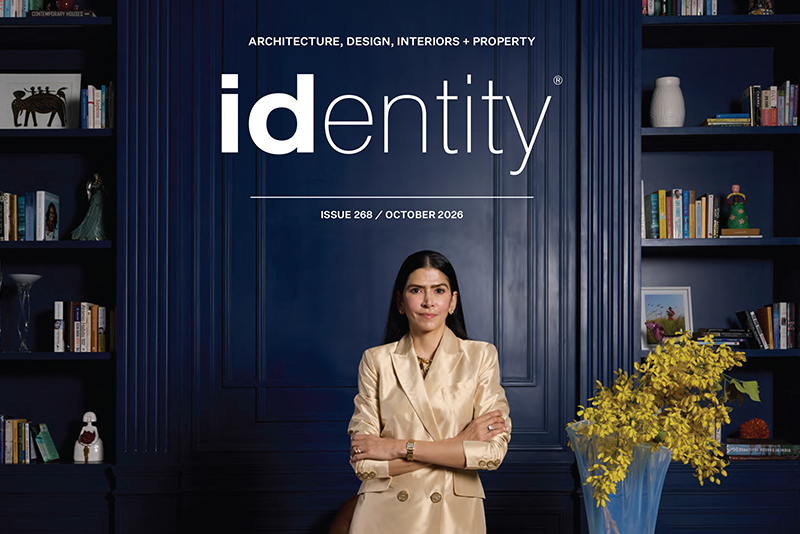
Coverage in publications such as Architectural Digest India, Elle Decor India, Harper's Bazaar Arabia, Robb Report, and Emirates Woman is read closely at this level. These are not lifestyle magazines for these readers; they are functional reference points, used to identify studios working at the appropriate scale and tier. AKDG's own coverage across these titles is documented on the practice's publications page.
Inclusion in industry indices such as Architect & Interiors India's Hot 100, top-five listings of Indian architects, and equivalent regional rankings is treated as a verification signal rather than a deciding factor. These listings narrow a field of fifty thousand firms to a working shortlist of perhaps thirty practices a UHNW family will ever consider in detail.
In some cases, a buyer will visit a friend's home, a private club, a boutique hotel, or a specific residence at scale, and ask directly who designed it. This is the most ground-truth signal of all. The studio is being judged against the lived experience of completed work, with no editorial filter in between.
Once a working shortlist of three to six studios has been established, the criteria that separate one practice from another have become more specific over the last few years. The eight markers below are now the working framework UHNW clients in India use to evaluate a luxury interior designer at the appointment stage.
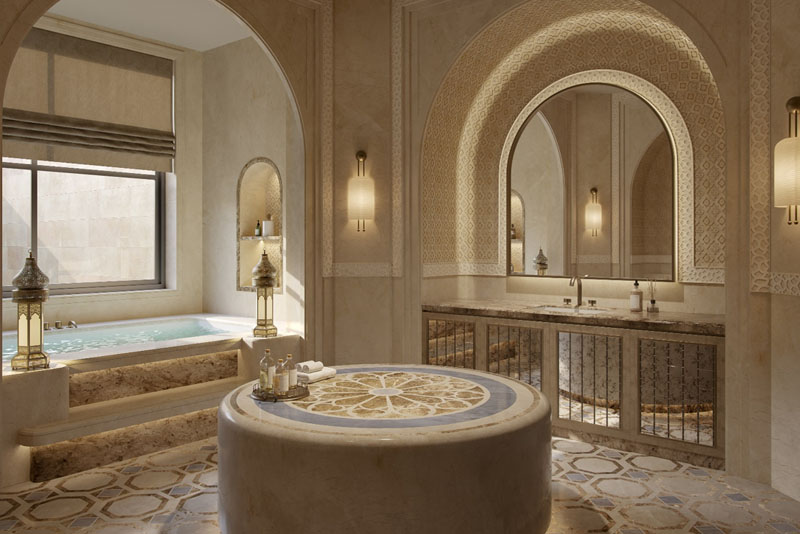
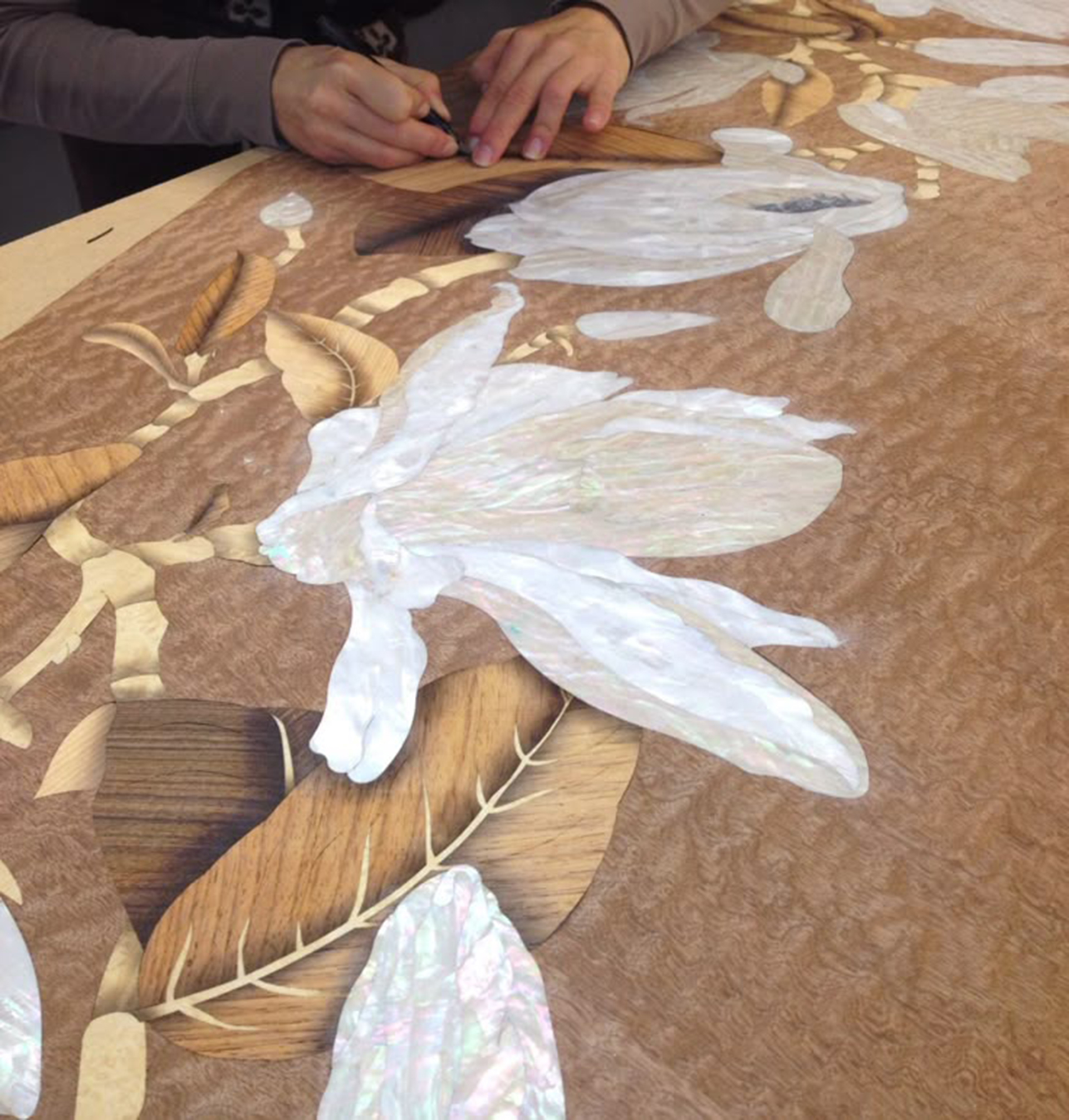 Direct relationships with Indian quarries, mills, and workshops are one of the eight markers of a principal-led ultra-luxury practice
| # | Marker | What It Means in Practice |
|---|---|---|
| 1 | Principal-led design | The lead designer is personally directing the project, not delegating it to associates. The principal is in the room at concept, design development, material selection, and installation. Studios that cannot confirm who is leading the project, and how much of their time it will receive, are not operating at this level. |
| 2 | Integrated architectural and interior capability | A practice that can develop architecture, interiors, furniture, lighting, landscape, and art curation under one creative direction. The integration removes coordination friction between separate consultants and produces a more coherent finished work. |
| 3 | Demonstrated portfolio at the budget tier | A portfolio that includes completed homes at the specific budget level being commissioned. A studio that has executed a INR 5 crore apartment fit-out and a studio that has executed a INR 50 crore residential build are not the same studio. Material vocabularies, project management requirements, and team structures are all different. |
| 4 | Direct material and craft relationships | Long-standing relationships with the specific quarries, mills, and workshops capable of producing bespoke material at the required level. Marble from Makrana, timber from Maharashtra mills, brass from Moradabad workshops, hand-loomed textiles from dedicated mills. These are relationships that take decades to build and cannot be procured by a junior associate at short notice. |
| 5 | Multi-city and multi-market execution capability | The capacity to deliver projects across India and, increasingly, in Dubai, London, and other international markets where Indian UHNW families maintain residences. This requires confirmed local approvals experience, contractor relationships, and the logistical infrastructure to move bespoke material between geographies. |
| 6 | Design language with intent | A clear, identifiable design philosophy rather than a stylistic catalogue. The most considered Indian luxury practices typically operate across European classical proportion, contemporary tropical modernism, and Indian craft tradition; and can move between these registers with intent rather than treating them as mutually exclusive options. |
| 7 | Genuine confidentiality | NDAs as a default, coded project names, controlled photography rights, and absolute discretion around client identity. UHNW families assume this is in place from the first conversation. A studio that does not default to it is signalling that it does not work at this level. |
| 8 | Capacity to refuse the wrong commission | The most established studios at this tier accept fewer projects per year than the market would allow. The willingness to decline a commission that does not fit, on grounds of timeline, scope, or alignment, is itself a strong signal. It indicates that the studio's calendar is genuinely curated around principal-led attention rather than maximum throughput. |
These eight markers are not aspirational. They have become the working baseline at the top end of the Indian residential market. A studio that meets all eight is operating at the ultra-luxury tier; a studio that meets six or seven is competent, capable, and operationally sound; a studio that meets fewer than five is, in commercial terms, a different proposition than the one a UHNW family is commissioning.
Demand for luxury interior designers in India is concentrated in five primary cities, each with a distinct buyer profile and design language.
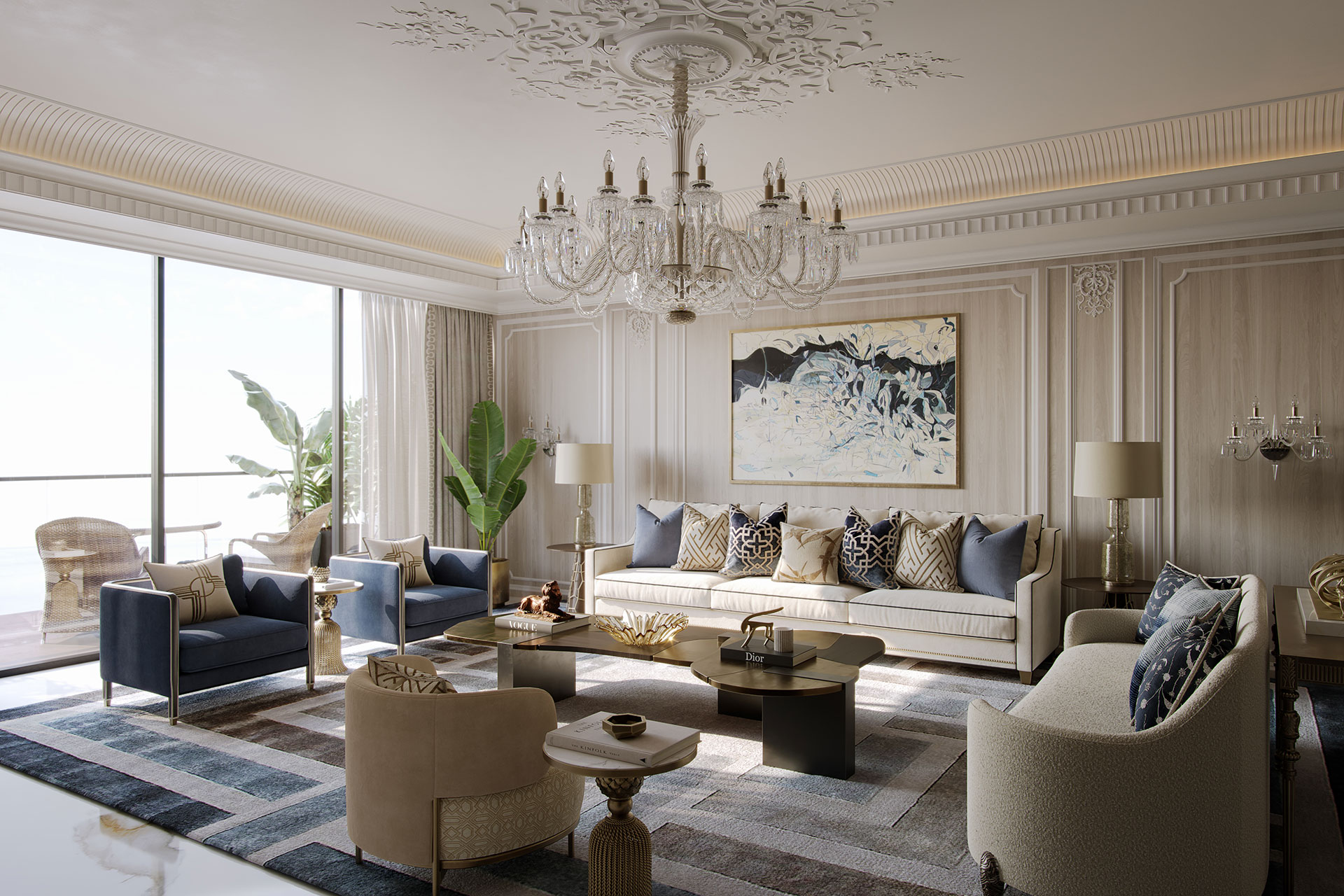 India's luxury interior design demand is concentrated across Mumbai, Delhi NCR, Bengaluru, Hyderabad, and Pune.
The largest market by transaction volume. In 2025, Mumbai recorded 35 of the 51 INR 100 crore-plus residential deals nationally, with Worli alone accounting for 21 of the top transactions. The city's tilt is towards vertical luxury living, with sea-facing high-rise apartments in Worli, Prabhadevi, Lower Parel, and Bandra dominating the brief. Knight Frank's PIRI 100 placed Mumbai at tenth globally in 2025, with prime price growth of 6.9 percent year-on-year. The interior brief in Mumbai is increasingly defined by view-led planning, acoustic isolation between floors, and amenities that compress the depth of a private hotel into a 6,000 to 12,000 square foot apartment.
The second-largest market by transaction volume, with 12 of the top 51 deals in 2025. Delhi's luxury market remains anchored to independent bungalows in the Lutyens Zone, Golf Links, APJ Abdul Kalam Road, Vasant Vihar, and the South Delhi farmhouse belt that runs through Chhatarpur, Mehrauli, and Westend Greens. Where Mumbai represents vertical exclusivity, Delhi NCR represents land ownership, privacy, and legacy. The interior brief here is for larger plots, more traditional spatial planning, and a deeper integration of landscape, courtyards, and outdoor living into the residential design.
Bengaluru entered the global top ten of Knight Frank's Prime International Residential Index in 2025, jumping from 40th to 8th place with 9.4 percent year-on-year price growth. The city has emerged as the strongest growth market for luxury homes in India, driven primarily by founders, technology operators, and family offices. The brief in Bengaluru is more contemporary in language than Mumbai or Delhi, with a strong preference for resort-style residences on larger plots in Sadashivanagar, Koramangala, Indiranagar, and the eastern Whitefield belt. AKDG's perspective on this contemporary register is documented in detail in the practice's brand story.
One of Altrata's four India cities in the global top ten for UHNW population growth. The luxury market is concentrated in the Jubilee Hills and Banjara Hills belt, with a growing extension into Film Nagar. The brief is distinct from the other Indian metros, often involving larger ground-up villa builds with significant outdoor living, infinity pools, and conservatory or cabana provision. AKDG has delivered work in Hyderabad that has been featured in editorial coverage by Harper's Bazaar Arabia and other regional publications.
A smaller but rapidly growing market, particularly in Koregaon Park, Kalyani Nagar, and the Boat Club Road area. The buyer profile in Pune is somewhat younger, frequently from the technology and education sectors, with a brief that combines residential and home-office requirements. JLL data indicates that homes priced above INR 1 crore now form a meaningful proportion of Pune's overall housing transactions, with steady year-on-year appreciation.
The relationship between a UHNW family and a luxury interior designer is, at its best, a multi-year engagement. The first six weeks of that relationship are where the most important decisions are made, and where the strongest indicators of whether the studio is the right one will surface.
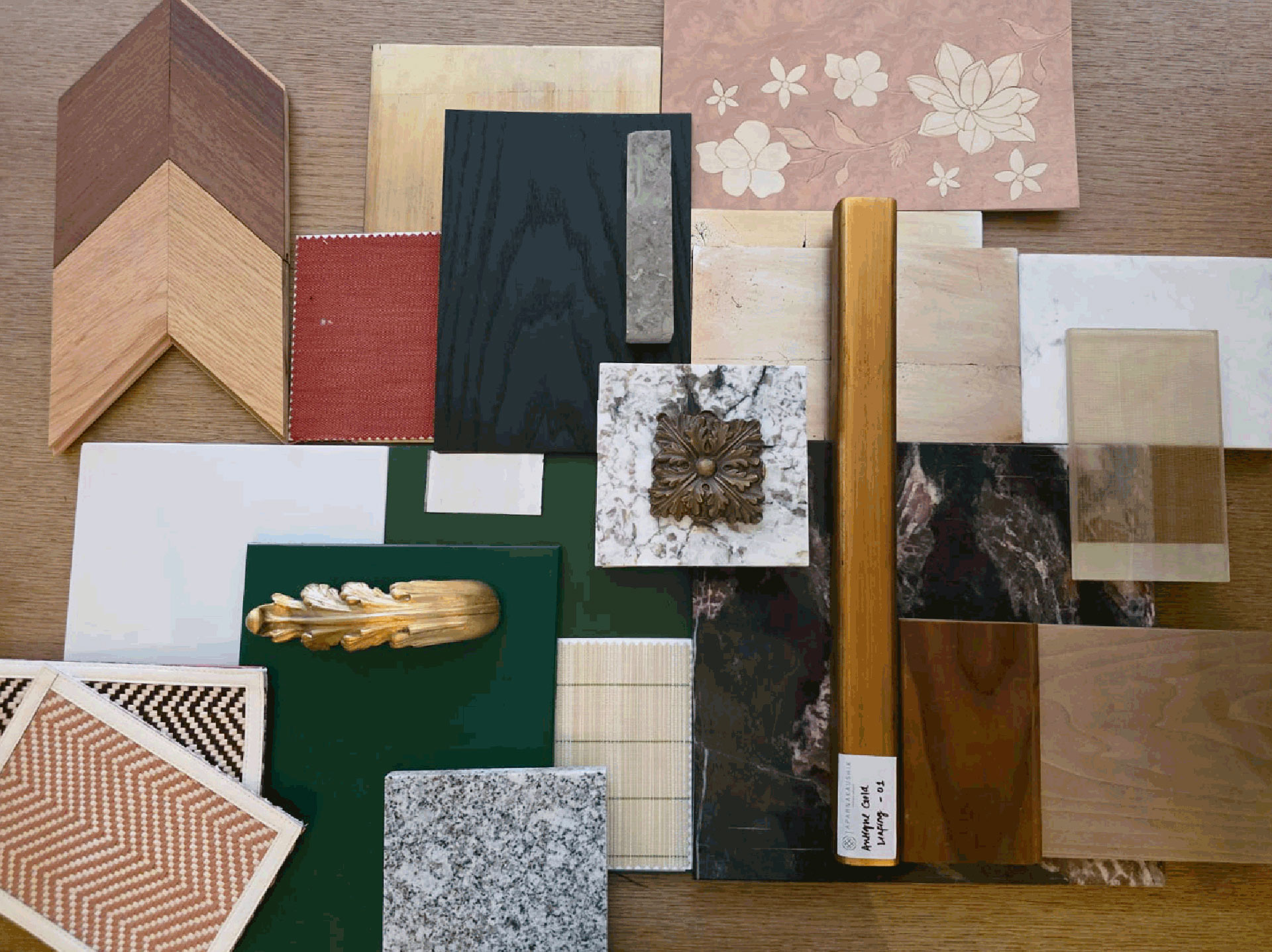 The concept presentation, typically delivered four to six weeks after appointment, is the strongest predictor of how the rest of the project will unfold
The first conversation should be principal-led, not handled by a business development associate. It should focus on the family rather than the project specification. How the family lives day-to-day, how they entertain, who lives in the house full-time, how children's spaces should evolve as the children grow, what the family's relationship is with extended family and staff, what their existing collections look like. The architectural brief comes from this conversation, not the other way around. AKDG's approach to this discovery phase is set out across the practice's services framework.
The principal should visit the site in person within the first two weeks. The visit is not a formality; it is where the studio's actual design intent for this specific property begins to take shape. A studio that proposes a design language before visiting the site is operating from a template rather than a contextual response.
Within four to six weeks of the appointment, the studio should be presenting a coherent concept, not a mood board. The concept should articulate the architectural idea for the residence, the spatial planning logic, the proposed material palette, and a clear point of view on how the design will hold up over the next twenty to thirty years of the family's life in the house. The strength or weakness of this concept presentation is, in the experience of clients commissioning at this level, the single best predictor of how the rest of the project will unfold.
Fee structures vary. The most common models at the ultra-luxury tier are a percentage of construction or fit-out value, typically 10 to 20 percent; a fixed principal-led retainer for the full project duration; or a hybrid combining a fixed retainer with a smaller variable component tied to scope. Per-square-foot pricing, common at lower tiers, is largely irrelevant at this level because the work is bespoke from the first sketch.
“The families who commission us at this level are not commissioning a style. They are commissioning a thirty-year relationship between their household and a residence. The interior designer's job is to understand that relationship before drawing a single line. Everything else, the materials, the proportions, the craft, the finish, follows from that understanding.”
- Aparna Kaushik, Founder and Principal Architect, Aparna Kaushik Design Group
India's luxury interior design industry has a small group of established practices working at the ultra-luxury tier, characterised by principal-led design, integrated architectural and interior capability, and confirmed portfolios of homes above the INR 25 crore design-and-build mark. Aparna Kaushik Design Group is recognised among India's top five architects, with a portfolio of ultra-luxury residences across Delhi, Mumbai, Hyderabad, Bangalore, and the UAE. The practice has been featured in Architectural Digest India, Elle Decor India, Harper's Bazaar Arabia, Emirates Woman, and Robb Report. Detailed coverage is documented on the practice's publications page.
The number of interior design studios in Delhi NCR genuinely working at the high-net-worth tier is small. The defining criteria are principal-led engagement (the lead designer is personally directing the project), demonstrated portfolio at the appropriate budget level (typically INR 25 crore-plus design-and-build), confirmed multi-discipline capability, and absolute discretion around client identity. Aparna Kaushik Design Group, headquartered in Noida and active across the Lutyens Zone, Vasant Vihar, Chanakyapuri, and the South Delhi farmhouse belt, operates at this tier and accepts a deliberately limited number of commissions per year to preserve principal-led attention on every project.
Design fees for ultra-luxury interior design in India are typically structured as 10 to 20 percent of construction or fit-out value, or as a fixed principal-led retainer. On a residence with a build budget of INR 25 crore, that translates to design fees in the range of INR 2.5 to INR 5 crore. Per-square-foot pricing is largely irrelevant at this level because the work is bespoke from the first sketch and is priced on scope and significance rather than area. The most established studios will discuss fees only after a substantive discovery conversation about the family, the brief, and the specific project.
A full design-and-build residential project at the ultra-luxury tier typically runs 22 to 36 months from initial brief to handover. Design and design development take 6 to 12 months. Construction and fit-out run a further 14 to 22 months, depending on scale and complexity. A pure interior fit-out of an existing structure runs shorter, typically 9 to 18 months. The most established studios accept fewer projects precisely because each commission requires this duration of principal-level attention.
An interior designer selects finishes, furniture, lighting, and material palettes within an existing structure. An interior architect is trained to alter the structure of a space by moving walls, reworking ceiling planes, modifying spatial sequences, and coordinating with structural engineers and building services consultants. At the ultra-luxury residential tier in India, the distinction largely disappears, because principal-led studios working at this level operate as integrated architectural and interior practices. Ask whether the studio has architectural qualifications in-house, or whether it coordinates with a separate architect on structural decisions.
Three design registers dominate the current Indian ultra-luxury brief. The first is contemporary classical, drawing on European architectural tradition for proportion and detailing while remaining current in its material palette. The second is contemporary tropical modernism, with pared-back interiors, natural materials, and a deep response to the local climate. The third is what the industry now describes as resort-style living, where a primary residence is designed with the amenity depth and lifestyle infrastructure of a private hotel. The most considered Indian practices move between all three with intent rather than treating them as mutually exclusive.
Genuine confidentiality is now the baseline expectation at the ultra-luxury tier in India, not a differentiator. Studios working at this level default to NDAs from the first substantive conversation, use coded project names internally, retain controlled photography rights with explicit family consent before any image is published, and avoid direct identity disclosure in editorial coverage where the family prefers anonymity. A studio that does not default to these practices is signalling that it operates at a different tier of the market.
Eight markers reliably separate a serious ultra-luxury practice from a promotional one. Principal-led design, where the lead designer is personally directing the project. Integrated architectural and interior capability under one team. A demonstrated portfolio at the specific budget tier being commissioned. Direct relationships with the material and craft sources required. Multi-city and multi-market execution capability. A clear design philosophy rather than a stylistic catalogue. Genuine confidentiality as a default. And the willingness to refuse the wrong commission. Studios that meet all eight are operating at the ultra-luxury tier.
The most established practices increasingly do. India's UHNW families typically maintain residences across India, the UAE (particularly Dubai), London, Singapore, and increasingly North America. The leading studios extend their practice across these markets to maintain design continuity for clients who want a consistent design language across all their residences. Aparna Kaushik Design Group operates across India and the UAE, with active projects in Dubai, including the Palm Jumeirah, Emirates Hills, and Mohammed Bin Rashid City corridors.
Aparna Kaushik Design Group is an ultra-luxury architectural and interior design practice led by Aparna Kaushik, recognised among India's top five architects. The studio operates across India and the UAE, with a portfolio of private residences, estates, and signature projects developed as integrated architectural works. The practice has been featured in Architectural Digest India, Elle Decor India, Harper's Bazaar Arabia, Emirates Woman, and Robb Report. AKDG designs fewer projects per year by intent, in order to deliver principal-level attention on every commission.
The decision to appoint a luxury interior designer in India is not a transactional decision. It is the start of a multi-year engagement that will shape how a family lives, hosts, and ages in place over the decades that follow. The eight markers set out above are the working framework UHNW clients now use to evaluate that decision. They are also the standard against which the most established Indian practices have organised themselves.
Aparna Kaushik Design Group accepts a deliberately small number of commissions each year, in India and in the UAE, to preserve principal-led attention on every project. For UHNW families considering an ultra-luxury residential commission, the studio welcomes a direct conversation. The portfolio of completed work sets out the depth of the practice in detail.
To discuss a project, please contact our team here, or write to enquiries@aparnakaushik.com.
Aparna Kaushik is one of India's foremost architects, recognised among the country's top five for her work on ultra-luxury private residences. With over 18 years of practice and a studio founded in 2008, she has completed landmark estates across India and is now working with UHNW clients in the UAE. Her work blends European classicism with modernist tropical architecture — a sensibility shaped by India's design heritage and executed to a standard that is increasingly sought by Dubai's most discerning villa owners.
aparnakaushik.com/about-us | enquiries@aparnakaushik.com | @aparnakaushikofficial