Short answer: luxury interior design in India is priced in one of three ways: as a percentage of project value (usually 8 to 15 percent), as a design fee per square foot (roughly ₹250 to ₹1,200), or as a fixed design fee with execution costed separately. A finished ultra-luxury interior generally lands somewhere between ₹4,000 and ₹15,000 per square foot, and a villa takes about nine to fifteen months from appointment to handover. All figures here are approximate ranges rather than quoted prices.
Most Indian studios publish nothing about money. Anyone planning a serious residence therefore starts without a reference point, and the first meeting becomes guesswork on both sides.
This guide sets out how the pricing actually works, what a project of a given size costs, how long it takes, and what is included once the drawings are finished. The figures are indicative market ranges rather than a quotation. Every commission at this level is bespoke, and the final number depends on decisions that have not been made when someone first asks the question.
Four things move the number more than anything else.
Scale, but not the way most people assume. A 12,000 sq. ft house does not cost twice a 6,000 sq. ft one. Larger homes carry more circulation, more service area and more repetition, so cost per square foot usually softens as area grows. Complexity is what pushes it back up.
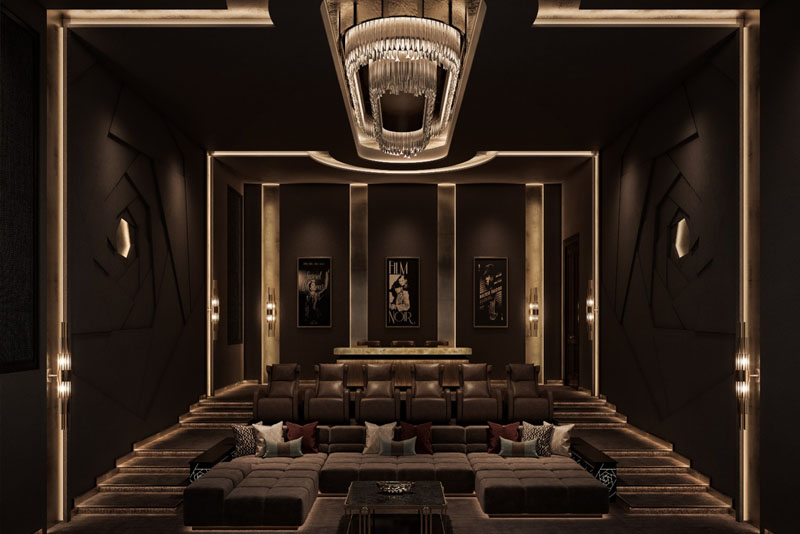
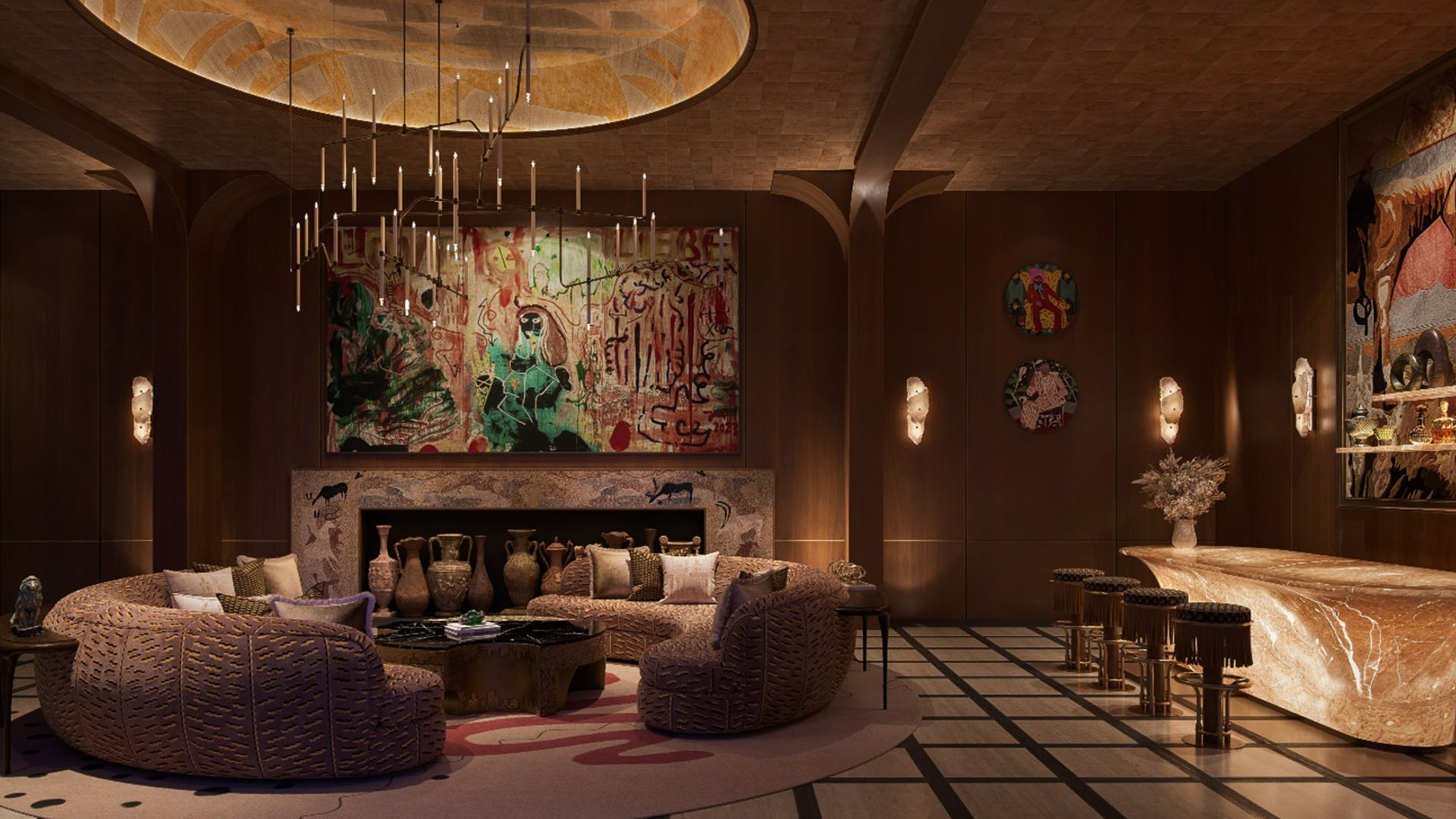
How much is made rather than bought. A house furnished with imported readymade pieces sits at one end of the range. A house where the joinery, the case goods, the lighting and the stone inlay are all drawn for that house and made for it sits at the other, and can cost three times as much for the same floor area. This single decision accounts for most of the gap between a well-appointed home and an ultra-luxury one, and it is where bespoke furniture budgets are set.
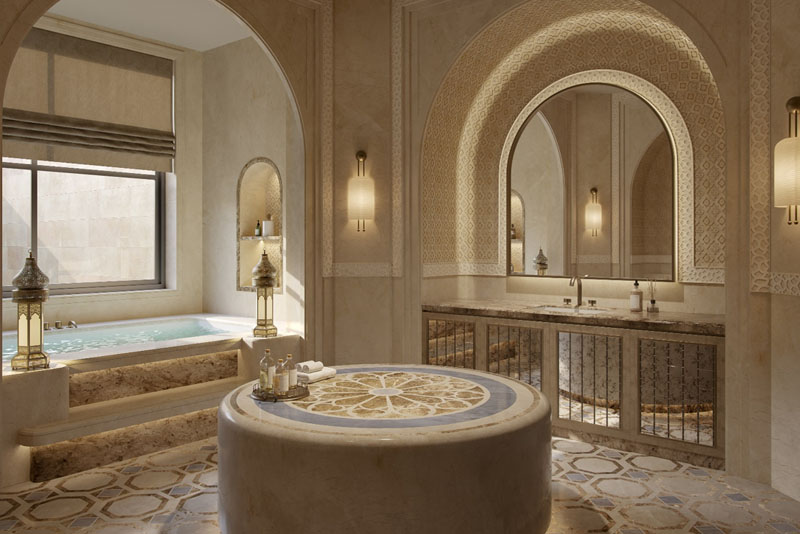
Material selection. Indian marble and engineered stone behave very differently in a budget from imported Italian marble, book matched slabs, solid brass hardware or specialist veneers with long lead times. Materials are also the honest place to adjust a budget later without visibly weakening the design, which is why a good studio raises the subject early.
Whether execution is included. A design appointment produces drawings, specifications and a procurement list. A turnkey appointment carries the project through to a finished, furnished house, and is priced higher because the studio becomes accountable for contractors, vendors, quality and programme rather than for drawings alone.
Almost every luxury interior commission in India is priced in one of three ways. Knowing which one is on the table is the most useful thing a client can establish before the first meeting.
| Fee model | Approximate range | Best suited to | Watch for |
|---|---|---|---|
| Percentage of project value | Around 8 to 15 percent of interior spend | Large residences where scope cannot be fixed at the start | Agree a cap, or re-base the percentage once scope firms up |
| Design fee per square foot | Around ₹250 to ₹1,200 per sq ft | Clients who want to compare studios on a like-for-like basis | A low rate usually signals a shallower scope |
| Fixed design fee plus execution | Quoted per project | Renovations and projects where the client wants certainty on design | Confirm in writing what execution covers |
A fourth arrangement appears occasionally at the top of the market: a retainer that keeps the principal architect involved across a multi-year build. It is unusual, and it normally means architecture and interiors have been commissioned together on an estate.
The ranges below cover interiors only, meaning the design and delivery of the finished, furnished space. They exclude land, civil construction and structural work.
| Project type | Approximate cost per sq. ft | Notes |
|---|---|---|
| Apartment or penthouse, 3,000 to 6,000 sq. ft | Around ₹4,000 to ₹12,000 | Penthouses sit at the upper end, where finishes are expected to match the address |
| Villa or private residence, 6,000 to 15,000 sq. ft | Around ₹5,000 to ₹15,000 | The most common ultra-luxury brief in Delhi NCR, Mumbai and Hyderabad |
| Farmhouse estate, one acre and above | Around ₹5,000 to ₹18,000 across built area | Landscape, pavilions and guest wings carry separate budgets |
| Renovation of an existing residence | Varies widely | Add 10 to 15 percent contingency for what is found behind existing surfaces |
Five things push a project to the top of its range, in order of impact: fully bespoke furniture and joinery, imported and book matched stone, specialist lighting with integrated automation, commissioned art, and a compressed programme. The last of these almost always costs money.
Renovations are the hardest to generalise, because the answer depends on what stays. A full strip out and rebuild approaches new build interior costs. A considered refresh of finishes, furniture and lighting is a fraction of it. Services, structure and waterproofing behind existing surfaces stay unknown until they are opened up, which is why the contingency matters.
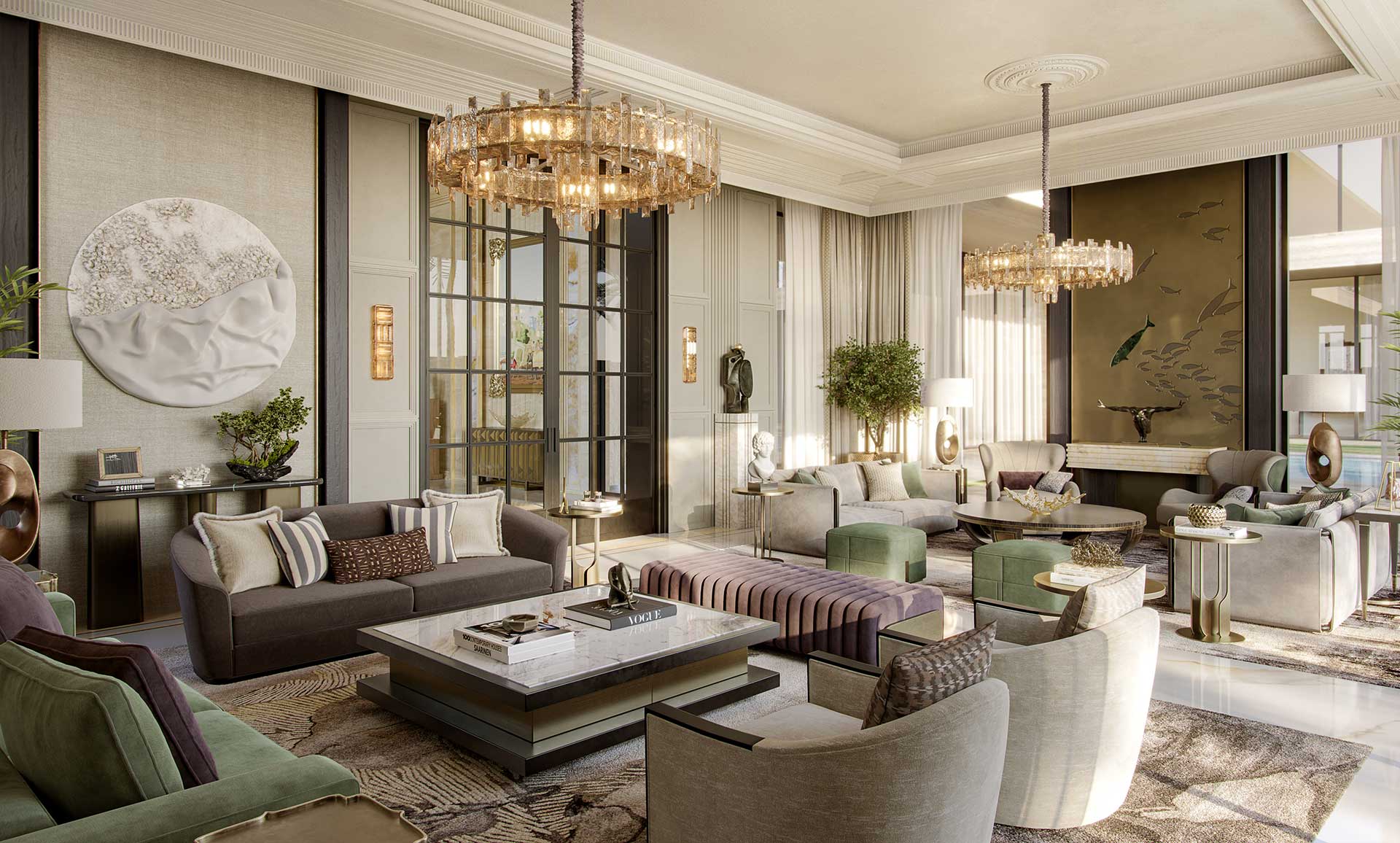
The word is used loosely in India, and that causes real confusion at the point of appointment. A studio offering turnkey luxury home interiors from design to execution should be accountable for four things.
Design. Concept, space planning, detailed drawings, material and finish specification, bespoke furniture and joinery design, lighting design, and a specification package complete enough to build from.
Procurement. Sourcing and ordering materials, furniture, fittings and hardware, managing lead times on imported items, and holding the vendor relationships so the client is not fielding calls from suppliers.
Execution. Appointing and supervising contractors and craftsmen, running the site, controlling quality on finishes and joinery, sequencing trades, and resolving the hundreds of small decisions a project produces.
Handover. Styling, snagging, photography where required, and a defect liability period during which the studio stays responsible for putting things right.
Four things usually sit outside the scope and should be confirmed in writing: statutory approvals and building management permissions, structural work, heavy civil or MEP alteration, and anything the client procures directly. Setting this boundary at appointment prevents most disputes that arise later.
How long does a luxury interior project take?
Around nine to fifteen months for a villa, and twelve to twenty-four months or more for an estate.
| Phase | Duration | What happens |
|---|---|---|
| Design | 8 to 16 weeks | Brief, site study, concept, client review, detailed design and specification |
| Procurement | 8 to 20 weeks, overlapping execution | Bespoke pieces are made to order, imported materials ship on their own schedule |
| Execution | 6 to 14 months | Apartment fit outs at the shorter end, villas at 10 to 14 months, estates longer |
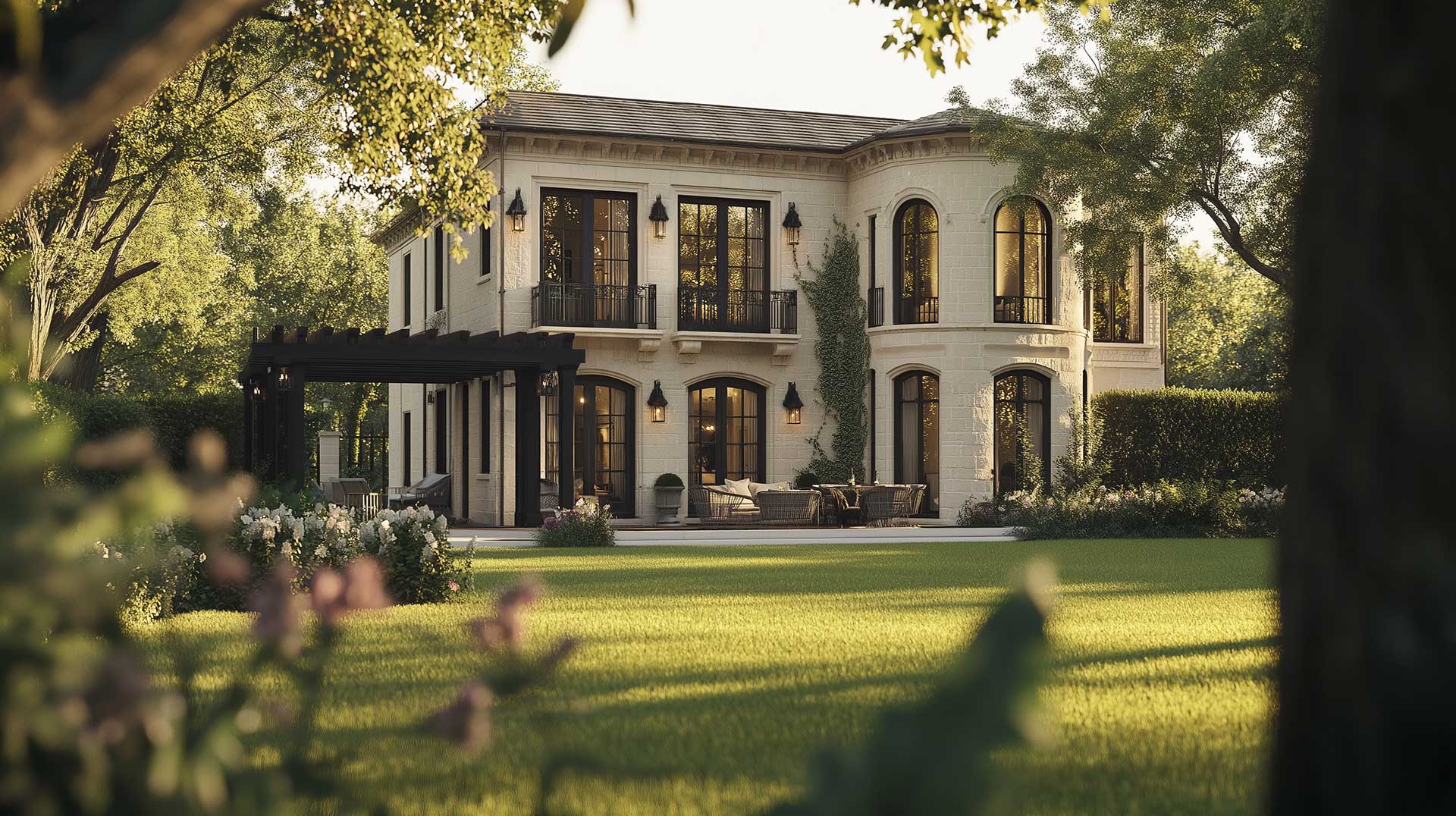
Farmhouse projects follow a different arithmetic, because land dominates the equation in a way it never does with an apartment.
Anyone researching farm house Delhi price finds that land in the established belts of Chhatarpur, Sainik Farms, Westend Greens and Pushpanjali is quoted per acre, and varies with location, approach road and title. Construction of the built form is a second line. Interiors are a third. As a rough shape, land often accounts for more than half the total outlay, construction a quarter to a third, and interiors and landscape the balance. The ratio shifts sharply depending on what was paid for the land and when.
Landscape deserves its own budget line rather than whatever is left at the end. On an estate, the approach, the lawns, the water and the pavilions are the setting the house is experienced within. Under budgeting them produces a good house sitting awkwardly in an unresolved plot.
For how these estates are designed, see our guide to luxury farmhouse design in India. For the market context and land values, see India's most expensive farmhouses.
1. Which fee model applies, and what triggers a change to it? Ask specifically what happens if the scope grows.
2. Is execution included, and who holds the contractor relationships? The answer decides who is accountable when something goes wrong on site.
3. Who from the studio is on this project, and how often is the principal involved? A practice led by its principal and a practice where the founder appears only at the pitch produce two different projects.
4. What is the realistic programme, and which items have the longest lead times? A studio that answers precisely has done it before.
5. What is excluded? The most useful question in the conversation, and the one client most often forget.
Fees are structured as a percentage of project value, usually 8 to 15 percent at the ultra-luxury end, as a design fee of roughly ₹250 to ₹1,200 per square foot, or as a fixed design fee with execution priced separately. The right model depends on the size of the residence and whether execution is included. These are approximate market ranges rather than fixed prices.
A genuinely high-end interior fit out runs about ₹4,000 to ₹15,000 per square foot, depending on how much of the joinery, furniture and stone is bespoke. Projects with fully commissioned furniture and book matched stone sit above that range. Treat these as approximate bands, not quoted rates.
About nine to fifteen months from appointment to handover. That covers 8 to 16 weeks of design, 8 to 20 weeks of procurement running alongside execution, and 6 to 14 months on site. Estate scale projects commonly run twelve to twenty-four months.
Design, procurement, contractor appointment and supervision, quality control, styling and handover. The studio is accountable for the finished house, not only the drawings. Statutory approvals, structural work and client procured items usually sit outside the scope and should be confirmed in writing.
Sometimes cheaper on paper, often more expensive in practice. Two separate appointments create a coordination gap that surfaces as reworked services, mismatched levels and delay. A practice covering both absorbs that coordination internally.
Land usually dominates the budget, particularly in Delhi NCR. Construction and interiors follow, with interiors in the region of ₹5,000 to ₹18,000 per square foot of built area, plus a separate landscape budget. The figures are approximate and move with land values and specification.
Aparna Kaushik Design Group is a principal led architecture and interior design practice working on ultra-luxury private residences in India and the UAE. See our completed residences, or get in touch to discuss a commission.
Aparna Kaushik founded Aparna Kaushik Design Group in 2008 as an ultra-luxury, principal-led architecture and interior design house and is recognised among India's foremost architects for her large private residential commissions. Her studio's UAE practice serves UHNW clients across Dubai and Abu Dhabi, delivering architecture, interiors, furniture, lighting, landscape, art curation, and turnkey execution as one coordinated service.
aparnakaushik.com/about-us | enquiries@aparnakaushik.com | @aparnakaushikofficial