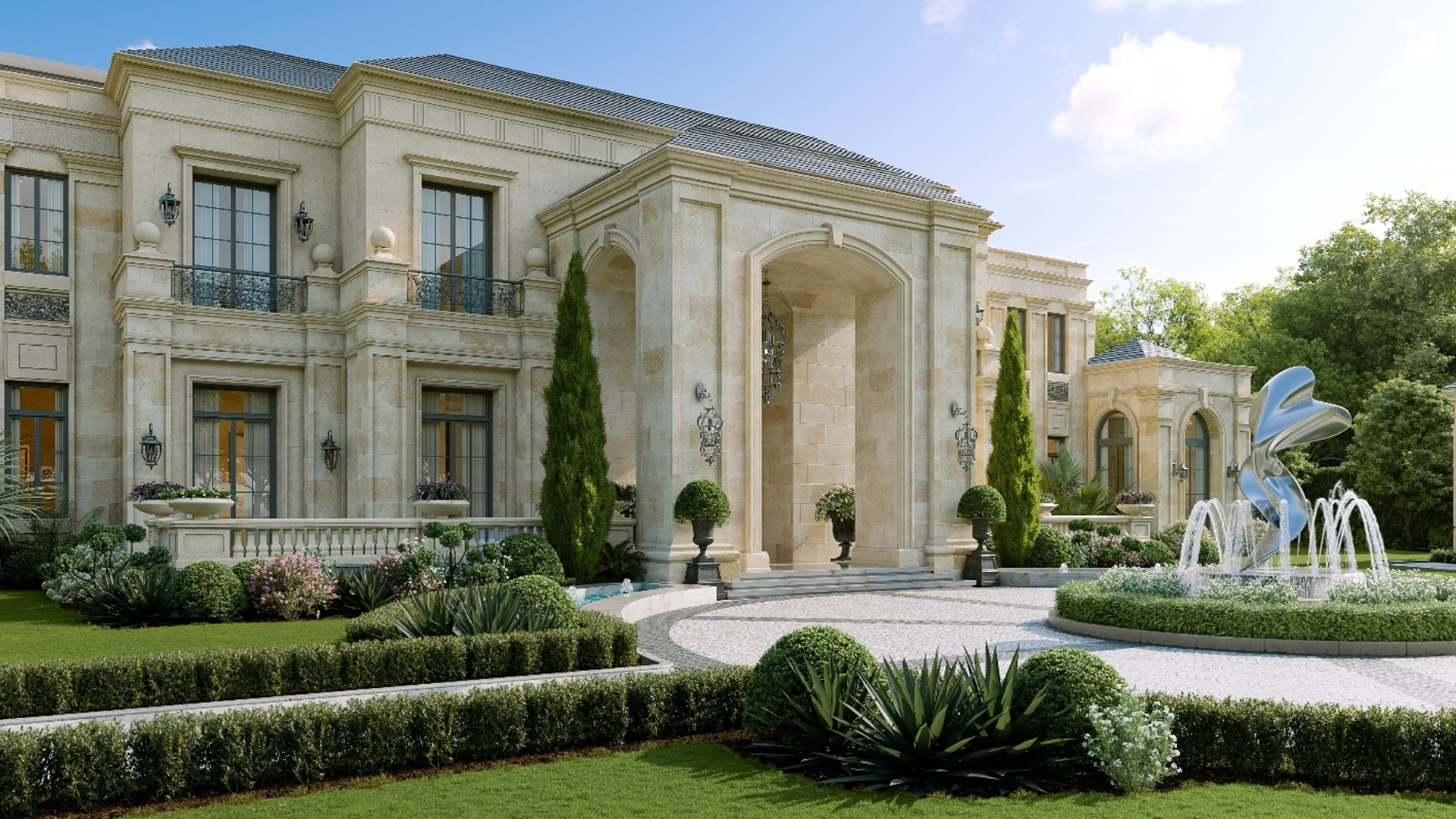
India's most expensive farmhouses sit in the South Delhi belts of Chhattarpur and Sainik Farms, where prime land transacts at roughly ₹15 crore to ₹40 crore per acre. Estates usually occupy one to five acres, the house takes up a small share of the plot, and land accounts for more than half the total cost of building one. Land values are approximate ranges and move with location, approach and title.
There is a kind of Indian house that never appears in a property listing, is rarely photographed and is almost never discussed by name. It sits on several acres at the end of a long private approach, an hour from the city centre, and it is the most expensive residential property the country produces.
The word farmhouse is misleading. These are estates, and they are where Indian families build the houses they cannot build in the city. This article looks at where they are, what they cost and what the people commissioning them are asking for now.
A farmhouse in India is a large private residence built on agricultural or semi agricultural land at the edge of a city, where plots are measured in acres rather than square yards. It has little to do with farming. The term survives from the land classification, not the use.
Three things separate an ultra-luxury farmhouse from a house that is simply large.
The ratio of land to building. On a true estate the house occupies a small fraction of the plot. The rest is landscape: lawns, orchards, water, and a drive long enough to make arrival part of the experience. Privacy comes from distance rather than from a boundary wall.
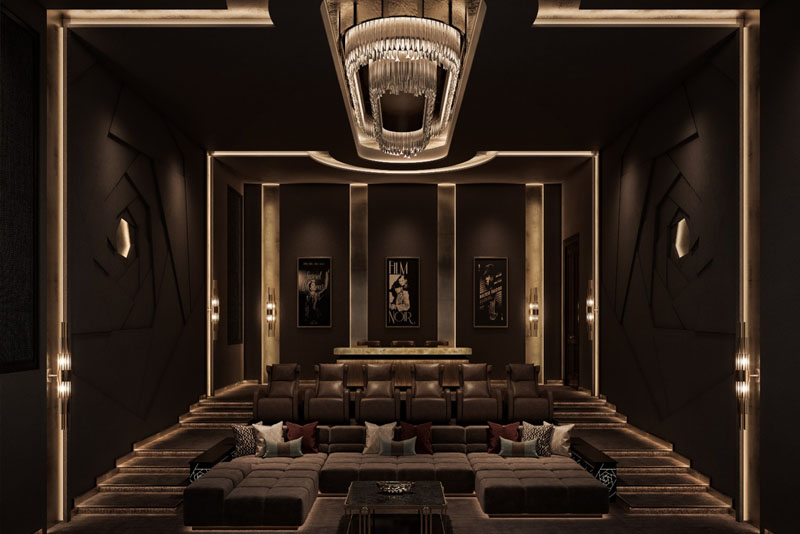
The programme. Beyond family accommodation, an estate usually carries a formal reception sequence for entertaining at scale, an independent guest wing, a pool and pool pavilion, staff quarters and service courts kept out of sight, and increasingly a wellness block with gym, spa and treatment rooms. Several of these sits in separate structures rather than under one roof.
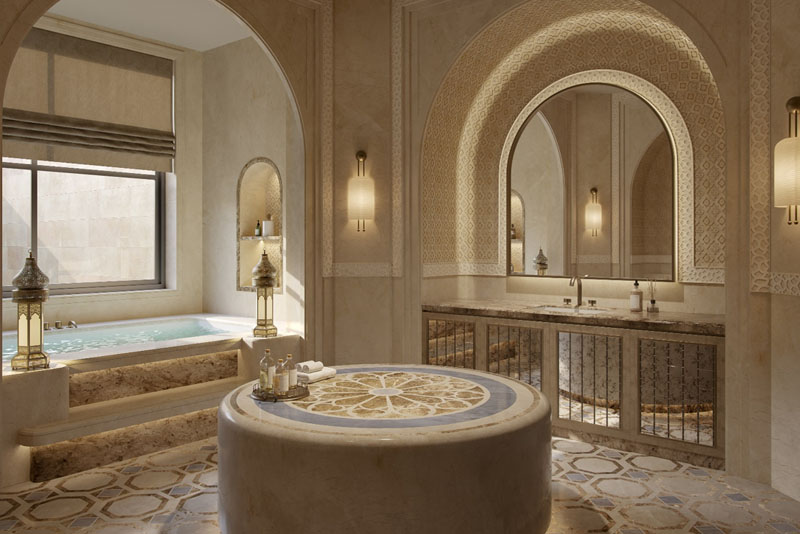
Craft. At this level the difference lies in what has been made rather than bought: stone selected and book matched for a particular wall, joinery drawn for a particular room, metalwork commissioned rather than ordered. It is the hardest difference to photograph and the most obvious one in person.
| Location | Character | Approximate land value per acre |
|---|---|---|
| Chhattarpur, South Delhi | The best known belt, close to the Mehrauli Gurgaon Road and the airport | Around ₹15 crore to ₹40 crore |
| Sainik Farms, South Delhi | Older and greener, with mature trees newer belts cannot match | Broadly comparable, interior plots at a premium |
| Westend Greens and Rajokri | Airport proximity, more uniform plot sizes | Below prime Chhattarpur |
| Pushpanjali and Bijwasan, West Delhi | Newer houses, more contemporary architecture, efficient plot geometry | Below prime South Delhi |
| Gurgaon fringe | Larger plots for the money, longer drive | Lowest of the NCR belts |
Chhattarpur is the name most associated with the category, and the belt has held demand for three decades.
Sainik Farms carries a regulatory history that any buyer's lawyer will examine closely, but the setting remains among the most desirable in Delhi.
Outside Delhi NCR the same product appears in different form. Alibaug serves Mumbai, where the weekend estate is reached by boat rather than by car. Lonavala and Khandala hold the hill house. Goa attracts the second home with a rental proposition attached. Kasauli and the Nilgiris are drawing families who want altitude.
For Delhi families the established South Delhi belts remain the benchmark. For Mumbai it is Alibaug. For a hill house, Lonavala, Kasauli or the Nilgiris. For a second home that can earn, Goa.
Judge any site on four things:
1. Distance from your primary residence. An estate more than two hours away gets used a third as often as one within ninety minutes.
2. Clarity of land title. The single largest risk in a farmhouse purchase, and the one worth the most legal time.
3. Power and water availability. Bringing services to a remote plot is a real line in the budget, not a formality.
4. How neighbouring plots are likely to develop. This is the factor buyers overlook most often and regret most often.
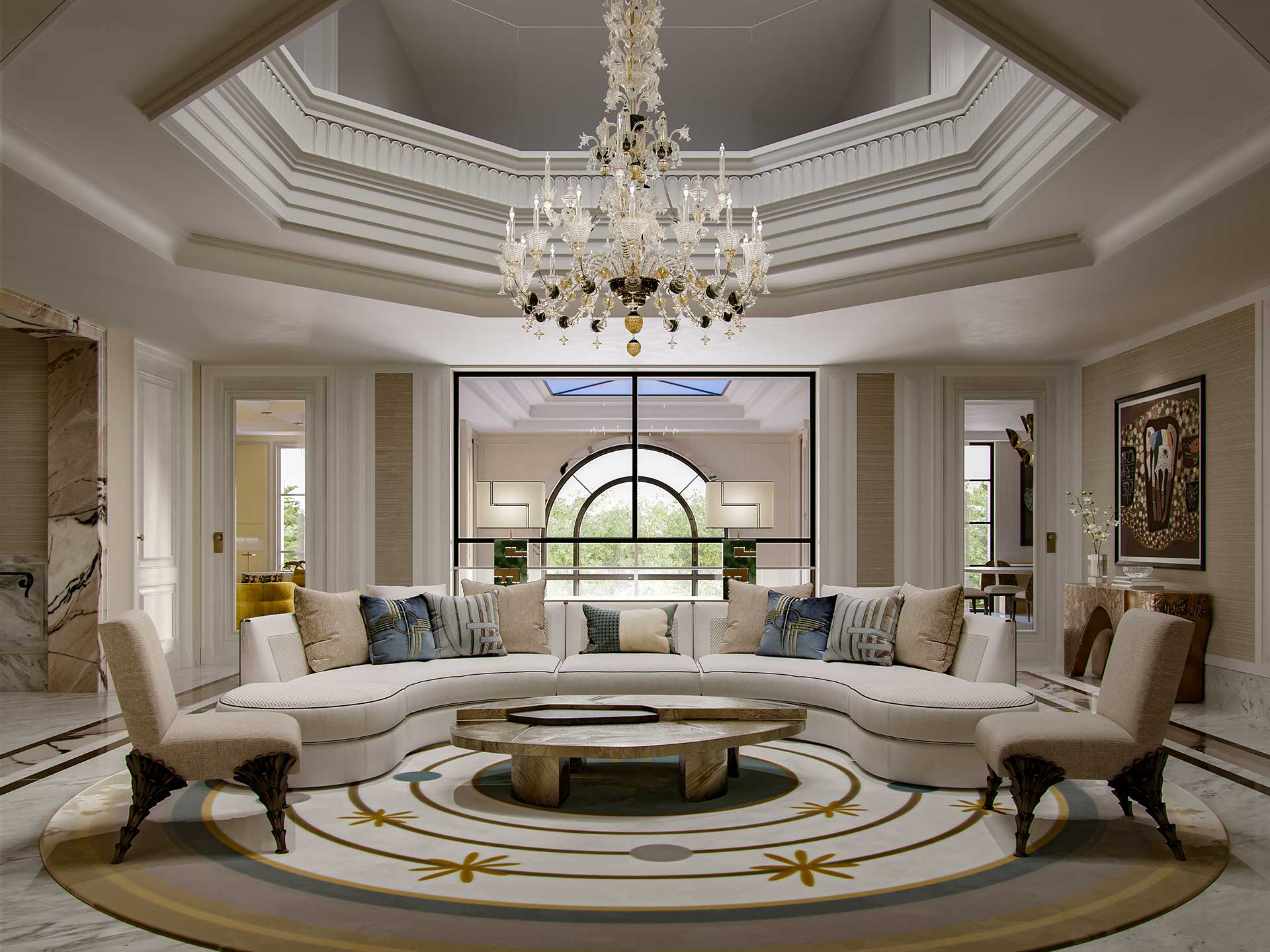
Spend time on enough of them and the same moves recur.
The approach is designed, not merely provided. The best estates treat the drive from gate to porch as the first room of the house. It curves rather than runs straight, reveals the building gradually, and arrives at a porte cochère scaled to the house rather than to a car.
Entertaining and family life are separated. Formal drawing and dining rooms, often with their own service access, sit apart from the informal family spaces. On the largest estates the two occupy different wings joined by a gallery.
The guest wing is genuinely independent. Separate entrance, separate services, sometimes a separate kitchen. Guests can stay a week without either party losing privacy.
Landscape carries as much design attention as the building. Formal lawns for events, informal planting for screening, water used for cooling and sound, and lighting designed for the garden rather than borrowed from the house.
Service infrastructure is substantial and invisible. Staff accommodation, service courts, plant rooms, generators, water treatment and kitchen deliveries all exist and none of them are seen. Estates fail here more often than anywhere else, with service vehicles arriving in view of the front door.
Scale is controlled rather than maximised. The largest estates in these belts are rarely the ones that built to the limit of the plot. A well-proportioned house of 15,000 sq ft sitting within four acres of designed landscape reads as grander than a 25,000 sq ft building crowding its boundaries. Restraint at planning stage is the most expensive decision on an estate, because it means paying for land and then choosing not to build on it.
Materials are chosen for how they will age. Stone, timber, lime plaster and solid metal improve over decades. Thin veneers, applied finishes and composites do not. The difference becomes visible around year seven.
The house holds one language. Whether the vocabulary is neo classical, contemporary, colonial influenced or regionally inflected, the successful estates commit to one and carry it through the joinery, the landscape and the smallest details. Houses borrowing from four references at once read as expensive rather than considered. Our Oaklane villa and the Chhattarpur farmhouse with its Balinese influenced design are two examples of a single language carried through.
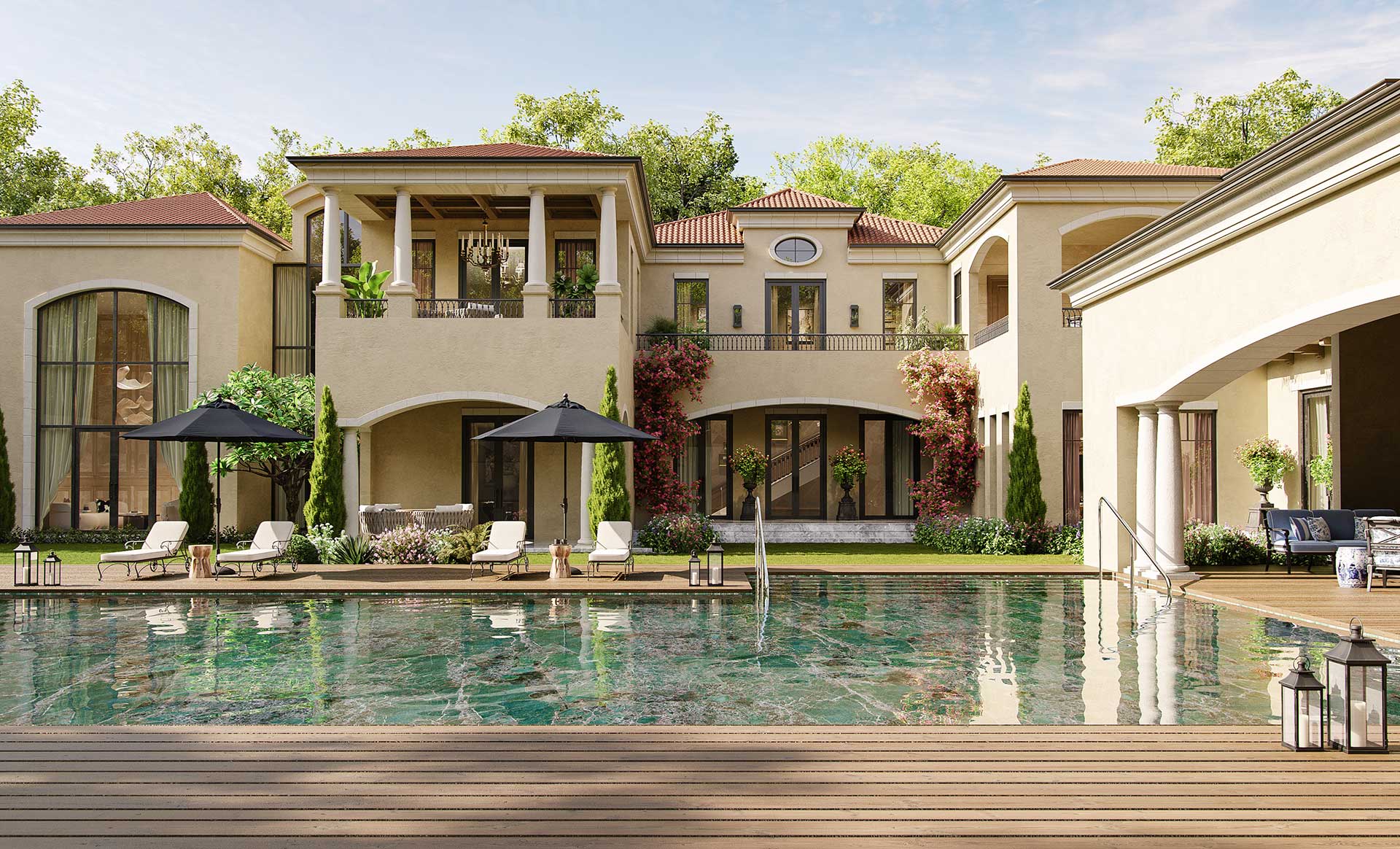
The budget breaks into three parts, and the first dominates.
| Component | Share of total outlay | Notes |
|---|---|---|
| Land | Often more than half | At roughly ₹15 crore to ₹40 crore per acre in prime South Delhi, a four-acre plot is a major commitment before any drawing exists |
| Construction | Roughly a quarter to a third | Varies with what is built rather than plot size. Estates usually build well below the permissible envelope |
| Interiors and landscape | The balance | Interiors in the region of ₹5,000 to ₹18,000 per sq ft of built area, with landscape budgeted separately |
Contingency matters more on an estate than on an urban project. Sites are larger, ground conditions less predictable, services often have to be brought in rather than connected to, and programmes run long enough that material prices move during the build.
For a full breakdown of how interior costs are structured, see our guide to how much luxury interior design costs in India.
The briefs have shifted noticeably over the past decade.
Wellness has moved from amenity to requirement. A gym was once a converted room. Now the brief routinely includes a dedicated block with gym, spa, steam, sauna, treatment room and sometimes a yoga pavilion oriented for morning light.
Art is planned into the architecture. Collectors now design walls, lighting and climate control around the collection rather than hanging work once the house is finished. That changes the architecture, not the decoration.
Privacy is the defining luxury. Not only from neighbours, but within the house, so that three generations can occupy the same estate without living on top of one another and staff can work without being seen.
Multi-generational planning is standard. Ground floor suites for elderly parents, independent wings for adult children, and shared spaces designed to bring everyone together deliberately rather than by accident.
Technology is expected to be invisible. Climate, lighting, security, entertainment and irrigation are integrated and simply controlled, and the hardware that runs them is designed out of sight.
Sustainability has arrived quietly. Solar arrays, rainwater harvesting, greywater recycling and passive cooling now appear in briefs that would not have mentioned them five years ago. Partly for running cost, mostly because clients want it.
What has not changed is why these houses exist. An estate is commissioned by a family that wants to gather, to entertain and to live at a scale and a pace the city cannot offer. Everything in a good farmhouse brief follows from that.
For how these estates are designed rather than priced, see our guide to luxury farmhouse design in India.
Chhattarpur and Sainik Farms are generally the most expensive farmhouse belts in Delhi, with prime plots transacting well above other locations. Westend Greens, Pushpanjali and Bijwasan follow. The Gurgaon fringe offers larger plots at lower cost per acre in exchange for distance.
Land dominates the budget. In prime South Delhi belts plots transact at roughly ₹15 crore to ₹40 crore per acre, often more than half the total outlay. Construction follows, with interiors at about ₹5,000 to ₹18,000 per square foot of built area and a separate landscape budget. All figures are approximate ranges.
Most established Delhi NCR estates sit on one to five acres, and the largest run well beyond that. The house occupies a small fraction of the plot, because on an estate the land itself is the luxury.
For Delhi families, the established South Delhi belts. For Mumbai, Alibaug. For a hill house, Lonavala, Kasauli or the Nilgiris. For a second home with rental potential, Goa. Judge any site on distance, title, services and how neighbouring plots will develop.
A villa is a large house on an urban or gated community plot measured in square yards. A farmhouse sits on agricultural or semi agricultural land at the city edge, measured in acres, with landscape and outbuildings forming a significant part of the estate.
Aparna Kaushik Design Group designs ultra-luxury private residences and farmhouse estates across Delhi NCR and India. See our completed residences, or get in touch to discuss a commission.
Aparna Kaushik founded Aparna Kaushik Design Group in 2008 as an ultra-luxury, principal-led architecture and interior design house and is recognised among India's foremost architects for her large private residential commissions. Her studio's UAE practice serves UHNW clients across Dubai and Abu Dhabi, delivering architecture, interiors, furniture, lighting, landscape, art curation, and turnkey execution as one coordinated service.
aparnakaushik.com/about-us | enquiries@aparnakaushik.com | @aparnakaushikofficial