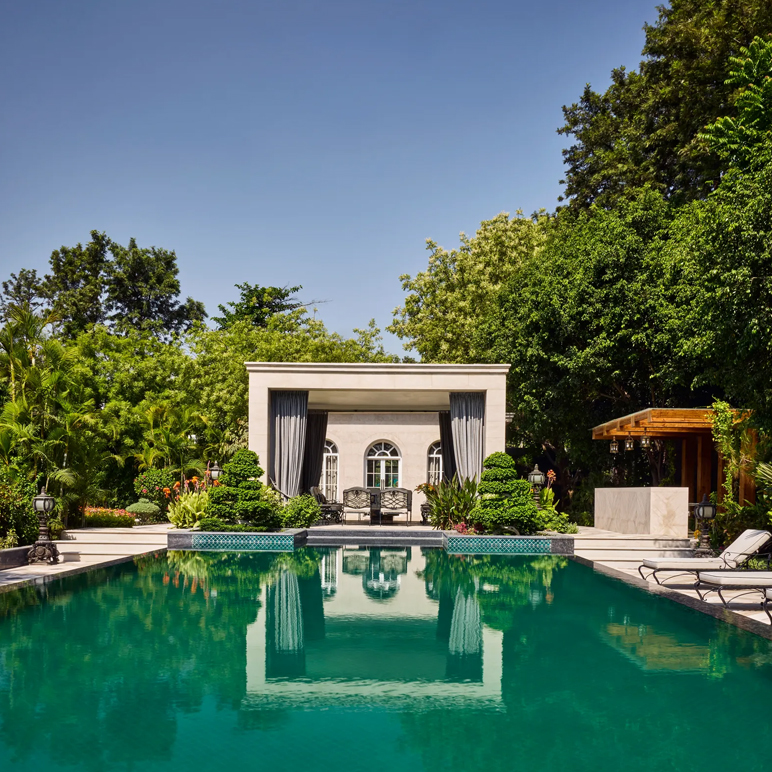
In a quiet enclave, a home in Delhi reimagines the grandeur of a French château through a distinctly contemporary Indian lens. Designed by Aparna Kaushik for a family of avid travellers and collectors, the 17,800-square-foot Oaklane Villa blends heritage craftsmanship with serene modernity—where every threshold unfolds like a scene from a lived-in dream.
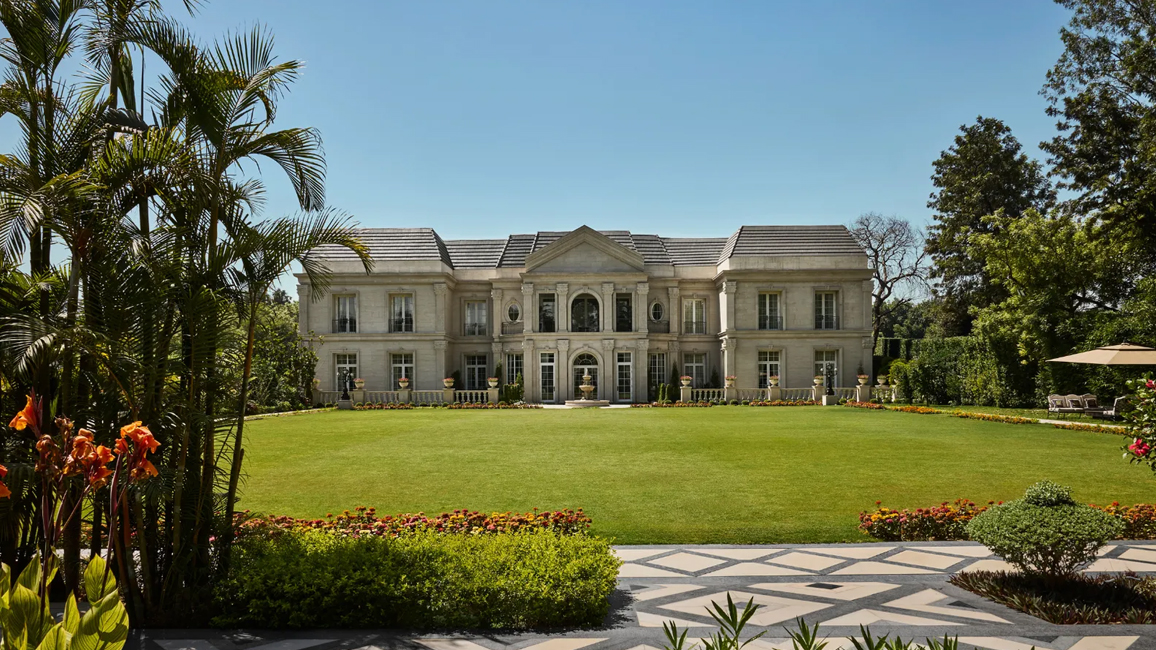
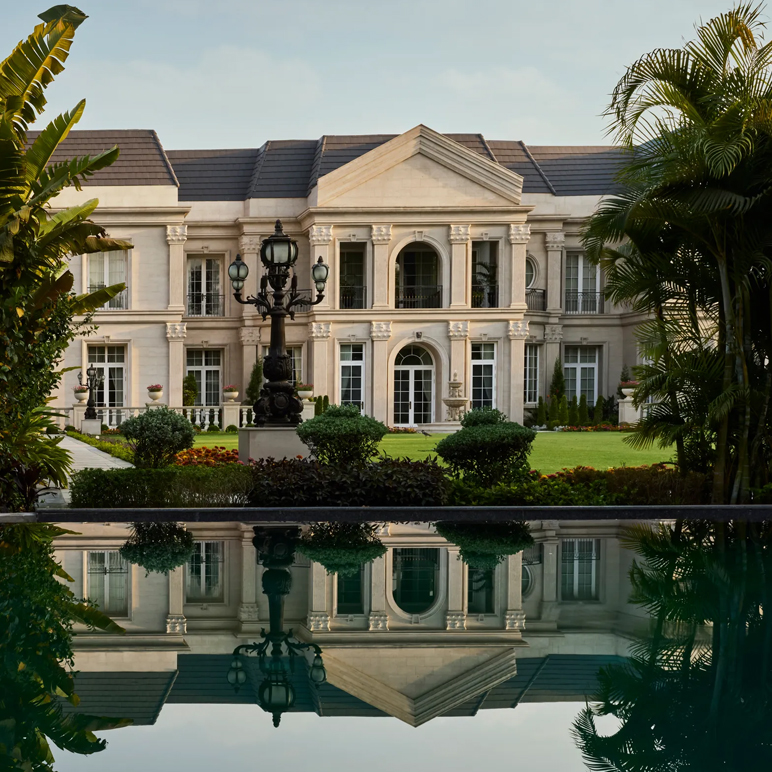
Set within a 59,000-square-foot plot, the villa rises from its landscaped lawns like a poised statement. The architecture draws from classical French estates—fluted pilasters, limestone façades, and a mansard roof in deep Astros Blue—yet tempers their formality with lightness. The proportions are measured; the rhythm deliberate. Each façade detail, from Corinthian pilasters to wrought-iron balconies, underscores the home’s quiet grandeur.
For the clients—a cosmopolitan family drawn to the symmetry and discipline of European architecture—the aspiration was clear: to create a residence that carried the romance of classical design while remaining responsive to the way they live today. “They wanted elegance without heaviness,” recalls the design team. “Something enduring, yet deeply personal.” The result is a residence that pairs classical order with contemporary nuance, where architecture feels both noble and human.
The approach begins with a sweeping stone-tiled driveway flanked by custom planters and soft green pockets—a rhythm of hard and soft surfaces leading the eye toward the portico. Ferragamo Beige Limestone lends the exterior a sun-washed glow, while marble inlays and champagne-leafed ceilings bring a gentle luminosity indoors. Craftsmanship here is less about ornament and more about precision—the quiet luxury of alignment, finish, and texture.
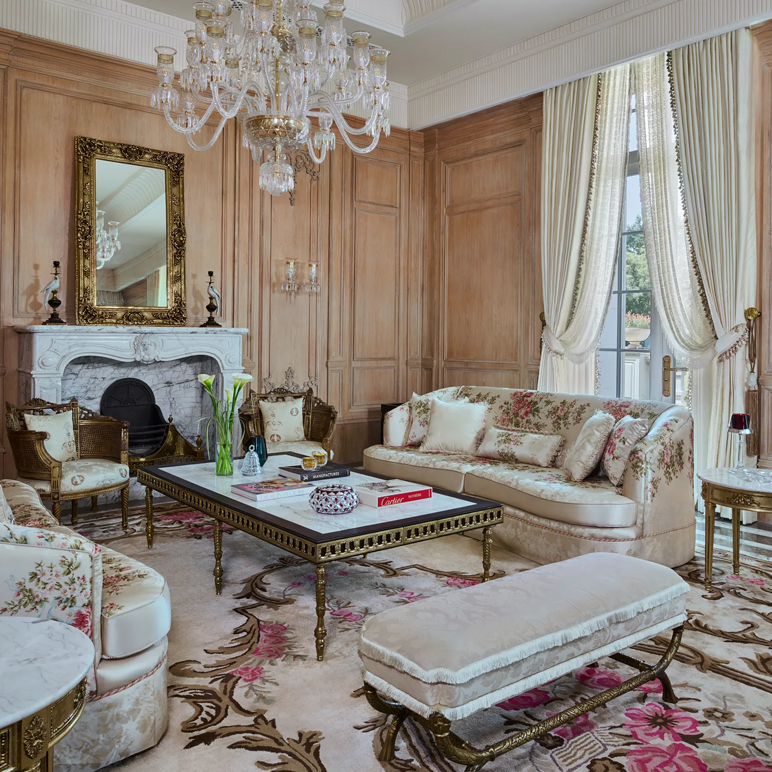
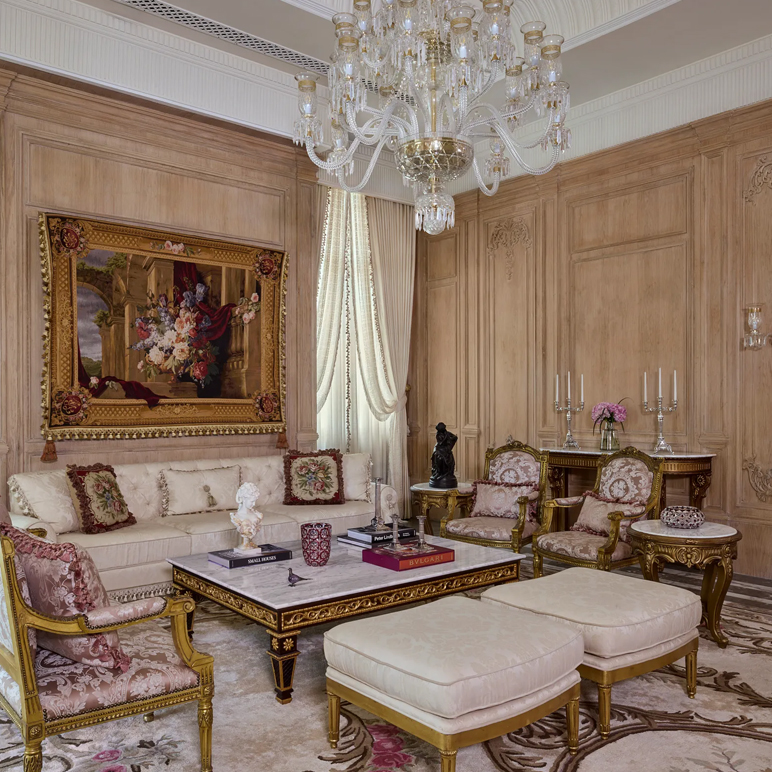
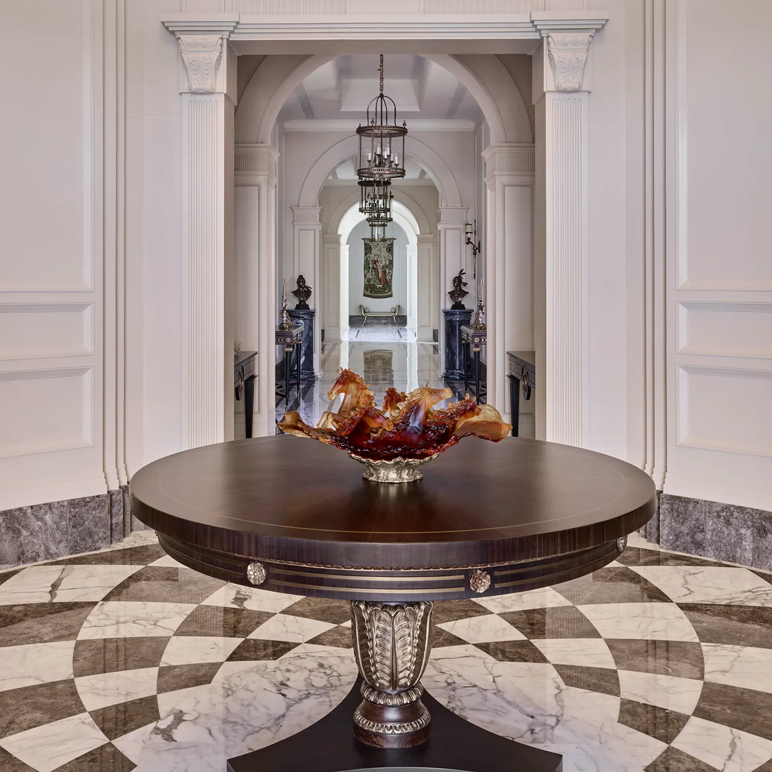
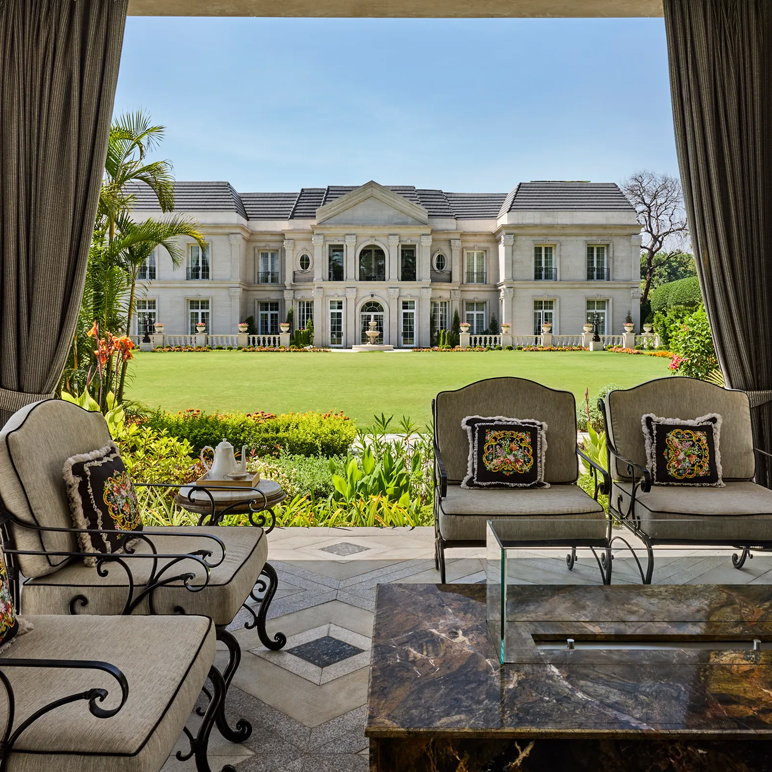
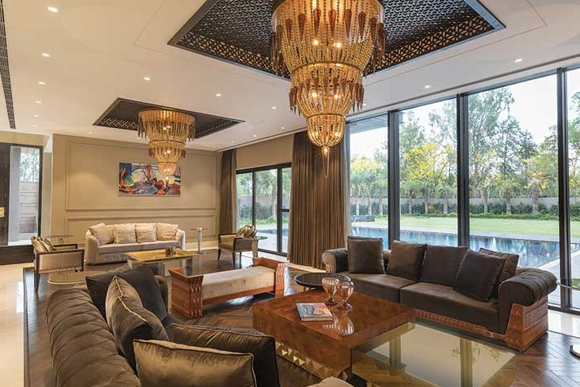
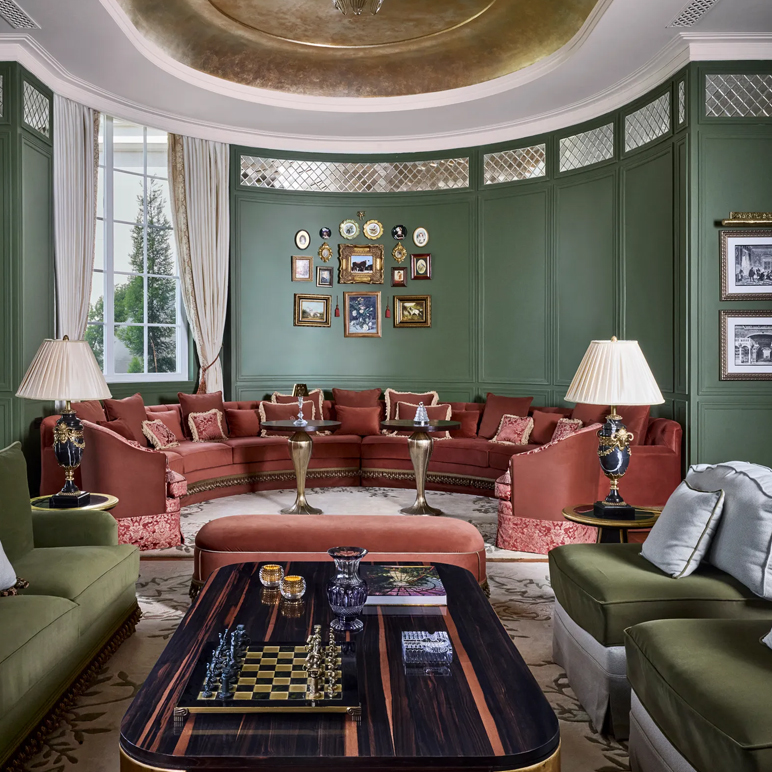
Inside, the interiors unfold with cinematic pacing. The formal living room, wrapped in warm wood paneling and anchored by polished marble flooring, sets the tone for the home’s equilibrium between warmth and order. The grand staircase—a curving gesture in wrought iron and brass—anchors the central axis and establishes the villa’s classical geometry. Above, the ceiling in the bar and lounge glimmers in champagne leaf, catching light like a fleeting reflection on water.
Each material tells a story of touch: stone skirtings meet carved wooden boiserie, and hand-blown glass fixtures hover like translucent punctuation marks. In an age of instant finishes, Oaklane Villa feels unapologetically crafted.
Planned across two levels, the villa’s 19 rooms unfold with an orchestrated rhythm. The ground floor houses the formal living and dining areas, bar and lounge, and an expansive master suite that opens onto private lawns. The first floor accommodates a second master suite, the daughter’s quarters, and guest bedrooms—all linked by a hallway that frames filtered views of the landscape.
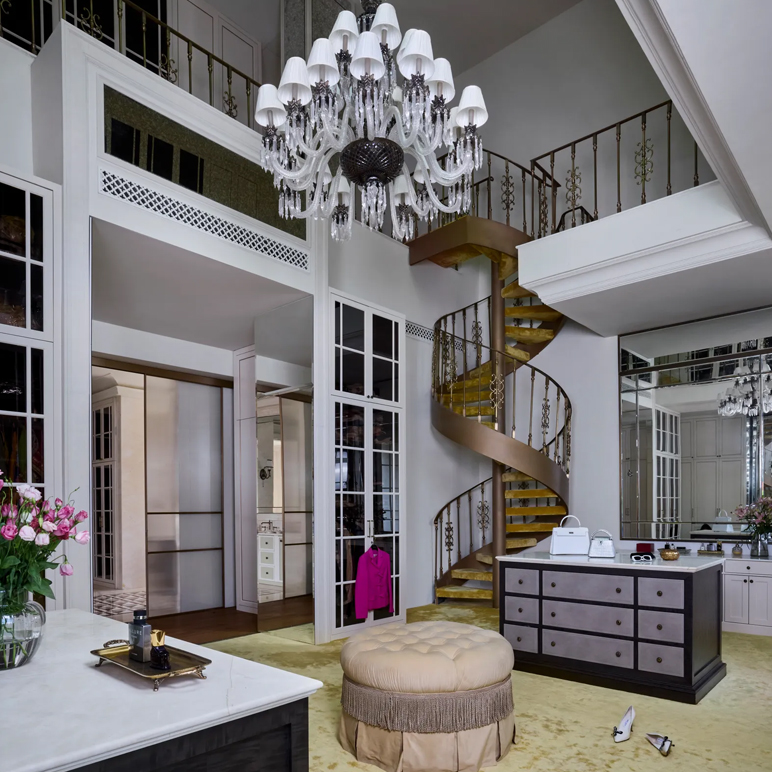
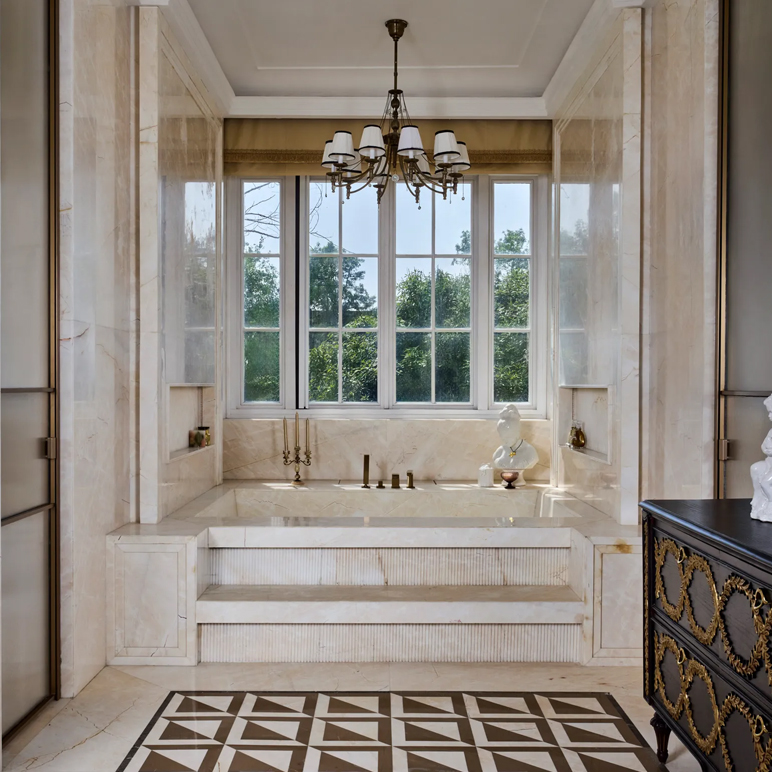
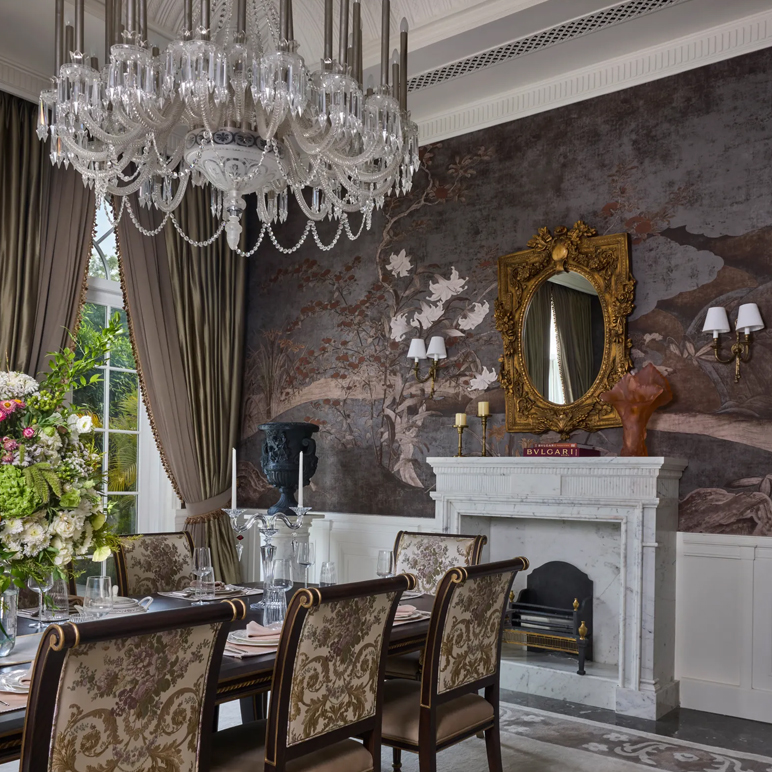
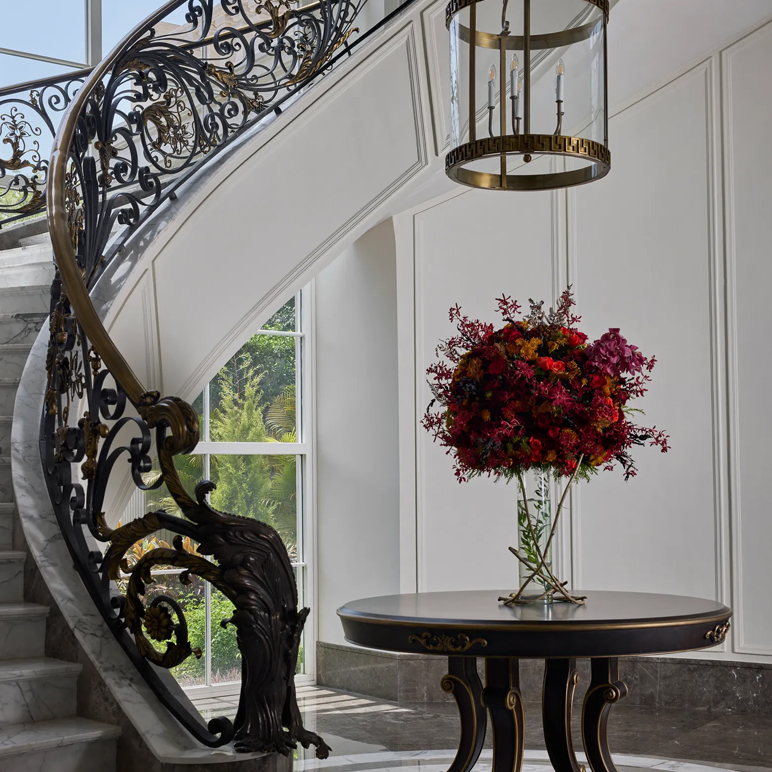
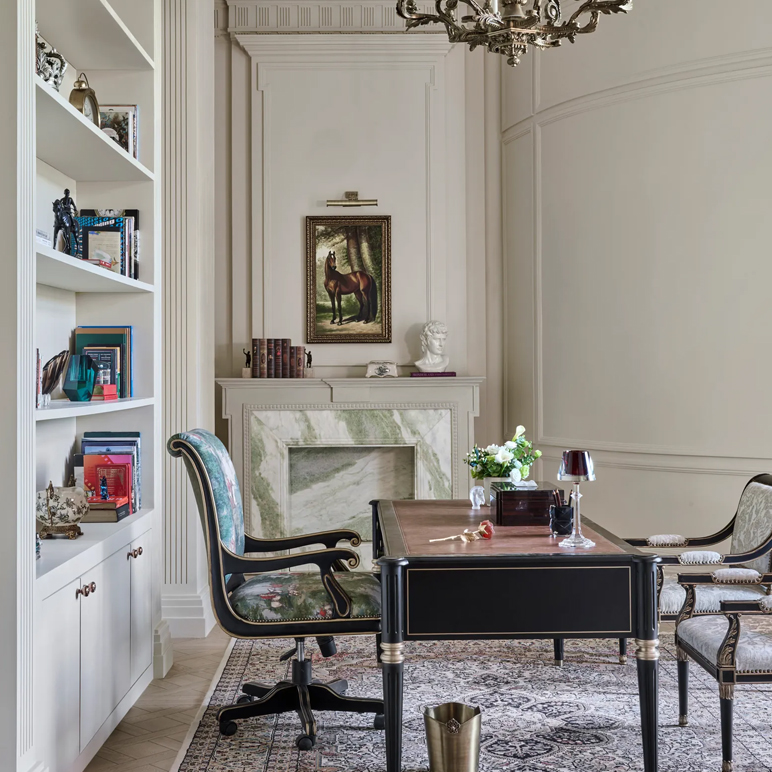
Grandeur unfolds softly, through craft and light. Spatial generosity is expressed through proportion and pause—wide corridors, framed views, and transitions softened by daylight. Each space leads effortlessly to the next: from the sunlit morning room to the intimate study, from a column-lined patio to a cabana by the pool.
Smart automation discreetly enhances comfort—lighting, curtains, and security responding silently to use—allowing a classical envelope to house a thoroughly modern life.
Inside Oaklane, the story lies in material nuance. A dark bronze handrail, pale marble inlay, a brass fitting catching a sliver of light, wood paneling dissolving into glass—these are compositions of tactility and restraint. The design team speaks of “moments over statements,” favouring quiet discovery over spectacle.
Art and collected objects are woven organically into niches and ledges, never imposed. Cabinetry, joinery, and hidden lighting merge form with function so that the practical feels poetic. Every surface carries intention; every line, purpose.
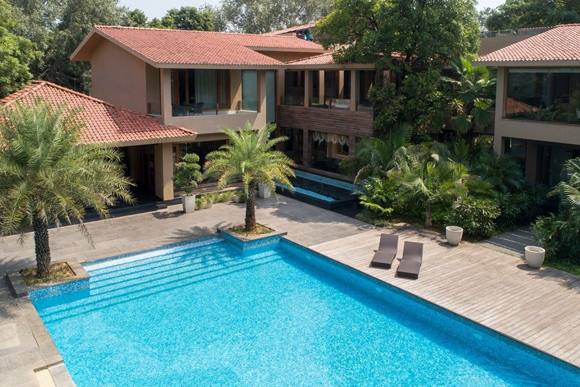
If architecture gives the home form, landscape gives it breath. Green edges wrap the periphery, lawns open to vistas, and the poolside cabana and terraces stitch the built with the natural. Planting is fluid and seasonal, making trees and shadows part of the architecture’s shifting canvas. Water reflections and filtered sunlight are not background effects but living elements, turning the house into a choreography of shade and shimmer.
Ultimately, what defines this home in Delhi is not its scale but its equilibrium. It stands as a meditation on balance—between heritage and present, stone and light, craft and comfort. Tension resolves through layering, not exaggeration: a grand hallway dissolves into twilight; a formal room drifts into a quiet glow; a corridor frames a private garden.
Here, the language of classical architecture is neither quoted nor imitated—it is reinterpreted. And in that reinterpretation lies its quiet power: the ability to feel timeless without feeling dated, to be grand yet remain deeply intimate.