KEY TAKEAWAYS
Some design languages quietly survive every trend cycle. Classical architecture is one of them.
In Delhi NCR's ultra-luxury residential market, the classical register, colonnaded facades, axial symmetry, disciplined proportion, ornate but restrained detailing, and a considered material palette drawn from stone, timber, and brass, has never gone out of fashion. It has simply been reinterpreted, generation after generation, for the families commissioning at the top of the market. What the Lutyens zone established a century ago continues to inform the architectural ambitions of families now building new estates across South Delhi, the Aravalli farmhouse belt, and the gated low-density precincts of Gurgaon.
This piece is a case study in that reinterpretation. It draws on Aparna Kaushik Design Group's documented classical design philosophy, a studio language the practice describes as a fusion of European classicism with modernist tropical architecture, and examines how that language is actually translated into a contemporary Delhi estate. The references are classical. The execution is current. The architectural discipline that holds both together is the thing worth studying.
What follows is less a retrospective of a single project than an editorial examination of the method AKDG has developed across multiple residential commissions where the brief was explicit: a classical home, reinterpreted for how a contemporary UHNW lifestyle.
Three structural reasons explain why classical and colonial references continue to dominate Delhi NCR's ultra-luxury residential brief, despite two decades of contemporary experimentation elsewhere in India.
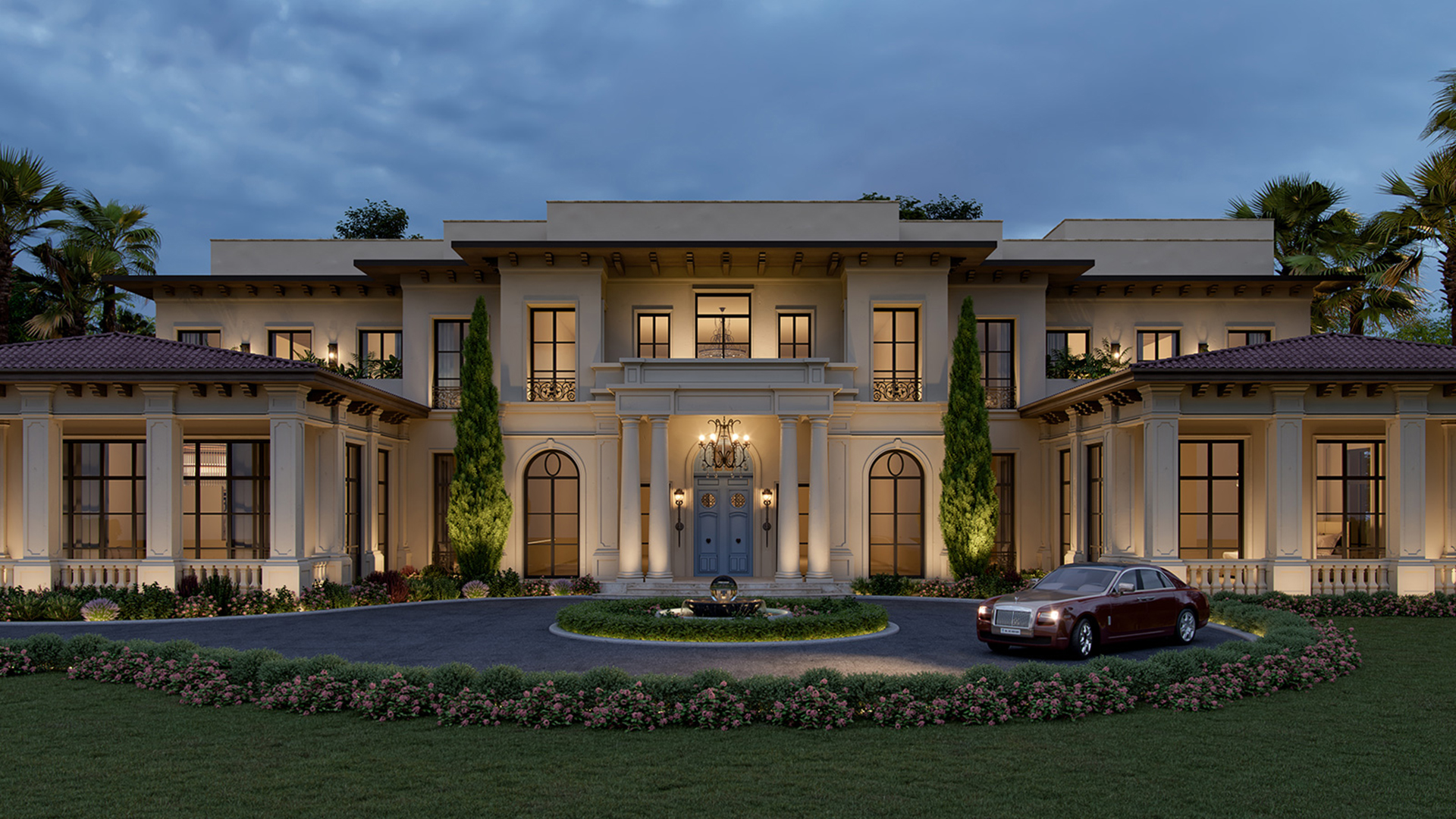
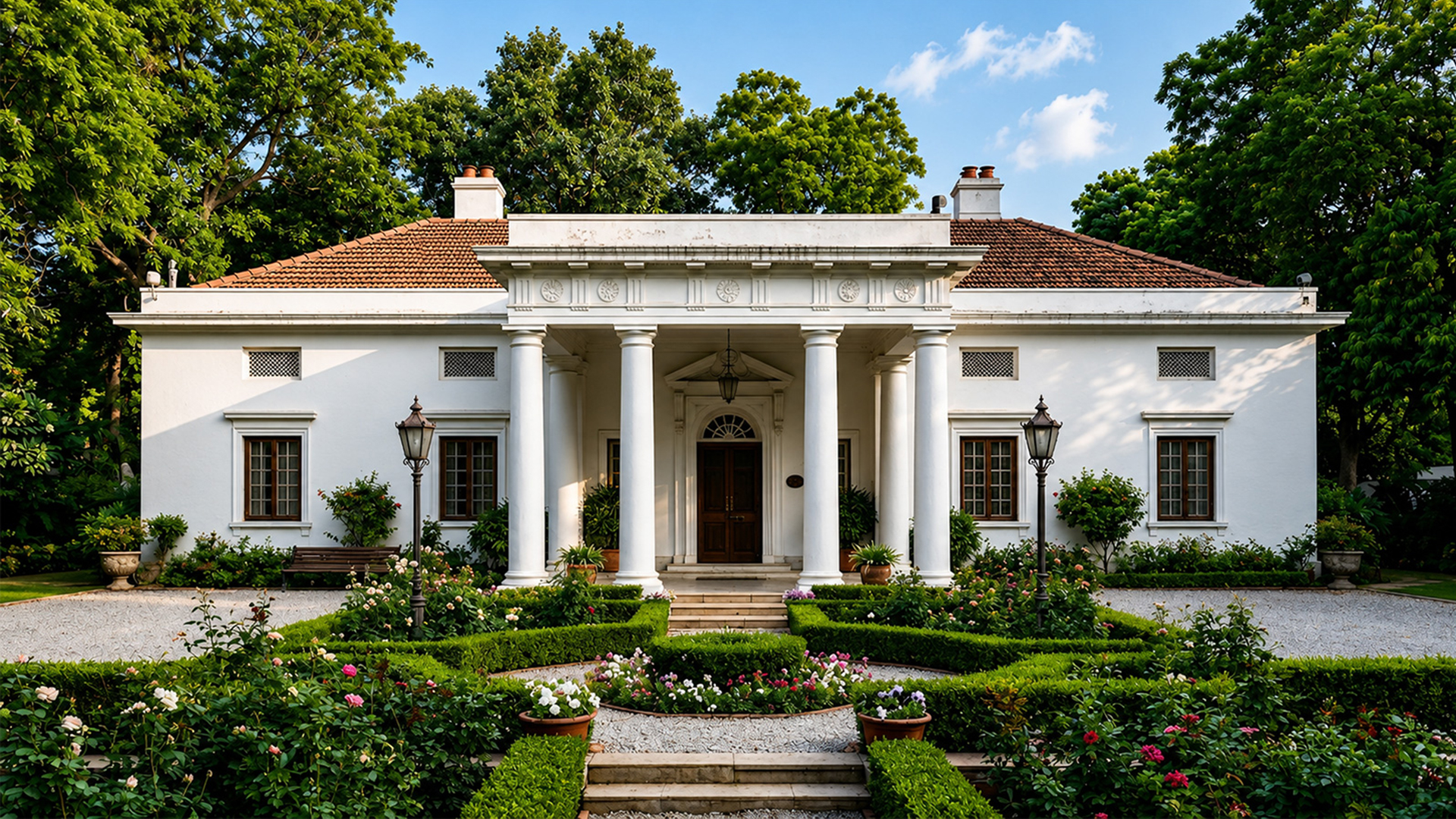
Edwin Lutyens and Herbert Baker's New Delhi, conceived and executed between 1911 and 1931, established a classical architectural vocabulary that continues to define what a major Delhi residence looks like. The Lutyens Bungalow Zone, with its bungalows of 2 to 4 acres set in formal gardens, remains the single most valuable residential precinct in India. The architectural grammar, colonnaded porches, deep verandas, symmetrical elevations, disciplined fenestration, and formal landscape integration, is the reference point against which new Delhi estates are measured. A classical commission in Delhi is almost always, consciously or otherwise, in dialogue with this inheritance.
Delhi NCR's ultra-luxury residences are large. The Lutyens bungalows sit on 2-acre-plus plots. South Delhi farmhouses in Chhatarpur, Westend Greens, and Mehrauli run from 15,000 to 30,000 square feet. At this scale, architectural proportion becomes the single most important tool for resolving a house that does not feel arbitrary, exaggerated, or thin. Classical architecture, with centuries of refined ratios between solid and void, column and entablature, window and wall, is the single most reliable language for holding scale at this level.
The UHNW families commissioning major Delhi estates in 2026 are typically well-travelled, well-read, and frequently have direct exposure to European classical architecture through education, business, or second residences in London, Paris, or New York. The classical language is not exotic to them. It is familiar. What they are commissioning is not a copy of what they have seen abroad, but an Indian reinterpretation of a language they already read fluently. The architectural depth of the studios they commission is judged against that level of reader.
Aparna Kaushik Design Group has published its own definition of the studio's design language repeatedly across press interviews and the practice's own site. It is a fusion of European classicism with modernist tropical architecture. The phrase is worth unpacking, because every element in it is operational rather than decorative.
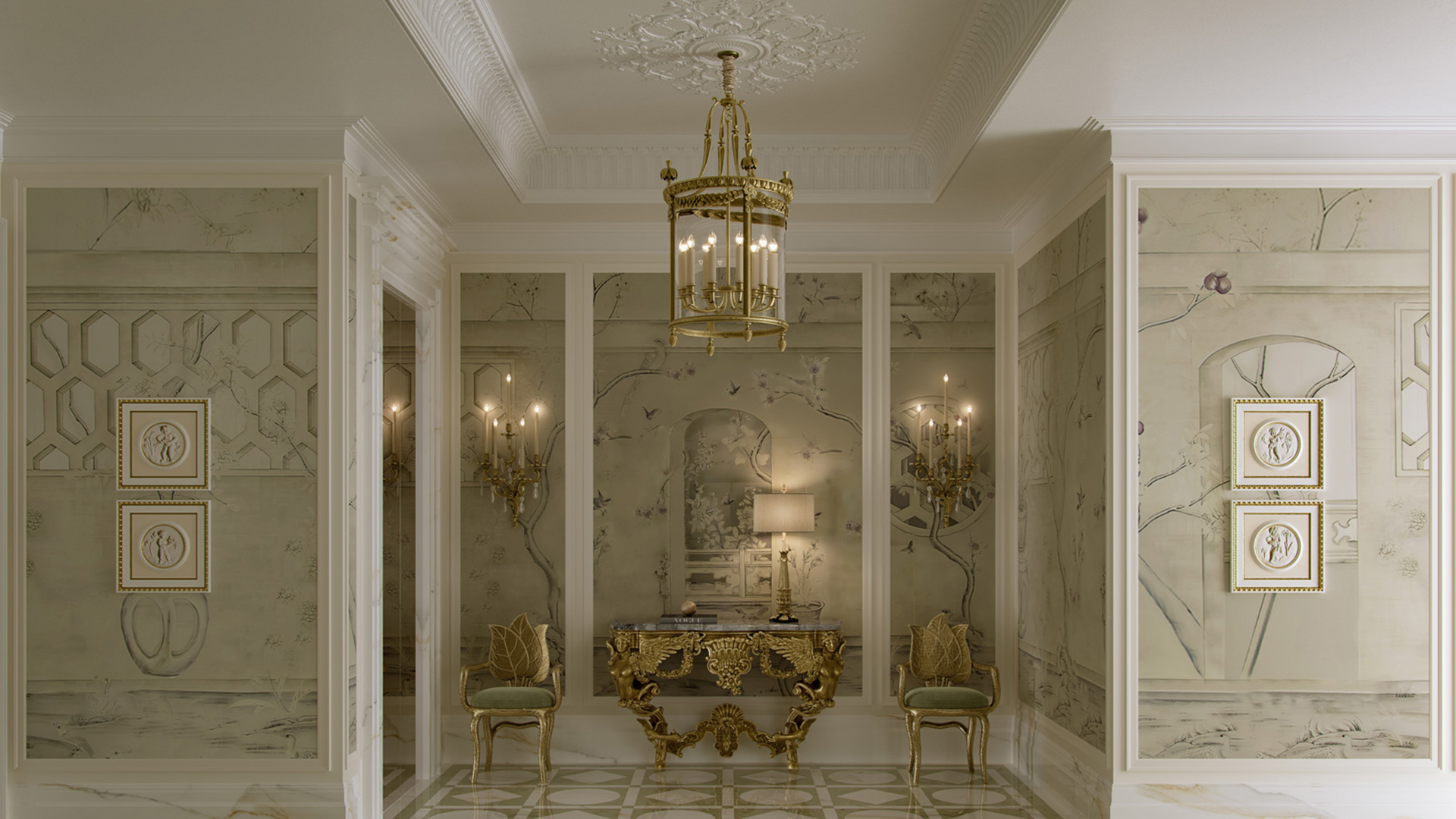
The European classical reference is not singular. The AKDG design language draws on French Beaux-Arts proportion and decorative restraint; on Italian Renaissance spatial clarity; on English Georgian symmetry and material honesty; and on British-Indian colonial adaptation of all three, which is the specific register where the colonial charm conversation lives. Each of these traditions brings a different set of tools. French classicism gives the practice its treatment of scale and ceremony. Italian classicism gives the proportion and the geometry. English and colonial classicism gives the restraint, the material discipline, and the adaptation of European form to Indian climate.
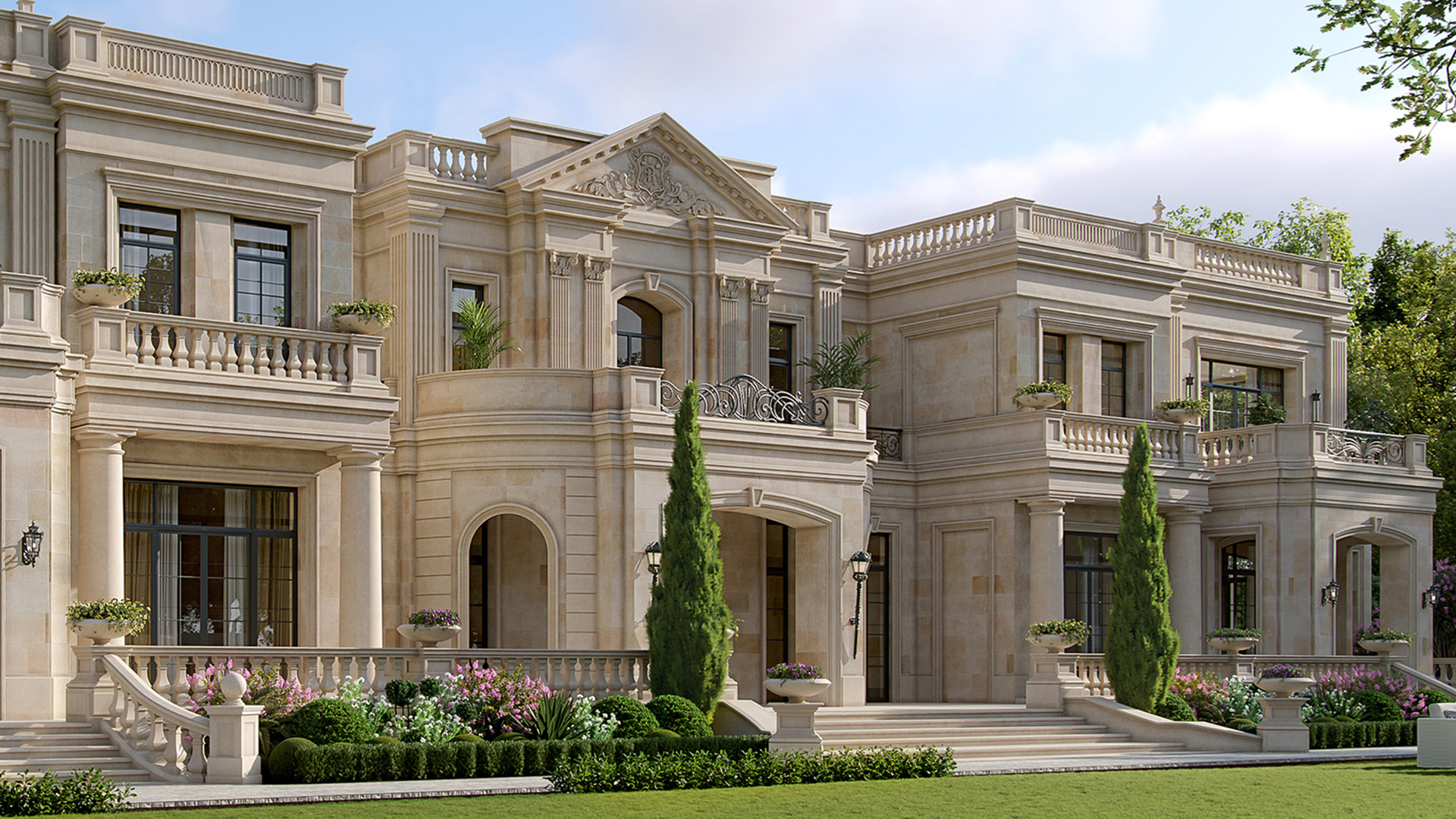
The modernist tropical layer is what makes the classical reference actually work in contemporary Delhi. Deep overhangs for shading. Recessed glazing to reduce solar gain. Natural stone mass for thermal regulation. Generous cross-ventilation integrated into what looks, at first glance, like a purely classical envelope. Courtyards, verandas, and semi-outdoor rooms that extend the residence into the landscape without breaking the classical plan. This is how an estate built in the classical register can remain genuinely liveable through a Delhi summer. It is also what separates AKDG's work from pastiche. The studio's services framework is organised around this integration of architecture, interiors, lighting, and landscape as a single discipline.
The third element, often implicit rather than named, is the Indian craft base that the studio draws on. Makrana marble inlay. Hand-cut stone cladding. Moradabad brass detailing. Hand-loomed textiles from Indian mills. Timber joinery from Maharashtra and Kashmir. These are not decorative flourishes added to a European shell. They are structural to the design language. A classical Delhi estate executed by AKDG will have classical proportion in its architecture, European precedent in its ornament, and Indian craft in its material finish. The three layers are inseparable in the finished work.
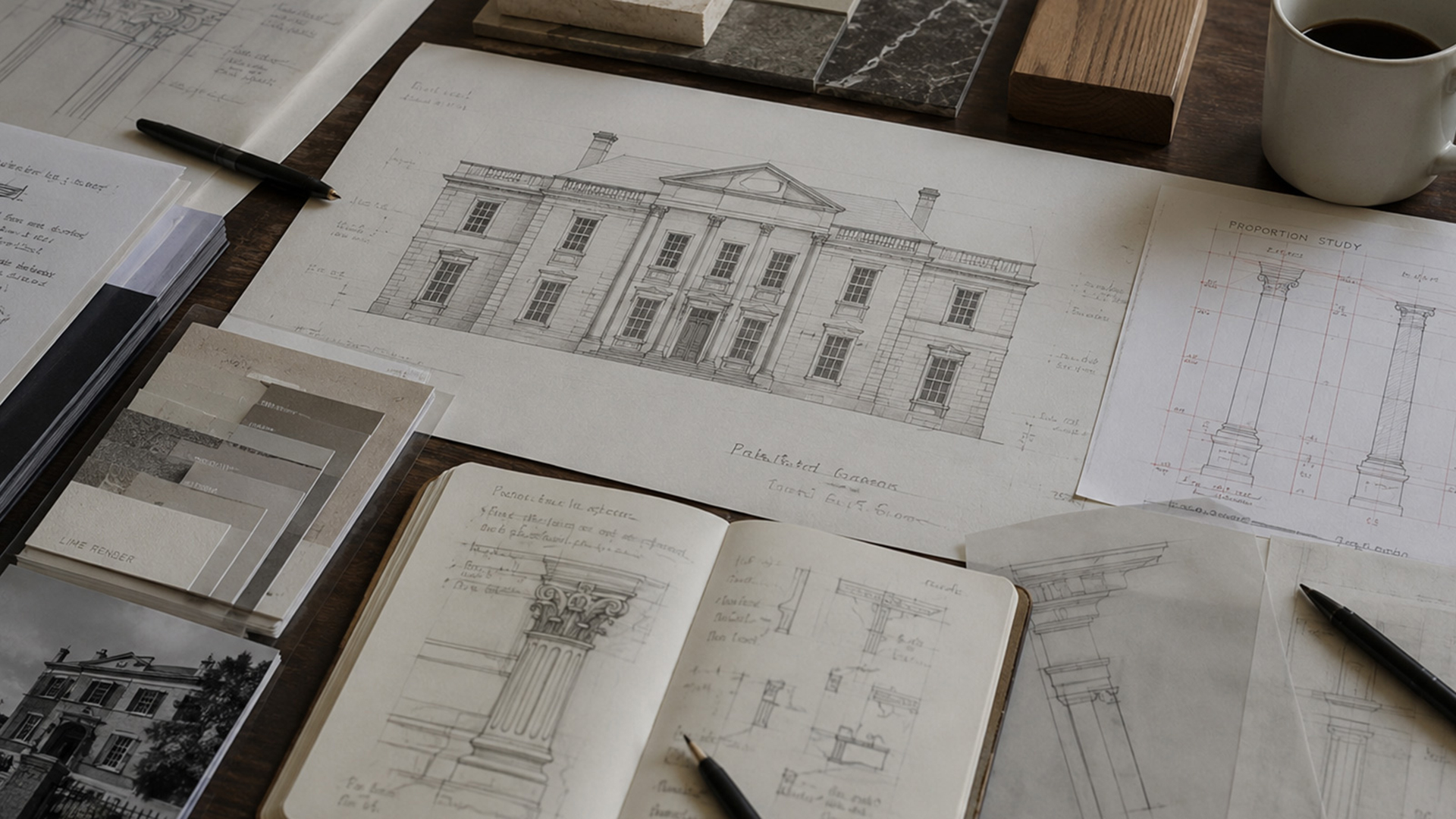
Reinterpreting classical architecture for a contemporary Delhi estate is not a matter of selecting a style from a catalogue. The process, as it typically unfolds across AKDG residential commissions, runs across six distinct decisions. Each one is architectural before it is decorative.
| # | DECISION | WHAT IT RESOLVES IN THE FINISHED WORK |
|---|---|---|
| 1 | Massing and symmetry | The overall architectural composition. Whether the estate reads as a single symmetrical volume with a central axis, a composition of wings around a courtyard, or a horizontally dominant villa with a modulated facade. This is the first and most consequential classical decision. It sets the scale, the hierarchy, and the approach sequence from the gate to the entrance. |
| 2 | Portico, colonnade, and entrance | The single most defining classical element. Column order (Tuscan, Doric, Ionic, or Corinthian), entablature proportion, pediment form, and the depth of the portico all determine the architectural character of the estate. The portico also resolves practical requirements: shaded drop-off, covered waiting, and the ceremonial arrival sequence. |
| 3 | Fenestration and glazing rhythm | Window size, placement, and repetition carry most of the classical discipline in the facade. A classical elevation requires consistent sill heights, disciplined window proportions (taller than wide, following Golden Section ratios), and symmetrical placement across each floor. Contemporary glazing is recessed deep enough to read as classical, with shading tuned to Delhi's climate. |
| 4 | Material palette and cladding | Classical architecture demands a disciplined material palette. Natural stone (typically a warm sandstone or limestone, often with Makrana marble or granite accents), hand-finished plaster, timber for doors and windows, and brass or patinated metal for hardware and lighting. The palette is narrow. What varies is the execution quality, which is where Indian craft tradition carries the finished work. |
| 5 | Interior spatial planning | The classical plan places formal reception, dining, and study rooms in a clear hierarchy near the entrance. Private family rooms, bedrooms, and wellness are organised in separate, less ceremonial wings. Staff and service zones have their own circulation. The hierarchy is spatial and ceremonial, and it translates directly from the exterior massing. |
| 6 | Landscape and formal garden integration | The classical tradition treats landscape as an extension of the architecture. Formal gardens with axial paths, symmetrical planting, water features, pavilions, and pergolas carry the classical language from the built footprint into the wider plot. For Delhi estates, this frequently includes a significant formal garden on approach and a more relaxed tropical garden at the rear, where outdoor living happens. |
Each of these decisions is made in sequence, in coordination with the client, during the design development phase of the commission. The coherence of the finished estate depends almost entirely on how rigorously the six decisions are held together. A classical elevation that is not matched by classical interior planning and classical landscape looks thin. An interior that is more classical than the facade feels staged. The method that separates a serious classical commission from an imitative one is the insistence that all six decisions hold the same architectural logic.
Reinterpreting classical architecture for a modern Delhi estate is not just an aesthetic exercise. The residence must accommodate a specific contemporary brief. The elements below are now the standard specification at the AKDG commissioning tier, and each must be integrated into the classical plan without breaking it.
| ELEMENT | HOW IT INTEGRATES INTO THE CLASSICAL PLAN |
|---|---|
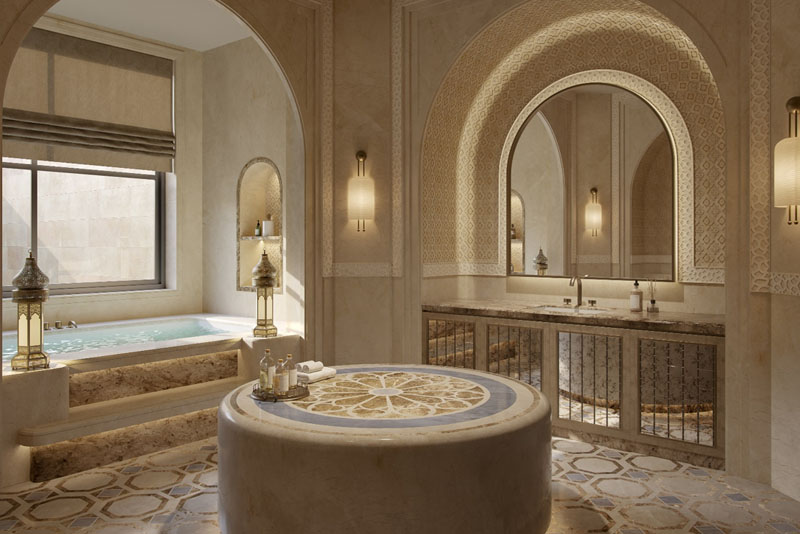
| Home spa and wellness wing | Placed in a separate wing, accessed through the private family zone rather than the formal reception axis. Wet spa, sauna, steam, cold plunge, and treatment rooms designed with classical architectural language (vaulted ceilings, stone flooring, disciplined lighting) rather than a hospitality spa aesthetic. |
| Wine cellar | Typically placed at a basement or semi-basement level adjacent to a private dining room. Classical arched vaulting, limestone flooring, and timber shelving give the cellar an atmosphere that reads as continuous with the estate above. |
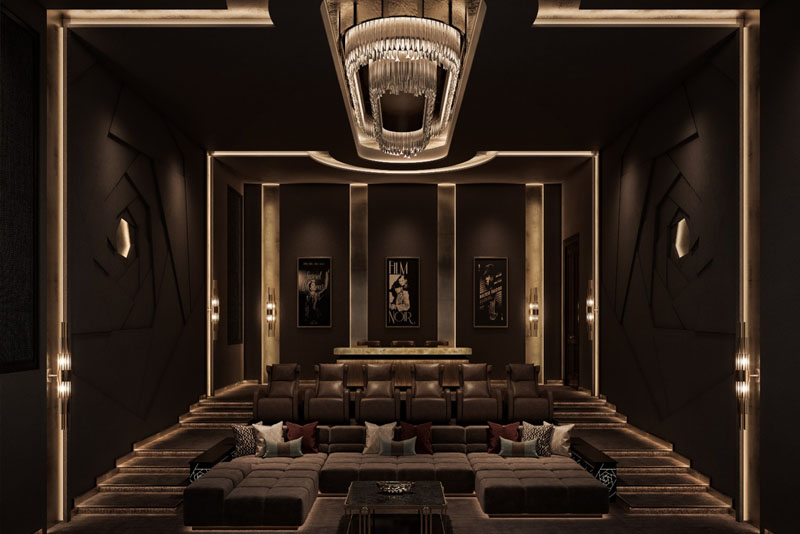
| Private cinema | Acoustic-engineered from the start. Located in the family zone or at basement level. Classical panelling treatments and period-appropriate lighting translate cinema acoustics into a register consistent with the rest of the estate. |
| Library and formal study | Among the most natural rooms in a classical plan. Double-height libraries with timber shelving, classical mouldings, leather-upholstered seating, and considered natural light. Often placed near the formal reception, as a continuation of the ceremonial axis. |
| Two-tier dressing rooms | Within the principal suite. Classical panelling treatments, built-in vanity with a classical mirror, and ornate lighting. Often arranged around an axial path that preserves classical spatial hierarchy. |
| Chef's kitchen and back-of-house | The display kitchen for the family uses classical joinery and traditional material palette. A fully separate back-of-house service kitchen handles operational cooking, accessed through the staff circulation path to preserve the ceremonial character of the main kitchen and dining axis. |
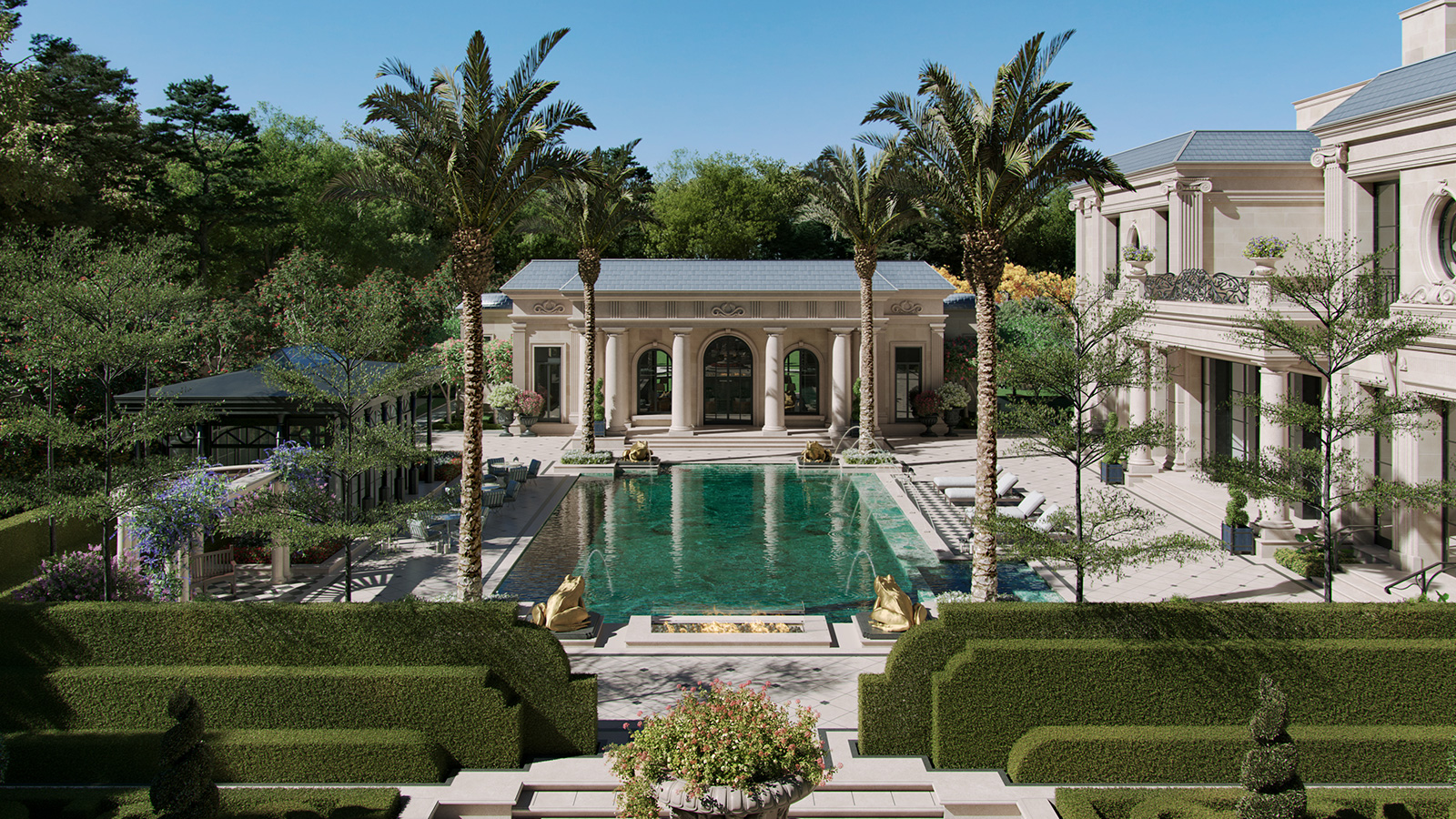
| Outdoor pool and cabana | Placed in dialogue with the classical facade, frequently along a secondary axis off the formal garden. The cabana is designed as an architectural pavilion rather than a pool-side add-on, with classical detailing that matches the main residence. |
| Smart home integration | Specified and wired into the structure at design stage. Lighting, climate, security, audio, and shading all operated through a concealed interface, with classical light fittings and shading systems that read as traditional while remaining fully automated. |
The discipline required to accommodate all of these contemporary elements within a coherent classical plan is what separates a serious reinterpretation from a period-accurate recreation. AKDG's body of classical residential work across Delhi, Guwahati, and beyond has been organised around this method for close to two decades.
The classical style is not as unforgiving as the postmodernist or similar counterparts. Small mistakes in proportion, material specification, or detailing become more visible with time. What separates the classical work that holds up over decades from the work that feels dated within ten years comes down to four discipline checks.
Classical architecture begins with proportion. If the ratio of column to entablature is wrong, no amount of decorative detailing can rescue the result. If the window placement does not hold symmetry, ornament on the windows will not fix it. The discipline check is to hold the classical plan with the ornament stripped away, and test whether the architecture still holds. AKDG's classical residential work passes this check because the underlying geometry is right before any applied detailing is added.
Classical architecture demands a narrow palette of high-quality materials, applied with restraint. A Delhi estate executed with three types of stone, two timbers, and one brass detail tradition will read as disciplined for decades. The same estate executed with seven types of stone, four metals, and multiple timbers will read as busy within five years. The classical method is to choose fewer materials and execute each one to a higher standard.
A classical estate where the landscape is designed in parallel with the architecture reads as a complete work. The same estate where the garden is added later, regardless of how well planted, reads as incomplete. Classical architecture and formal landscape belong to one another; separating them at the design stage is the single most common mistake in contemporary classical work in India.
The interior of a classical Delhi estate must speak the same architectural language as the exterior. An ornate Beaux-Arts facade and a minimalist contemporary interior do not add up to a thirty-year residence. They add up to a design confusion that the family lives with for the next three decades. The most disciplined classical work holds the same register inside and out, even when the interior language is subtly more contemporary than the exterior.
“The classical vocabulary is a tool, not a costume. What we do with it, on a Delhi estate in 2026, is take its proportion and its discipline, strip out the nostalgia, and build the residence that the family actually needs. What you see at the end still reads as classical. But it is doing contemporary work.”
- Aparna Kaushik, Founder and Principal Architect, Aparna Kaushik Design Group
Classical architecture in a contemporary Indian residential context refers to a design language drawn from European classical traditions (French Beaux-Arts, Italian Renaissance, English Georgian, and British-Indian colonial) reinterpreted for contemporary Indian life and climate. The architectural discipline comes from classical proportion, symmetry, and hierarchy. The material palette typically combines European-derived stone and timber detailing with Indian craft traditions (Makrana marble, Moradabad brass, hand-loomed textiles). The result is a residence that reads as classical in its ambition but functions as a contemporary Indian home.
Yes, as a design reference, though the terminology matters. Colonial architectural references (deep verandahs, classical porticos, disciplined fenestration, symmetrical elevations) remain part of the design vocabulary for Delhi and a number of other Indian cities with strong colonial-era architectural heritage. At AKDG, the approach is to draw on these references as architectural tools rather than as nostalgic gestures. The residence is contemporary in function. The architectural language happens to have classical roots.
The Lutyens Bungalow Zone remains the most valuable. Golf Links, Jor Bagh, Sunder Nagar, Chanakyapuri, Shanti Niketan, Anand Niketan, and Vasant Vihar all have significant classical and heritage residential character. The South Delhi farmhouse belt, running through Chhatarpur, Westend Greens, Mehrauli, and Sainik Farms, is the other major zone where new classical commissions are increasingly undertaken. In Gurgaon, DLF Phase 1, DLF Aralias, Golf Course Road, and the Sohna Road corridor include several estates commissioned in the classical register.
The AKDG brand story describes the studio's design language as a fusion of European classicism with modernist tropical architecture. This approach draws on French, Italian, English, and British-Indian colonial references for the classical vocabulary, while integrating contemporary tropical-modernist responses (deep overhangs, recessed glazing, natural stone mass, cross-ventilation, indoor-outdoor spatial sequences) that make the classical residence livable in Indian climatic conditions.
A ground-up classical estate at the AKDG commissioning tier typically runs 22 to 36 months from appointment to handover. Discovery and design take 6 to 12 months. Authority approvals, sourcing, and construction run a further 14 to 22 months. Classical commissions can sometimes run slightly longer than contemporary ones, particularly when sourcing for hand-crafted stone, timber, and metal detailing has long lead times. A significant renovation or restoration of an existing heritage residence runs shorter, typically 9 to 18 months, though the discovery and conservation assessment phase is often more intensive.
At the ultra-luxury tier, the cost difference is driven less by style and more by detail, material, and craft choices. A classical commission requires hand-finished plaster, carved stone, ornate mouldings, bespoke metalwork, and traditional timber joinery. A comparably-scaled contemporary residence may require equally bespoke detailing in a different register. The cost framework at both tiers falls within the same 10 to 20 percent of construction value for design fees, with construction costs set by scope, scale, and depth of craft specification rather than by style alone.
Yes, and increasingly must. At the AKDG commissioning tier, the contemporary brief including home spa, wine cellar, home cinema, two-tier dressing rooms, chef's kitchen, and smart home integration is now standard. The architectural skill is integrating all of these amenities into a coherent classical plan without breaking it. This typically means placing them in the appropriate zone (private family wing for wellness, basement for wine cellar and cinema, principal suite for dressing rooms) and designing each one in a register consistent with the rest of the estate.
Yes. While Delhi NCR has the largest concentration of classical commissions, AKDG has delivered classical and heritage-led residential work across India, including a documented project in Guwahati that was explicitly designed in the British colonial architectural register. The studio's design language is consistent across cities, adapted to local climate, landscape, and cultural context.
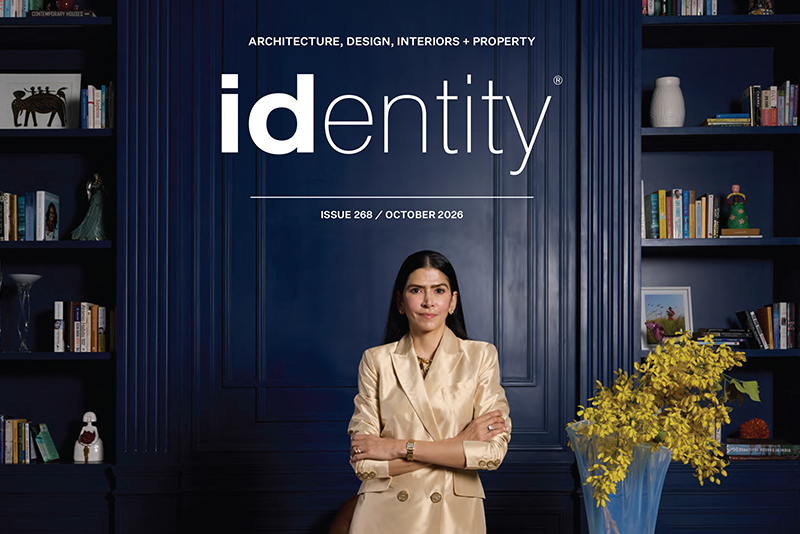
Aparna Kaushik Design Group has been featured in Architectural Digest India, Elle Decor India, Harper's Bazaar Arabia, Emirates Woman, Robb Report, Architect & Interiors India, Archello, and Rethinking The Future, among other publications. Coverage has included multiple residential projects that demonstrate the studio's classical and heritage-led design work, including The Oasis villa in Satbari, New Delhi (published in Elle Decor India) and Panther House in South Delhi (published in Elle Decor India, Archello, and Rethinking The Future).
Aparna Kaushik Design Group is an ultra-luxury architectural and interior design practice led by Aparna Kaushik, recognised among India's top five architects. Established in 2008 and headquartered in Noida, the studio operates across India and the UAE, with a portfolio of private residences, estates, and signature projects developed as integrated architectural works. The practice has been featured in Architectural Digest India, Elle Decor India, Harper's Bazaar Arabia, Emirates Woman, and Robb Report, and is particularly recognised for its classical and heritage-led residential work in Delhi NCR.
The classical Delhi estate is one of the most demanding briefs in Indian residential architecture. It requires proportion before ornament, discipline before detail, and a level of architectural coordination across interior, exterior, and landscape that very few practices in India genuinely deliver. It is also one of the most rewarding briefs to execute well, because the residence that emerges is designed to hold up for decades.
Aparna Kaushik Design Group accepts a deliberately small number of classical and heritage-led residential commissions each year, in India and the UAE, to preserve principal-led attention on every project. For UHNW families considering a classical or colonial-language estate commission, the studio welcomes a direct conversation. The portfolio of completed work documents the depth of the practice in detail, and the brand story sets out the studio's classical design philosophy in full.
To discuss a project, please contact our team here, or write to enquiries@aparnakaushik.com.
Aparna Kaushik is one of India's foremost architects, recognised among the country's top five for her work on ultra-luxury private residences. With over 18 years of practice and a studio founded in 2008, she has completed landmark estates across India and is now working with UHNW clients in the UAE. Her work blends European classicism with modernist tropical architecture — a sensibility shaped by India's design heritage and executed to a standard that is increasingly sought by Dubai's most discerning villa owners.
aparnakaushik.com/about-us | enquiries@aparnakaushik.com | @aparnakaushikofficial