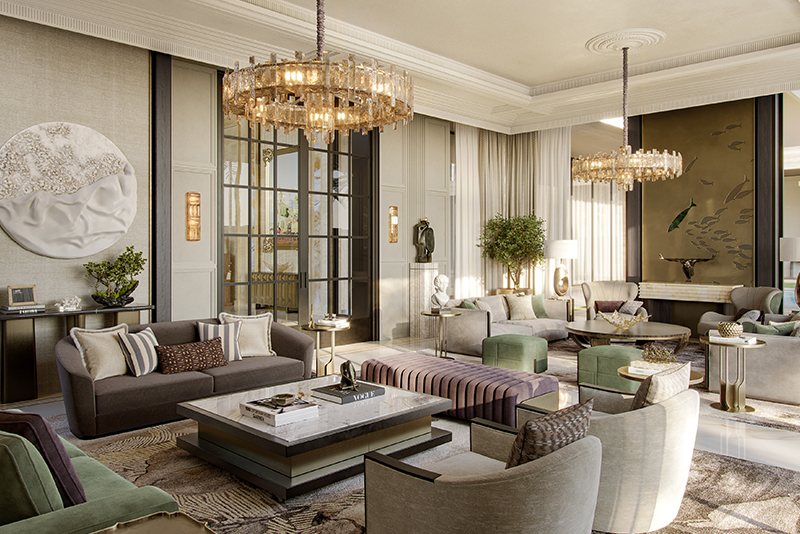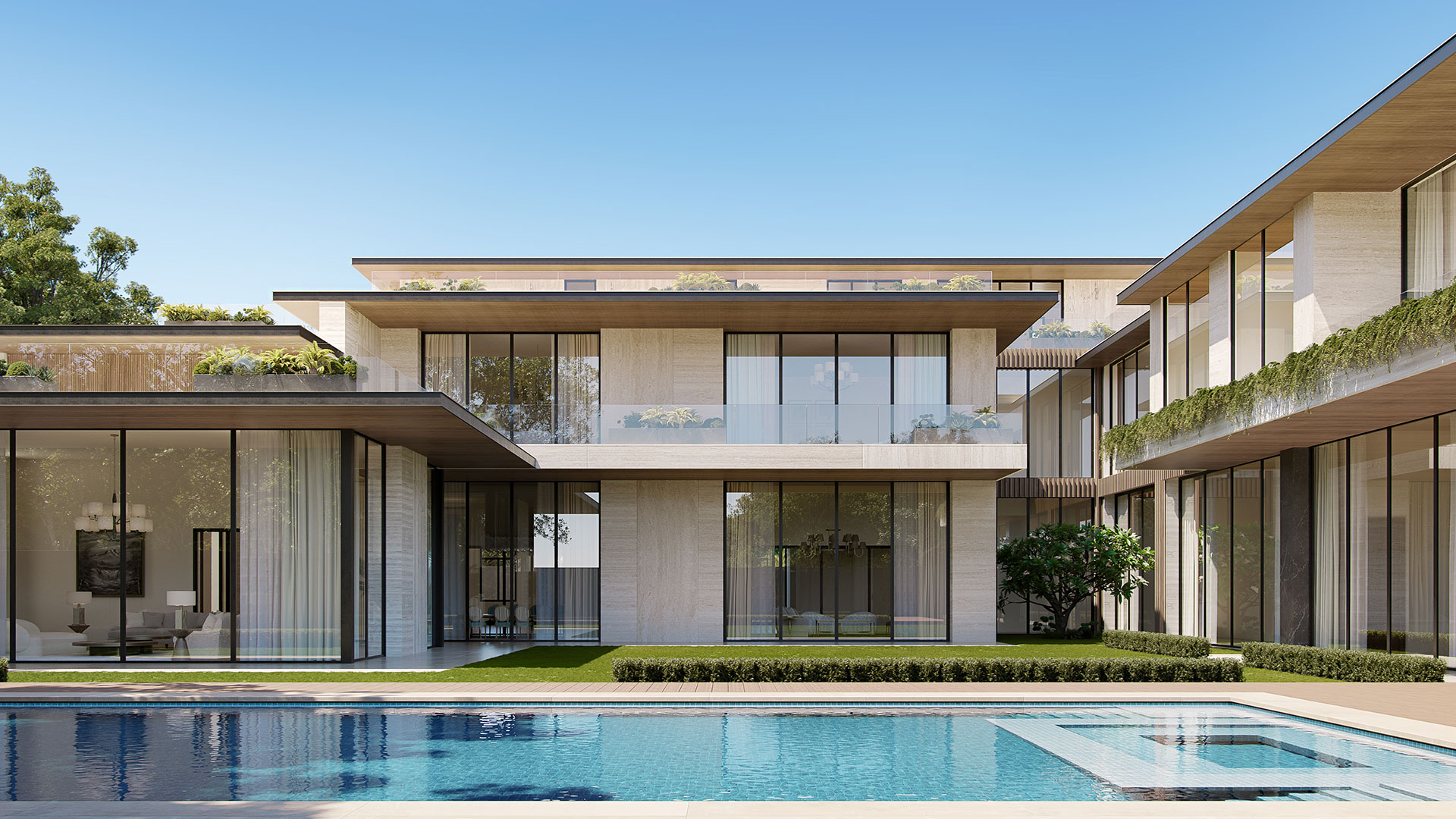
Abu Dhabi has become a property market in its own right. The Abu Dhabi Real Estate Centre recorded AED 142 billion of real estate transactions in 2025, 44 percent more than in 2024, across 42,814 deals, and the emirate's population passed four million for the first time in 2024. New and established villa communities, from Saadiyat and Yas to Al Raha, Khalifa City and Jubail Island, are full of owners who now need their homes designed, furnished and, in many cases, altered.
Search for the best interior design companies in Abu Dhabi and you will find directory lists that mix fit-out contractors, furniture shops and office specialists. They answer the question of who exists, not who suits a private villa. This guide does something different: it explains how Abu Dhabi's licences, approvals and sustainability rules shape a villa project, what the best companies there have in common, and the questions that separate them before you sign.
Abu Dhabi is not a smaller Dubai. Its authorities, permit platform, sustainability rules and community structures are its own, and many of its villas are long-term family homes rather than investments or second homes. A company that has worked only in Dubai may know the design but not the route through Abu Dhabi's approvals or the expectations of its communities.
| Dubai | Abu Dhabi | |
|---|---|---|
| Planning authority | Dubai Municipality or the Dubai Development Authority, depending on the area | Department of Municipalities and Transport |
| Permit platform | Dubai Building Permit System | TAMM |
| Community layer | Master developer's no-objection certificate | Developer or community facilities management process, often with approved contractor lists |
| Small works | Varies by community and authority | Direct contractor approval for small non-structural jobs and extensions up to 25 square metres |
| Sustainability rule for new villas | Dubai's own green building regulations | Estidama, with a minimum of 1 Pearl for all new villas since 2010 |
Our guide to the best interior design companies in the UAE covers Dubai and the northern emirates in more detail.
Across the UAE, designing and building are separate licensed activities, and Abu Dhabi is no exception. Trade licences are issued through Abu Dhabi's Department of Economic Development, and the activity on the licence decides what a company may do: a design consultancy can plan, draw, specify and coordinate, while a fit-out contractor can build. Drawings that affect structure or building services are prepared and stamped by an engineering consultancy licensed in Abu Dhabi, and contractors working under permits have to be registered with the authority.
In practice, three documents settle most doubts: the trade licence with its listed activities, the name of the engineering consultancy that will sign the drawings, and the insurance certificates covering design liability and the works on site. A firm that offers design and construction under one contract should be able to produce the licence for each, or the licence of the partner it relies on. Our note on interior designer versus architect explains when a villa needs both disciplines.
Abu Dhabi now separates villa work into two tracks. Small jobs, such as non-structural changes inside or outside the house, routine maintenance, new interior finishes and extensions no larger than 25 square metres, can be approved directly by the contractor under a simplified procedure from the Department of Municipalities and Transport. Everything larger takes the formal track on TAMM, the emirate's government services platform: new structure, changes to the mechanical, electrical or plumbing systems, and changes to the facade, with the drawings reviewed against Abu Dhabi's building code. Establishing which track a project sits on, before design begins, is the first thing a capable company does.
On top of the authority permit, most villa communities have their own layer. Developers and facilities managers run their own fit-out rules, often with approved contractor lists, and some restrict changes to street-facing facades almost entirely: a notice for one Abu Dhabi community allows no facade change other than a balcony enclosure. The best companies read the community's rules before drawing anything, because a design the community will not approve costs a month. Our guide to villa renovation in Emirates Hills and Abu Dhabi looks at renovation programmes in more depth.
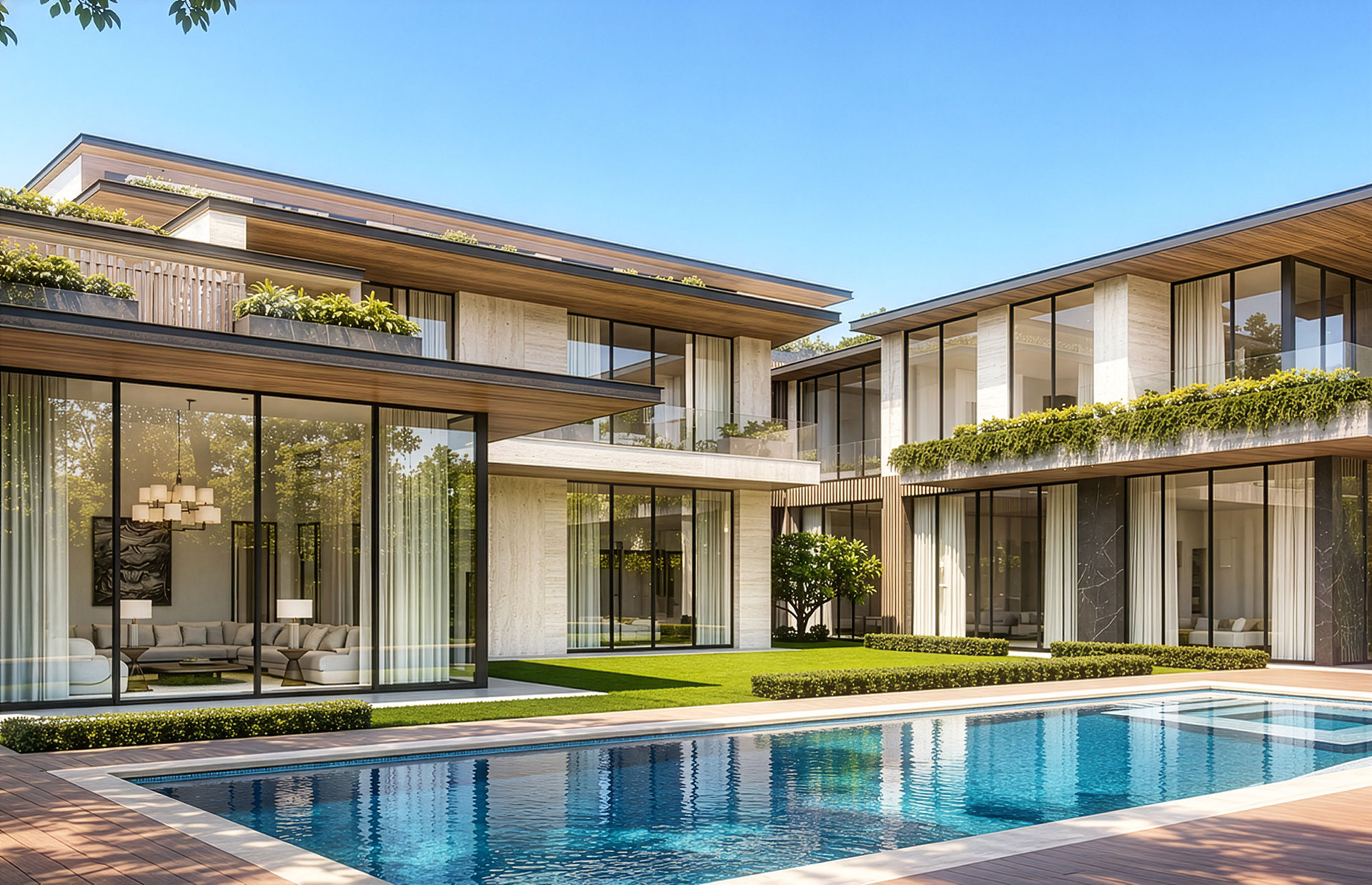
Estidama, Abu Dhabi's sustainability programme, uses the Pearl Rating System, which runs from 1 to 5 Pearls. Since September 2010 every new villa in Abu Dhabi has had to achieve at least 1 Pearl, which means meeting all of the system's mandatory credits. The rating is organised in seven categories, each with mandatory and optional credits, covering how a villa is planned and built, its use of water and energy, its materials, and the quality of its indoor and outdoor spaces.
For owners furnishing a finished villa, Estidama is mostly background. For owners building or rebuilding a villa, it shapes the brief from the first sketch: glazing and shading, insulation, water fittings, materials and the air inside the house. A company that has delivered Pearl-rated villas plans for it from the start rather than discovering it at the permit stage.
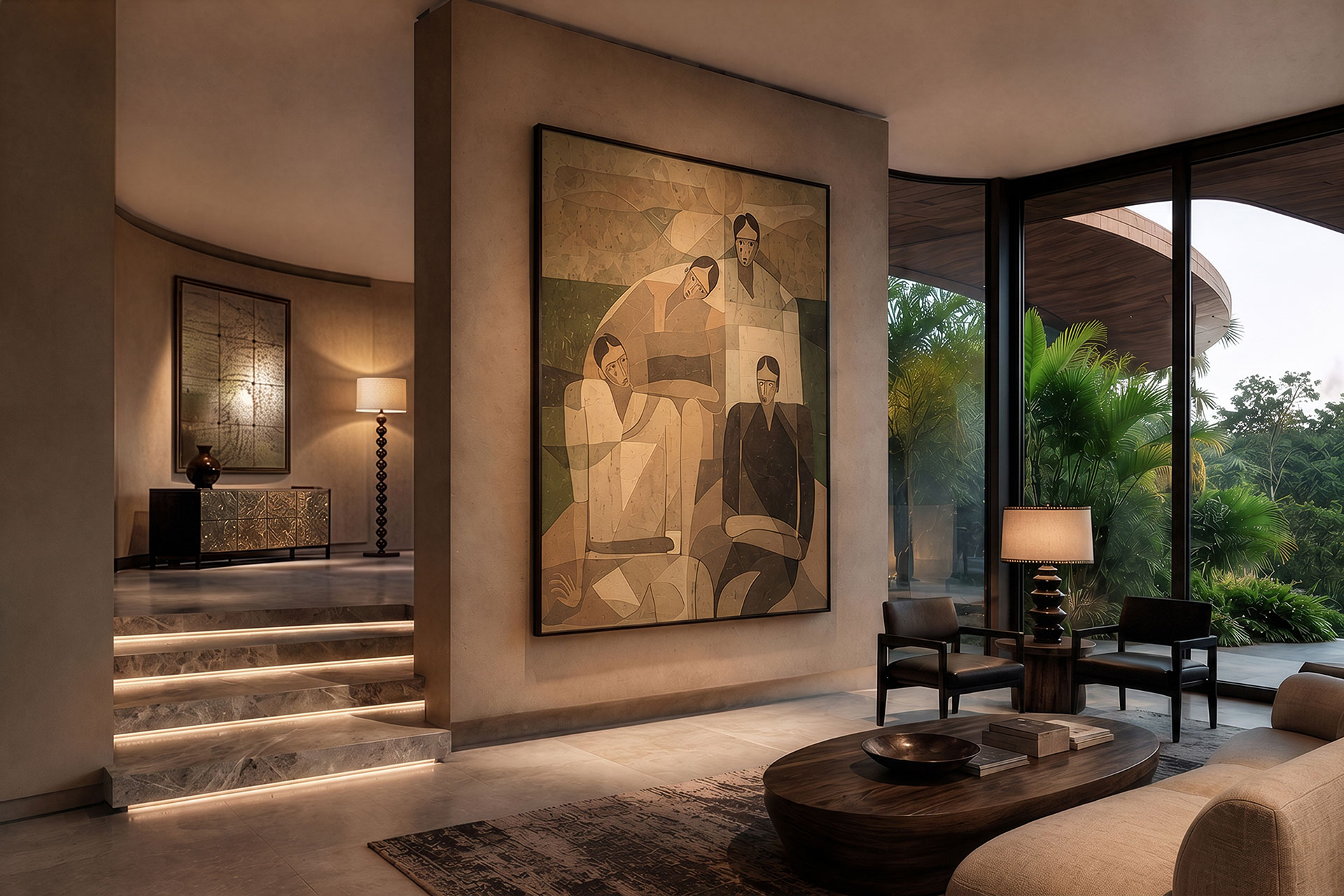
Each part of Abu Dhabi brings a different kind of project.
Our ranking of the top ten luxury villa communities in Abu Dhabi reads each one from the drawing board.
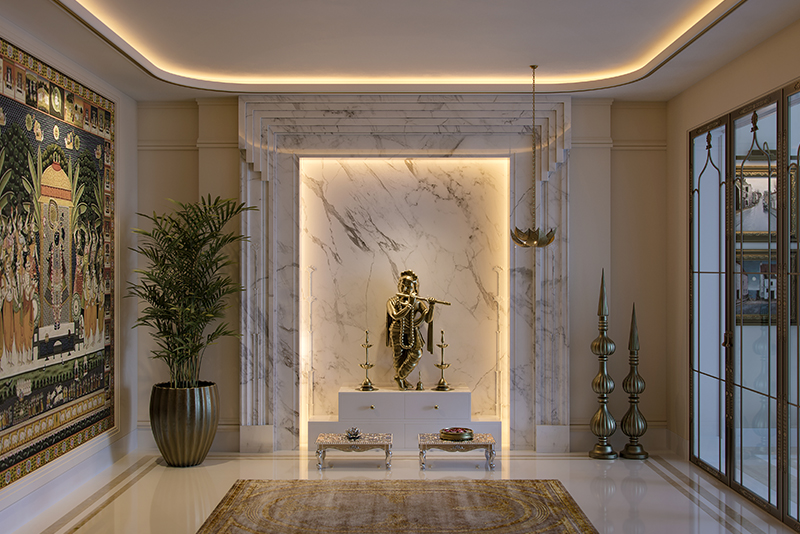
Abu Dhabi's villas are often family homes for the long term, and the brief reflects it. Emirati households commonly ask for separate majlis for men and women, each with its own entrance, a large kitchen with a separate working kitchen behind it, a prayer room, generous storage for hospitality, staff accommodation and privacy from the street and the neighbours. Expatriate families bring their own needs, from home offices to study spaces for children. The best companies treat these as the starting point of the plan, not as additions to it.
Climate runs through all of it. Summer heat above 45 degrees, humidity on the islands and salt air along the coast shape glazing, shading, air handling and every material that faces outside. Our guides to the contemporary majlis and kitchen interior design for villas cover two of the rooms that matter most in an Emirati home, and our guide to luxury interior design in Abu Dhabi covers the design language of the emirate.
A company that answers all five plainly, with documents and addresses, belongs on the shortlist.
Fees follow scope. A company should explain whether it charges a percentage of the project value, a fixed fee or a fee by area, and what is excluded. Timelines depend on the approvals involved: minor works through the simplified DMT route move faster than structural or facade changes through TAMM, and community rules add their own steps. A realistic programme can only be set once the scope is fixed and the community's process is known. Our villa fit-out cost guide explains how to structure a budget, and the same principles apply in Abu Dhabi.
Aparna Kaushik Design Group designs villas in Abu Dhabi as it does in Dubai and across India: one principal-led studio responsible for the architecture, the interiors, the furniture, the lighting, the landscape and the art, and for seeing them built. In the emirate, the studio's drawings are taken through approvals by a licensed engineering consultancy and built by licensed contractors, with the studio on site throughout. Our Abu Dhabi page collects the studio's work in the emirate, and the complete portfolio is on our projects page.
There is no official ranking. The strongest companies hold the right licences for design and fit-out, have taken villas through DMT, TAMM and community approvals, understand Estidama, plan around the family brief and can show finished villas in Abu Dhabi. Aparna Kaushik Design Group designs and delivers villas in Abu Dhabi and Dubai on that basis.
Small non-structural jobs, maintenance, new interior finishes and extensions up to 25 square metres can be approved directly by the contractor under the Department of Municipalities and Transport's simplified procedure. New structure, changes to building services and facade changes need a formal permit through TAMM, and most communities also have their own approval process and contractor list.
Estidama is Abu Dhabi's sustainability programme, and its Pearl Rating System has required every new villa to achieve at least 1 Pearl since September 2010. It matters most when a villa is being built or rebuilt; furnishing a finished home is largely unaffected.
The authorities, permit platforms and sustainability rules differ: Abu Dhabi uses the Department of Municipalities and Transport, the TAMM platform and Estidama. Villas there are often long-term family homes, so the brief usually includes separate majlis, a working kitchen, a prayer room and staff accommodation.
A design consultancy plans, draws, specifies and coordinates; a fit-out contractor builds. They are separate licensed activities, and drawings that affect structure or building services are stamped by an engineering consultancy licensed in Abu Dhabi. A company offering both should hold both licences or name its licensed partner.
It depends on the scope and the approvals. Minor works through the simplified route move faster than structural or facade changes through TAMM, and community rules add their own steps. A reliable programme comes after the scope and the community's process are confirmed.
Lists of the best interior design companies in Abu Dhabi will keep changing. The test does not: a licence that covers the work, a record of approvals in your community, experience with Estidama where it applies, and finished villas you can see for yourself. Apply it and the right shortlist is usually a short one. To discuss a villa in Abu Dhabi, see our interior design and turnkey execution services, or contact the studio.
Sources: Abu Dhabi Real Estate Centre figures for 2025 as reported by WAM and the Abu Dhabi Media Office; The National on Abu Dhabi's population in 2024; Department of Municipalities and Transport announcements on the minor-works permit procedure and the Estidama Pearl Rating System.
Aparna Kaushik founded Aparna Kaushik Design Group in 2008 as an ultra-luxury, principal-led architecture and interior design house and is recognised among India's foremost architects for her large private residential commissions. Her studio's UAE practice serves UHNW clients across Dubai and Abu Dhabi, delivering architecture, interiors, furniture, lighting, landscape, art curation, and turnkey execution as one coordinated service.
aparnakaushik.com/about-us | enquiries@aparnakaushik.com | @aparnakaushikofficial