KEY TAKEAWAYS
Abu Dhabi is where a growing number of UAE villa buyers are now looking, and the search results for its best communities have the same problem as Dubai's: almost every page is written by an agent. They rank communities by price and amenity. They do not tell you what the emirate will let you build there. Knight Frank's Abu Dhabi review published in July 2026 gives the clearest picture of where the money is going, and the design implications run in a different direction to the price table. We work across the UAE, including Abu Dhabi, and this list sets out both.
The order is ours. Where Knight Frank publishes figures for a community we have used them, and the islands come first because that is where the emirate's premium stock and most of its new supply sit. For the last two entries, the established mainland communities, there is far less published data, so those entries are shorter by design rather than by oversight.
Saadiyat is the emirate's most expensive address on both measures Knight Frank tracks. Villas transacted at an average of about AED 26,500 per square metre in the year to June 2026, and apartments at about AED 43,100 per square metre, the latter up about 21 percent on the year.
It is also the most tightly governed. The beachfront carries lighting and height discipline tied to turtle nesting, which constrains glazing, external lighting and roof profiles in ways that have to be designed for rather than worked around later. Add the cultural district's influence on how owners want to display art, and the brief here is unusually specific. We have written about villa design on Saadiyat Island in detail.
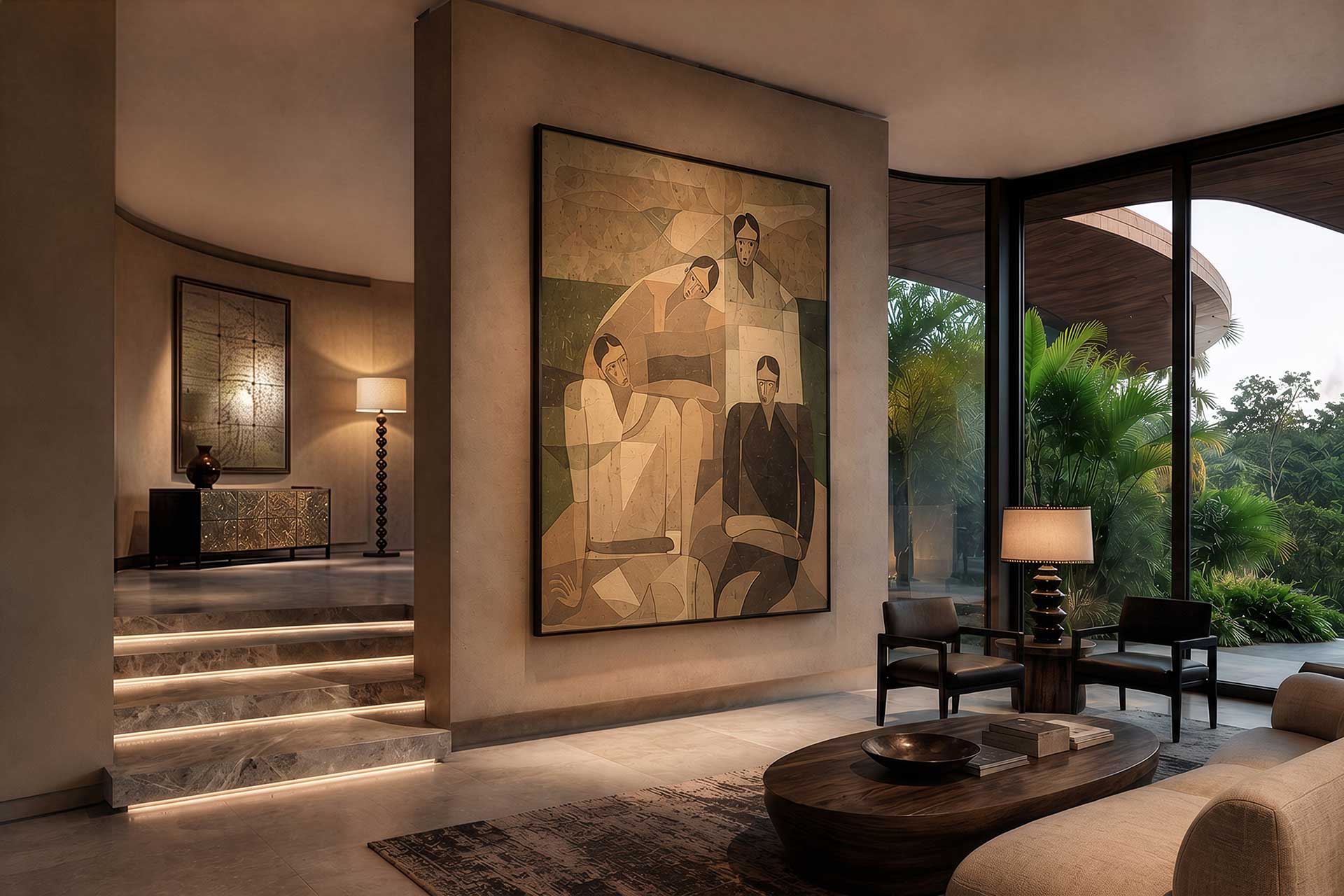
Al Jubail recorded the emirate's fastest villa price growth, at about 40 percent year on year to June 2026 (Knight Frank). It sits between Abu Dhabi and Yas, and its proposition is mangrove and low density rather than beachfront.
Low density is the design opportunity. Plots here can support a house that opens fully to the landscape on more than one side, which is rarer in the emirate than buyers expect, and the mangrove setting rewards a restrained material palette over a reflective one.
Yas apartments rose about 18 percent year on year to June 2026 (Knight Frank), and the island's villa communities have expanded steadily alongside the entertainment district.
Yas stock is newer and developer-built, so the work is almost always interior-led: stripping a handover specification and rebuilding it to a standard the shell was not designed for. The constraint is procedural, through the community's approvals, rather than structural.
Developed by Modon Properties, Hudayriyat covers roughly 11.6 square miles with about 10 miles of beach, and is offered freehold to all nationalities. Its residential release includes villas of three to seven bedrooms and mansions of six to eight.
The mansion plots are the interesting part of this island for an architect. At that scale the house stops being a villa with more rooms and becomes a planning problem, with service, guest and family zones that have to be separated properly rather than simply enlarged.
A private island off Saadiyat, launched by Zaya in 2008 as a project of around AED 3 billion, holding a small number of beachfront estates and water villas alongside resort amenities.
Scarcity defines it. With a fixed and very small number of homes, work here is renovation and reinvention rather than new build, and island logistics govern the programme. Everything arrives by boat, which changes how a project is sequenced and what is realistic to specify.
Aldar's newest master development, covering about 2.7 million square metres between Yas Island and Al Jubail.
Being early is the advantage here. On a development still being delivered, decisions made at drawing stage cost a fraction of the same decisions made after handover, and buyers who bring a design team in before completion get a house shaped to them rather than adapted to them.
Al Reem is the most interesting line in Knight Frank's table, because it moved both ways: apartments up about 18 percent year on year while villas fell about 22 percent over the same period.
That divergence is worth understanding before buying. It suggests the island's demand is concentrated in apartment stock rather than its villas, which has implications for how much you should spend reworking a villa here and what you can expect to recover from it.
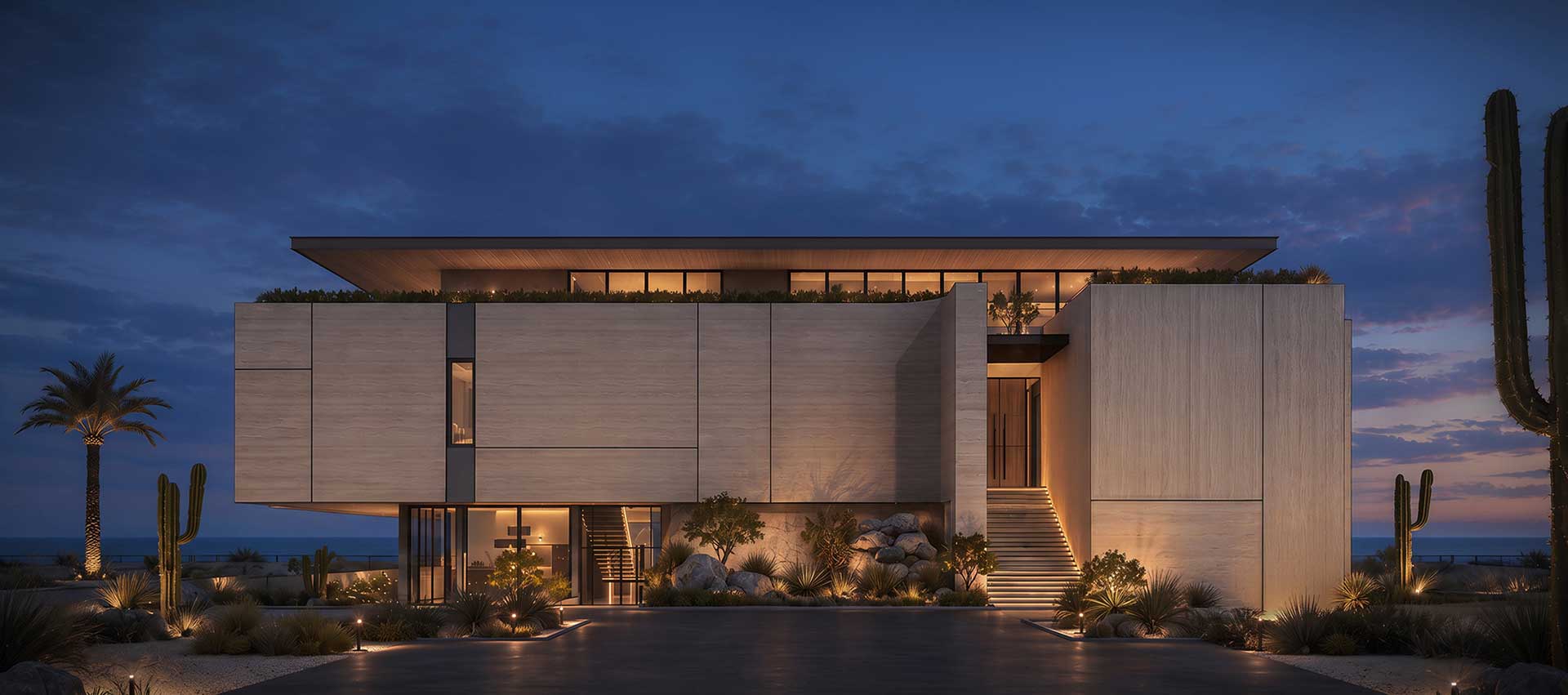
An Eagle Hills development of waterfront villas with a marina, set on an island east of the city.
Waterfront plots with marina access bring the same coastal specification discipline as Saadiyat, without the nesting-related lighting rules. Salt, humidity and sun still decide the material palette.
An established waterfront community developed by Aldar, consistently listed among the emirate's leading villa addresses by local agents.
Stock here is older than the island developments, which makes it one of the more realistic places in Abu Dhabi to buy something worth renovating rather than something already finished to a developer's taste.
The established inland option, with large plots, mature landscaping and a long-settled family community.
No sea, and therefore no coastal specification premium, which means more of the budget goes into the house itself. For owners who want space and privacy over a view, it is consistently underrated.
| Community | Position | What you can realistically change |
|---|---|---|
| Saadiyat Island | Most expensive villas and apartments (Knight Frank) | Interiors freely; exterior shaped by beachfront lighting and height rules |
| Al Jubail Island | Fastest villa growth, about 40 percent | Substantial, with low density allowing a landscape-led plan |
| Yas Island | Apartments up about 18 percent | Interiors, through community approvals |
| Hudayriyat Island | Freehold to all nationalities | Everything at mansion-plot scale |
| Nurai Island | Private island, very limited stock | Renovation, governed by island logistics |
| Fahid Island | Newest Aldar master development | Most of it, if engaged before handover |
| Al Reem Island | Apartments up, villas down | Interiors; weigh spend against the villa trend |
| Ramhan Island | Waterfront villas with marina | Interiors; coastal specification applies |
| Al Raha Beach | Established waterfront | Renovation of older stock |
| Khalifa City | Established inland, large plots | Most things; budget goes into the house, not the view |
Buyers who have done a Dubai project often assume the process transfers. Much of it does. The part that does not is the regulatory texture: different master developers, different approval routes, and in Saadiyat's case environmental rules that reach directly into the building envelope rather than sitting alongside it.
The practical consequence is that experience in one emirate is not automatically experience in the other, and it is a fair question to ask any studio you are considering. Our guide to villa renovation in Emirates Hills and Abu Dhabi covers how a renovation runs across both, and our Dubai practice page covers the emirate next door.
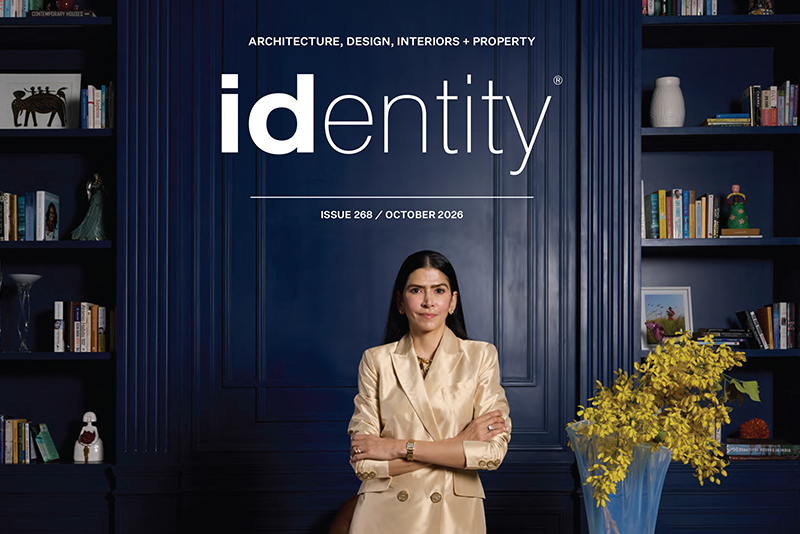
"You can go to Morocco or Mexico… but why not create your own experience at home? "
— Aparna Kaushik, Founding Principal, speaking to Emirates Woman, December 2025
Saadiyat Island. Knight Frank recorded villa transactions there averaging about AED 26,500 per square metre in the year to June 2026, and apartments at about AED 43,100 per square metre, up about 21 percent year on year, making it the emirate's most premium address for both property types.
Al Jubail Island, at about 40 percent year on year to June 2026, according to Knight Frank. Al Reem Island moved the other way over the same period, with villa prices down about 22 percent even as its apartment prices rose about 18 percent.
Freehold ownership depends on the community. Hudayriyat Island, for example, is offered freehold to all nationalities. Because availability varies by designated investment zone, confirm the ownership structure for the specific community before committing.
The regulatory texture differs. Abu Dhabi has its own master developers and approval routes, and on Saadiyat's beachfront, lighting and height discipline connected to turtle nesting reaches into the building envelope itself. Experience in one emirate does not automatically transfer to the other.
Al Raha Beach and Khalifa City hold the most established stock, which makes them the more realistic places to buy something worth reworking. Nurai Island is renovation-only in practice, because its number of homes is fixed and very small.
Yes. The studio works across the UAE, including Abu Dhabi and Dubai, as a principal-led design-and-build practice, alongside its work in India.
Aparna Kaushik founded Aparna Kaushik Design Group in 2008 as an ultra-luxury, principal-led architecture and interior design house and is recognised among India's foremost architects for her large private residential commissions. Her studio's UAE practice serves UHNW clients across Dubai and Abu Dhabi, delivering architecture, interiors, furniture, lighting, landscape, art curation, and turnkey execution as one coordinated service.
aparnakaushik.com/about-us | enquiries@aparnakaushik.com | @aparnakaushikofficial