KEY TAKEAWAYS
Luxury interior designers in Abu Dhabi work to a brief that is distinct from Dubai's. Abu Dhabi is the cultural and political capital of the UAE, and its finest homes tend to be more rooted, more private, and more considered. Designing one well means understanding the majlis and Arabic hospitality, the emirate's island and waterfront living, and a climate of intense sun and coastal humidity. This guide, written by Aparna Kaushik Design Group, covers what defines luxury interior design in Abu Dhabi, where the finest homes sit, how culture and climate shape them, the materials that last, and how to commission a studio.
Luxury interior design in Abu Dhabi is defined by cultural rootedness, restraint, and craftsmanship, designed around Arabic hospitality and a demanding coastal-desert climate. Where Dubai often rewards bold statement design, Abu Dhabi tends toward the understated and the enduring. The finest homes are planned around the majlis and family life, with privacy and proportion taking precedence over spectacle. Demand is strong and supported by the emirate's cultural investment. Luxury villas on Saadiyat Island commonly range from AED 6 million to over AED 20 million (market data, 2025), and Abu Dhabi property prices were forecast to rise about 8 to 10 percent in 2025, helped by new launches and the pull of the Saadiyat cultural district, home to the Louvre Abu Dhabi and the forthcoming Guggenheim (industry reports, 2025).
| Marker of a True Abu Dhabi Luxury Home | What It Looks Like |
|---|---|
| Cultural rootedness | The majlis, Arabic hospitality, and Islamic geometry, reinterpreted with restraint. |
| Privacy by design | Screening, and considered separation of guest and family zones. |
| Climate-first detailing | Shading, orientation, and salt-tolerant materials for sun and coastal humidity. |
| Integrated delivery | Architecture, interiors, and landscape designed by one studio. |
Abu Dhabi's luxury residences cluster on Saadiyat Island, Nurai Island, Al Bateen, and Al Maryah, with Mohammed Bin Zayed City offering space for large family estates. Location sets the character of the home as much as the design does. The table below maps the prime addresses.
| Area | Character | Typical Home | Why It Matters |
|---|---|---|---|
| Saadiyat Island | Cultural, beachfront, prestigious | Beachfront villas | The Louvre and Guggenheim district, protected beaches. |
| Nurai Island | Ultra-private island | Private island estates | Maximum privacy and exclusivity. |
| Al Bateen | Established, waterfront, central | Mature luxury villas | An old, settled address near the Corniche. |
| Al Maryah / Al Reem | Modern, urban, waterfront | Penthouses and apartments | The new financial and urban luxury core. |
| Yas Island | Leisure-led, waterfront | Resort-style villas | Lifestyle and entertainment proximity. |
| Mohammed Bin Zayed City | Spacious, residential | Large family estates | Space and scale for large households. |
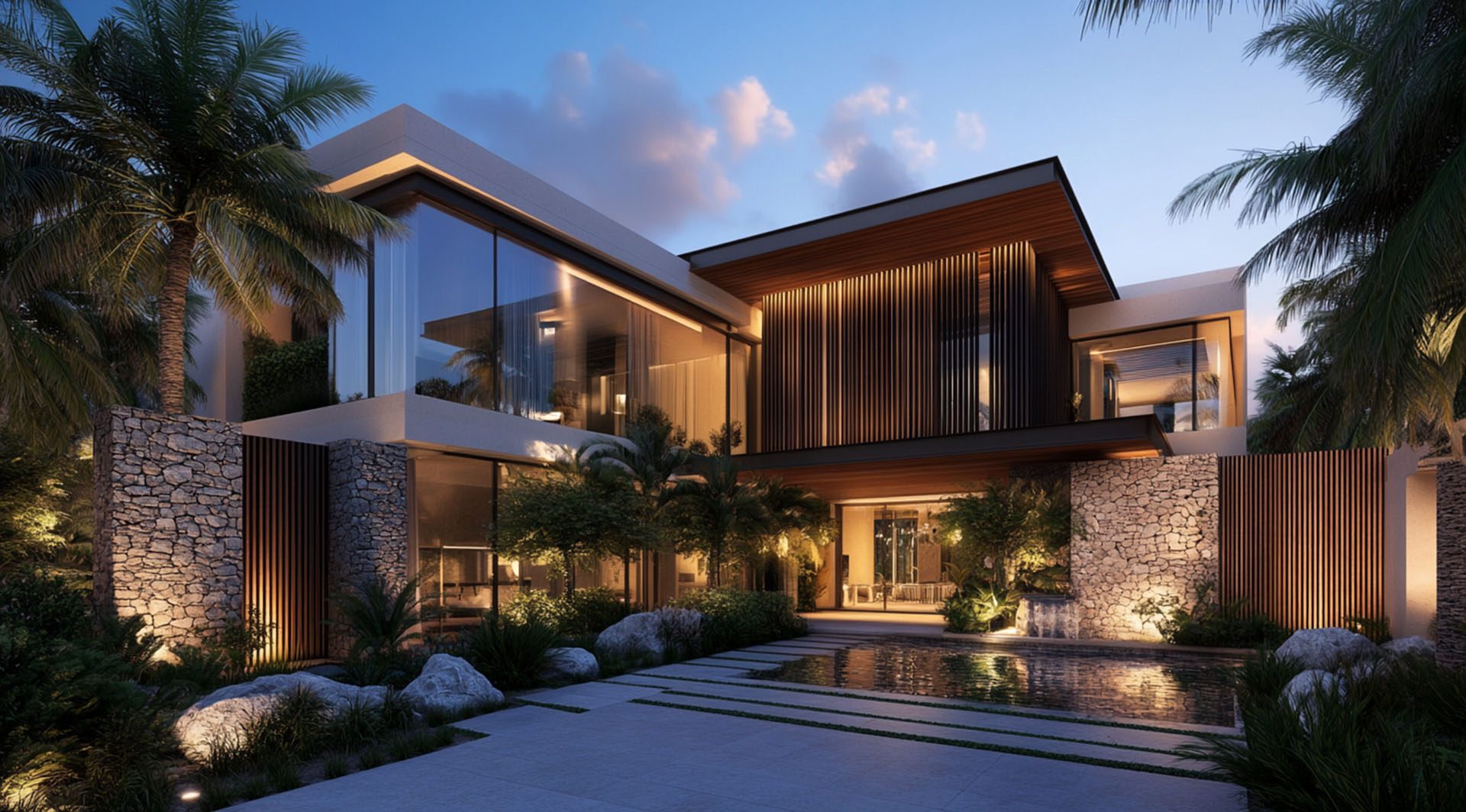
Abu Dhabi tends to hold its heritage more closely than Dubai, so the majlis, privacy, and family-first hospitality carry even more weight in how a home is planned. As the cultural capital, Abu Dhabi favours the reserved over the showy. The majlis, the formal reception room, is usually the signature space, designed with generosity and craftsmanship and often planned to respect the separation of family and guest areas. The result reads as rooted and understated rather than theatrical, which is the distinction that sets an Abu Dhabi home apart from its Dubai equivalent.
The wider Arabic design language, the majlis geometry, the mashrabiya screen, the courtyard, and the falaj, is shared across the Emirates. We cover how that language is reinterpreted for the contemporary villa in depth in our piece on modern Arabic interior design for Dubai. In Abu Dhabi, the same elements are read through a more reserved, family-first lens.
Abu Dhabi homes are designed for intense sun, high heat, and coastal humidity, using shading, orientation, and durable materials rather than mechanical cooling alone. Careful orientation and deep reveals limit solar gain, while mashrabiya-inspired screens shade openings without closing off light or air. High-performance glazing and thermal mass steady the internal temperature, and salt-tolerant, corrosion-resistant materials answer the coastal and island air. Landscape and water features cool the microclimate and frame the privacy that a home of this kind needs. The result is a residence that stays comfortable and elegant across the year, with the mechanical systems doing less of the work.
For a residence of this kind, the stronger question is who holds the whole vision, which is why an integrated design-and-build studio is the best choice. A coastal or island home is hard to coordinate across separate firms, particularly when owners are international and not on site every day during the build. One studio directing architecture, interiors, and landscape keeps proportion, materials, and detailing coherent from facade to furniture.
| Role | Focus |
|---|---|
| Interior designer | Finishes, furnishing, and styling within existing spaces. |
| Interior architect | The spaces themselves: volumes, openings, circulation, structure. |
| Integrated studio (AKDG) | Architecture, interiors, and landscape designed as one coherent whole. |
You can see this integrated approach across the studio's interior design and turnkey execution work, and across the wider UAE portfolio.
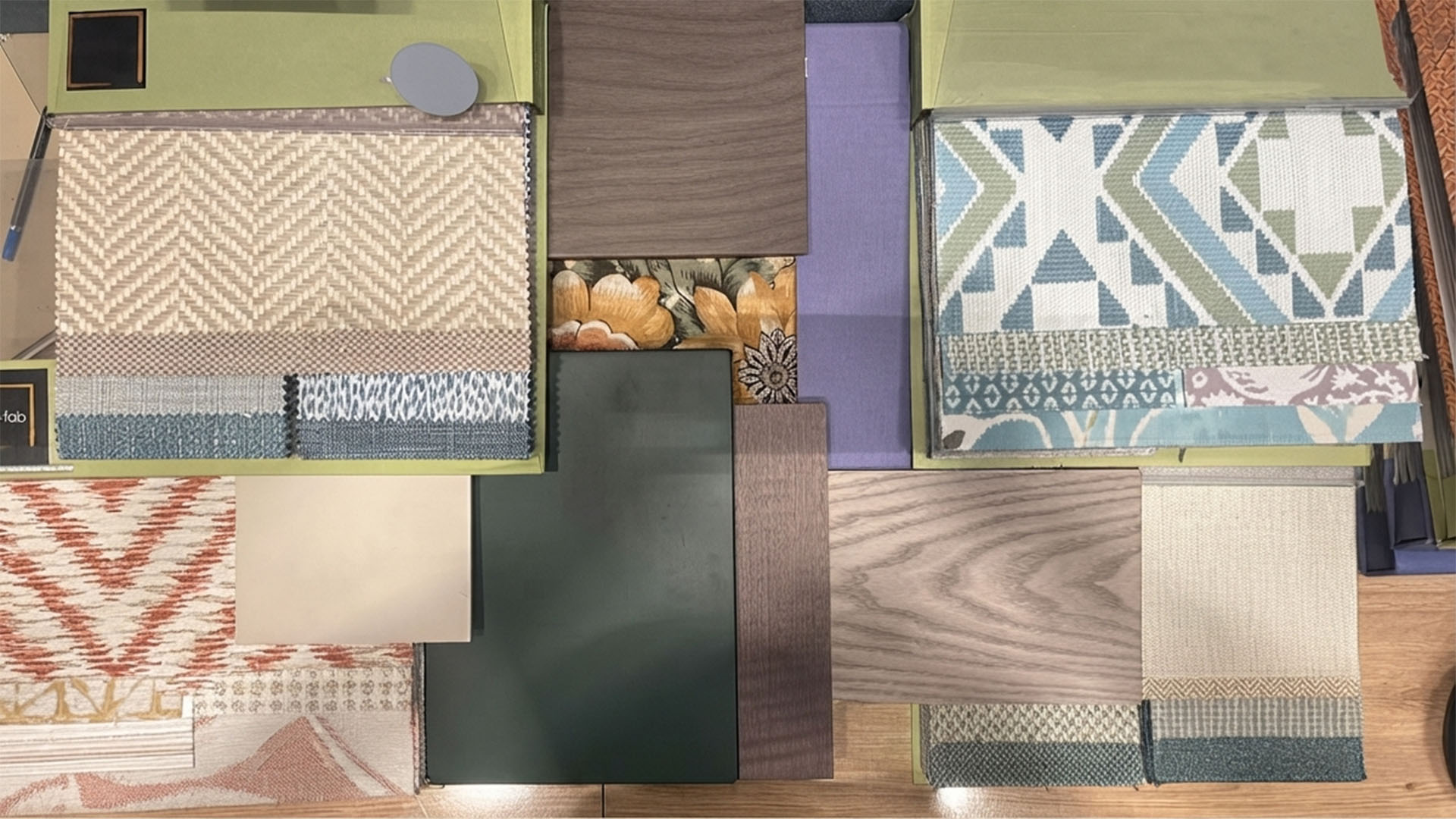
The materials that perform in Abu Dhabi are those suited to sun, heat, and coastal humidity: natural stone and marble, fine plaster, timber veneers, and corrosion-resistant metals. A restrained, natural palette, lifted by cultural detailing, is what gives an Abu Dhabi home its quiet authority.
| Element | Material and Reason |
|---|---|
| Floors and walls | Large-format marble and natural stone, cool underfoot and enduring. |
| Surfaces | Fine plaster and timber veneers for warmth and craft. |
| Screening | Mashrabiya-inspired screens for privacy and sun control. |
| Metals | Brass and bronze with anti-corrosion treatment for the coastal air. |
| Detailing | Islamic geometry and restrained gold-leaf accents for cultural depth. |
“A home in Abu Dhabi should hold its culture quietly. We design the majlis, the light, and the materials as one, so the residence feels generous and rooted, contemporary in its comfort and unmistakably of the place”
- Aparna Kaushik, Principal Architect and Interior Designer
Commissioning a luxury interior in Abu Dhabi moves through five stages, from defining how you live and entertain to a fully styled, move-in-ready home. The path below is how an integrated studio approaches it.
Define how you live and entertain. Set out your family's daily life and hosting needs, including the majlis and the separation of guest and family zones.
Choose the location. Select an area such as Saadiyat, Nurai, Al Bateen, or MBZ City that fits your lifestyle, privacy, and views.
Agree the design language. Settle the balance of Arabic heritage and contemporary design, and the material direction, with one studio before drawings begin.
Develop the design and approvals. Work through concept, detailed drawings, specification, costing, and local approvals with transparency at each stage.
Execute and style. Build, install interiors, lighting, and landscape, then finish with styling and a final walkthrough.
Luxury interior design in Abu Dhabi blends the emirate's cultural heritage and Arabic hospitality with contemporary, climate-responsive design. It is typically more understated and family-oriented than Dubai, with the majlis, privacy, and craftsmanship central to how the finest homes are planned.
Abu Dhabi tends to be more measured and heritage-conscious. Where Dubai often favours bold statement design, Abu Dhabi's UHNW homes lean toward restraint, cultural rootedness, and family living, especially on its islands and along the waterfront.
Saadiyat Island leads for cultural, beachfront living, while Nurai Island offers ultra-private island estates. Al Bateen is an established waterfront address, Al Maryah and Al Reem are the modern urban core, and Mohammed Bin Zayed City offers space for large family estates.
Cost depends on scope, area, and specification. For context, luxury villas on Saadiyat Island commonly range from AED 6 million to over AED 20 million (market data, 2025), and interior design is scoped against the residence and brief. An accurate figure follows once the brief is defined.
The majlis is the formal reception space where guests are received and entertained, central to Arabic hospitality. In a luxury Abu Dhabi home it is often a signature room, designed with generosity, privacy, and craftsmanship, and frequently planned to respect family and guest separation.
Abu Dhabi has intense sun, high heat, and coastal humidity. Interiors and architecture answer this with careful orientation and shading, mashrabiya-inspired screens, deep reveals, high-performance glazing, thermal mass, and salt-tolerant materials, supported by landscape and water for cooling.
Natural stone and large-format marble, fine plaster, timber veneers, and brass or bronze with anti-corrosion treatment all perform well. Islamic geometry, mashrabiya screening, and restrained gold-leaf accents add cultural depth without excess.
Yes, and the best homes do exactly this. The majlis, Islamic geometry, and Arabic hospitality can be reinterpreted in a clean, contemporary palette, so a residence feels rooted in Abu Dhabi while remaining unmistakably modern.
One studio directing architecture, interiors, furniture, lighting, and landscape keeps a home coherent from facade to furniture. For an international or island residence the owners may not visit daily during the build, which makes that single line of accountability even more valuable.
Begin with a conversation about how you live and entertain, including the role of the majlis, then move through concept, design development, approvals, execution, and styling. See the full range of Abu Dhabi villa design services. You can start by contacting Aparna Kaushik Design Group through the contact page on the website.
Aparna Kaushik is one of India's foremost architects, recognised among the country's top five for her work on ultra-luxury private residences. With over 18 years of practice and a studio founded in 2008, she has completed landmark estates across India and is now working with UHNW clients in the UAE. Her work blends European classicism with modernist tropical architecture — a sensibility shaped by India's design heritage and executed to a standard that is increasingly sought by Dubai's most discerning villa owners.
aparnakaushik.com/about-us | enquiries@aparnakaushik.com | @aparnakaushikofficial