KEY TAKEAWAYS
Saadiyat Island villas carry a brief that exists nowhere else in the Gulf: beachfront living inside a culture district. On one side of the address sits the Louvre Abu Dhabi, with the Guggenheim rising nearby and the wider Saadiyat Cultural District around them; on the other, a protected white-sand shoreline where hawksbill turtles still nest each season. Between the two sits some of the emirate's most valuable residential land, developed largely under Aldar, where villa listings average around AED 15 million and the best beachfront and golf-course properties reach AED 45 million and beyond (industry property data, 2026). AKDG's work reshaping the luxury interior design conversation in Abu Dhabi covers the emirate's wider brief; this guide goes deeper into its definitive island, and what designing a villa here actually demands.
Saadiyat leads Abu Dhabi's luxury market because it concentrated three things no competing district holds together: a protected natural shoreline, a masterplanned cultural quarter of global rank, and villa communities, Saadiyat Beach Villas and Hidd Al Saadiyat among them, built to a density that keeps the island quiet. The Louvre Abu Dhabi gave the address an identity beyond real estate, the Saadiyat Beach Golf Club threaded a championship course between the communities and the sea, and the pipeline of museums keeps the district's prestige compounding rather than fading.
The island's development discipline is part of the value. Saadiyat was masterplanned and largely delivered under Aldar, Abu Dhabi's principal developer, which has kept architectural standards, community management and the pace of release under one hand rather than fragmenting the island across competing schemes. For owners this shows up in the mundane ways that matter over a decade of ownership: consistent community upkeep, predictable design review, and a supply pipeline managed to protect values rather than flood them. Scarcity on Saadiyat is designed, not accidental, and the market prices it accordingly.
The market reflects it. Villas on the island list from roughly AED 8.4 million for inland community homes to well past AED 85 million for landmark beachfront properties, with the average asking price around AED 15 million and premium family villas near AED 19 million (industry property data, 2026). For buyers comparing the emirate's options, the alternatives each read differently, and the differences are design briefs as much as price points.
Saadiyat against Abu Dhabi's other villa addresses
| Address | Character | Typical villa positioning |
|---|---|---|
| Saadiyat Island | Culture district, protected beach, golf; the emirate's prestige address | AED 8.4m inland to AED 45m beachfront and beyond; trophy homes past AED 85m |
| Al Hudayriat and Nareel area | Newer waterfront masterplans, sport and leisure identity | Contemporary waterfront villas; strong value but without the cultural district |
| Yas Island | Entertainment-led: circuit, parks, marina living | Family villas and golf communities at gentler prices than Saadiyat |
Saadiyat's defining constraint is environmental, and it is a genuine one, not a marketing line. The island's beaches are a documented nesting ground for critically endangered hawksbill turtles, and the masterplan protects them with dune buffers, controlled public access and, most consequentially for designers, restrictions on artificial light reaching the beach during nesting season. For a beachfront villa this means exterior lighting designed to be shielded, low-level and warm-toned on the seaward side, glazing and screening choices that manage light spill after dark, and landscape that works with the dune line rather than flattening it.
The landscape brief follows the same logic. The most convincing Saadiyat gardens run a gradient rather than a boundary: irrigated planting and lawn held close to the house, transitioning through salt-tolerant regional species to native dune grasses where the plot meets the protected foreshore. A garden that ends in a clipped hedge against wild dune reads as a suburban plot dropped onto a nature reserve; a garden that negotiates the transition reads as if the villa belongs to the island. On a shoreline this closely watched, that judgement is also the difference between a landscape plan that clears review comfortably and one that gets redrawn.
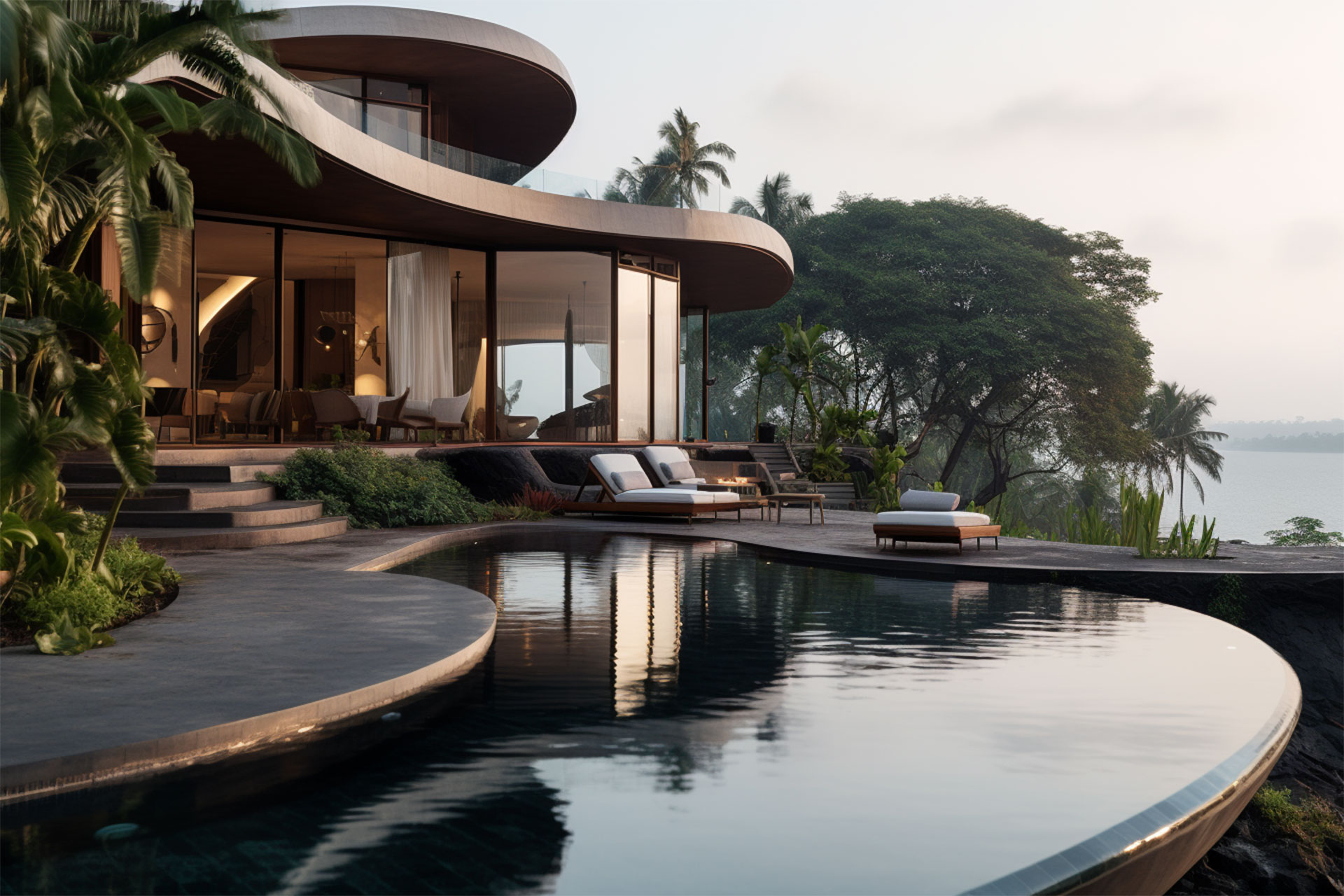
Height discipline shapes the rest. The island's low-rise coastal zoning keeps villas within a modest silhouette, which pushes design ambition sideways, into plan depth, courtyards, and section moves such as sunken lounges and generous floor-to-floor heights, rather than upward. The best Saadiyat villas read as long, calm compositions parallel to the shore, taking the sea in glimpses and full reveals rather than one undifferentiated wall of glass, and their gardens negotiate the transition from irrigated green to native dune planting with some grace. These constraints, handled early, are not the brief's burden; they are its character.
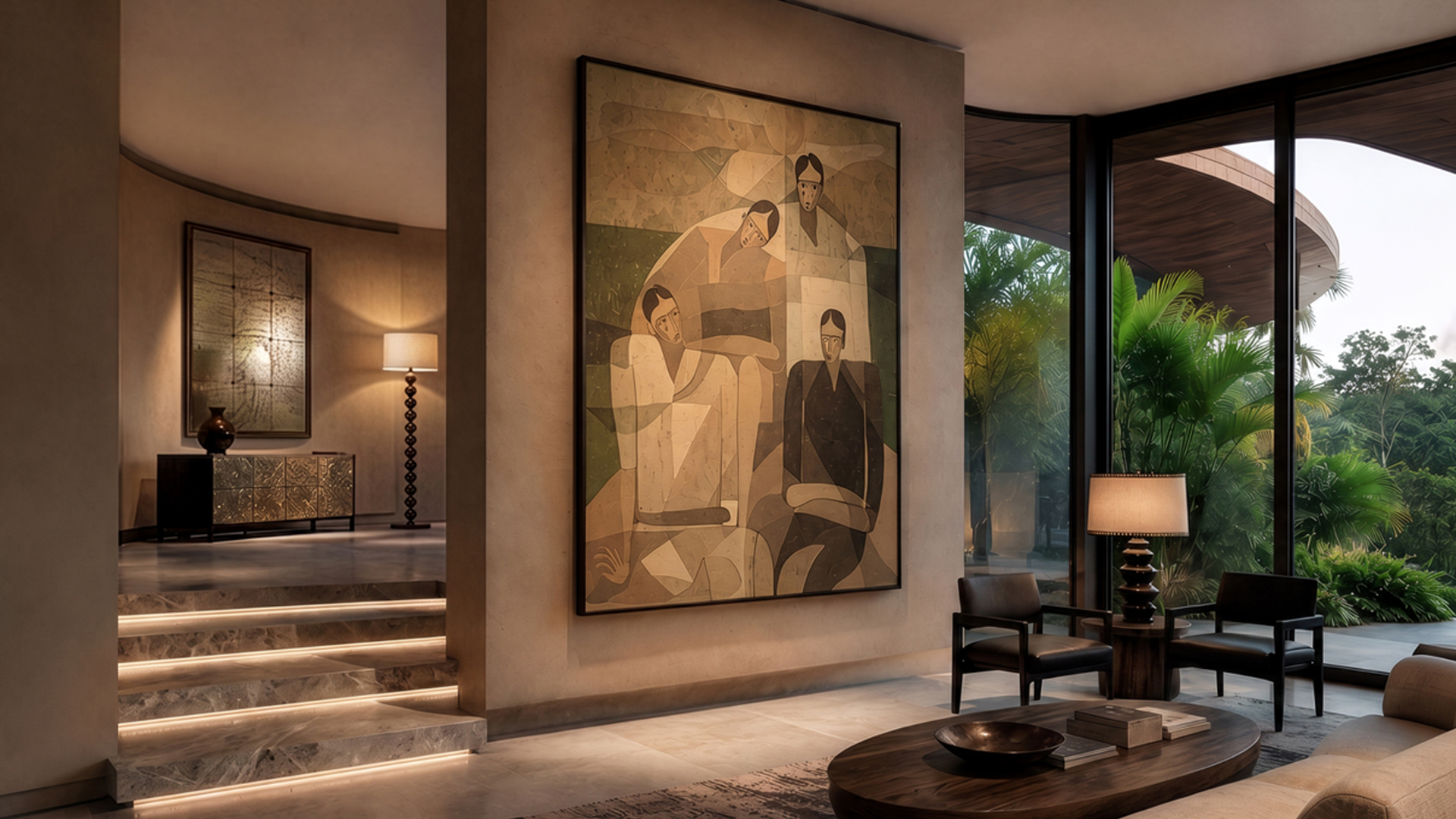
A villa minutes from the Louvre attracts owners who collect, and the interiors brief on Saadiyat increasingly resembles a private gallery's: proper hanging walls with reinforced fixing zones and clean sightlines, lighting designed in layers with museum-grade colour rendering on the art, and daylight control, deep reveals, screens, interlayers and blinds, that protects works on paper and textiles from a sun that is brutal on both. Conservation-grade climate stability matters as much as light; a collection's insurer will ask about humidity control before it asks about the view.
The palette follows from the same logic. With the sea on one side and art on the walls, the architecture's job is restraint: quiet stone, warm neutrals, and material depth over pattern, so the eye is given a hierarchy rather than a competition, an approach AKDG explored at length in its Palm Jumeirah villa study, where the water demands the same deference. This is also where an integrated studio shows its worth, because hanging walls, lighting, climate zoning and joinery all have to be resolved in the same drawings, not discovered against each other on site.
The island's buyer profile has internationalised sharply: established Emirati families now share the address with European, East Asian and, prominently, Indian UHNW families for whom Abu Dhabi has become a second base, drawn by the emirate's stability and the island's schools, beach clubs and cultural quarter. Search behaviour tells the same story; queries for the best architect for luxury villas in Abu Dhabi increasingly resolve to Saadiyat-specific briefs, and the commissions arriving at the studio's Abu Dhabi practice are typically full-scope: architecture or gut renovation, interiors, landscape and turnkey delivery held by one team across a client who may be on the island only part of the year.
The renovation wave is arriving on schedule as well. Saadiyat Beach Villas' earliest stock is now well into its second decade, and owners who bought for the address are commissioning the same gut-renovation briefs Dubai's prime communities normalised years earlier: opened plans turned properly toward the sea, principal suites rebuilt to spa standard, glazing and shading upgraded to current performance, and the gallery-living layer, hanging walls, lighting, climate stability, added throughout. On an island where new beachfront plots are nearly exhausted, renovating a well-positioned early villa is increasingly the smartest route to a definitive Saadiyat home.
That last condition matters. A part-time principal and a full-scope brief reward a studio structured to carry a project without weekly client presence, with the design authority to make a thousand small decisions in the spirit of the agreed whole. Aparna Kaushik Design Group's iconic architecture practice is built for exactly that commission, and families considering Saadiyat, a purchase, a new build on one of the remaining plots, or the renovation of an early villa, can get in touch with the studio while the brief is still forming.
"Saadiyat asks for a rare kind of confidence: architecture that can stand near the Louvre without shouting at it, and interiors that let the art and the sea decide the room."
— Aparna Kaushik, Principal Architect and Interior Designer
Villa listings on Saadiyat range from roughly AED 8.4 million for inland community homes to AED 45 million for beachfront and golf-course properties, with landmark trophy villas past AED 85 million. The island's average asking price sits around AED 15 million (industry property data, 2026).
Saadiyat's beaches are a protected nesting ground for hawksbill turtles, so beachfront properties observe dune setbacks and controls on artificial light reaching the beach in nesting season. In design terms that means shielded, low-level, warm-toned exterior lighting on the seaward side and landscape that preserves the dune line.
The Saadiyat Cultural District is the island's masterplanned museum quarter, anchored by the Louvre Abu Dhabi with the Guggenheim Abu Dhabi and further institutions following. It gives Saadiyat a gallery-city identity unique among Gulf residential addresses and shapes the character, and the interiors briefs, of the villa communities around it.
Saadiyat is the prestige address: protected beach, the cultural district, golf and the emirate's highest villa values. Yas is entertainment-led, with family villa communities at gentler prices. Buyers seeking the definitive Abu Dhabi address and long-term scarcity generally land on Saadiyat.
Reinforced hanging walls with clean sightlines, layered lighting with museum-grade colour rendering, daylight control through reveals, screens and interlayers, and stable conservation-grade climate zoning. These need to be designed into the architecture from the start rather than retrofitted around a finished villa.
Yes. The island's earlier villa stock is reaching the age where owners renovate rather than move, and the brief follows the same logic as new work: respect the height and environmental disciplines, rework plans toward the sea view, and bring lighting, services and interiors up to the standard the address now commands.
Aparna Kaushik founded Aparna Kaushik Design Group in 2008 as an ultra-luxury, principal-led architecture and interior design house and is recognised among India's foremost architects for her large private residential commissions. Her studio's UAE practice serves UHNW clients across Dubai and Abu Dhabi, delivering architecture, interiors, furniture, lighting, landscape, art curation, and turnkey execution as one coordinated service.
aparnakaushik.com/about-us | enquiries@aparnakaushik.com | @aparnakaushikofficial