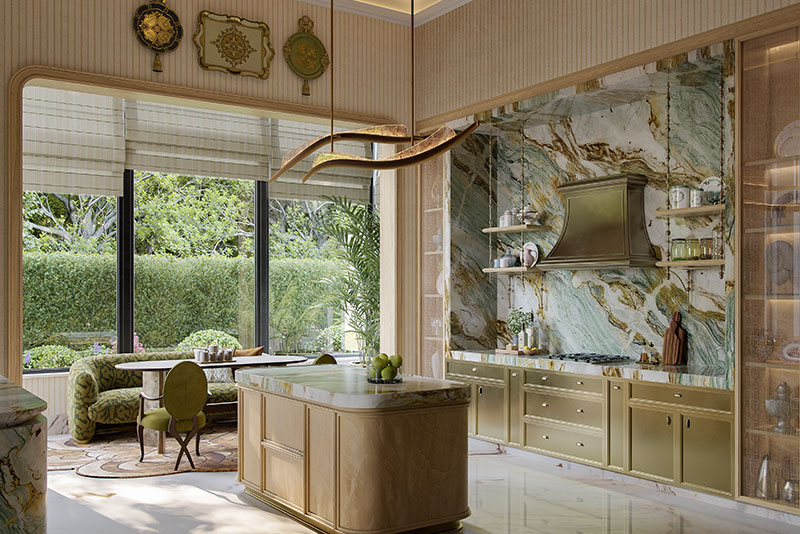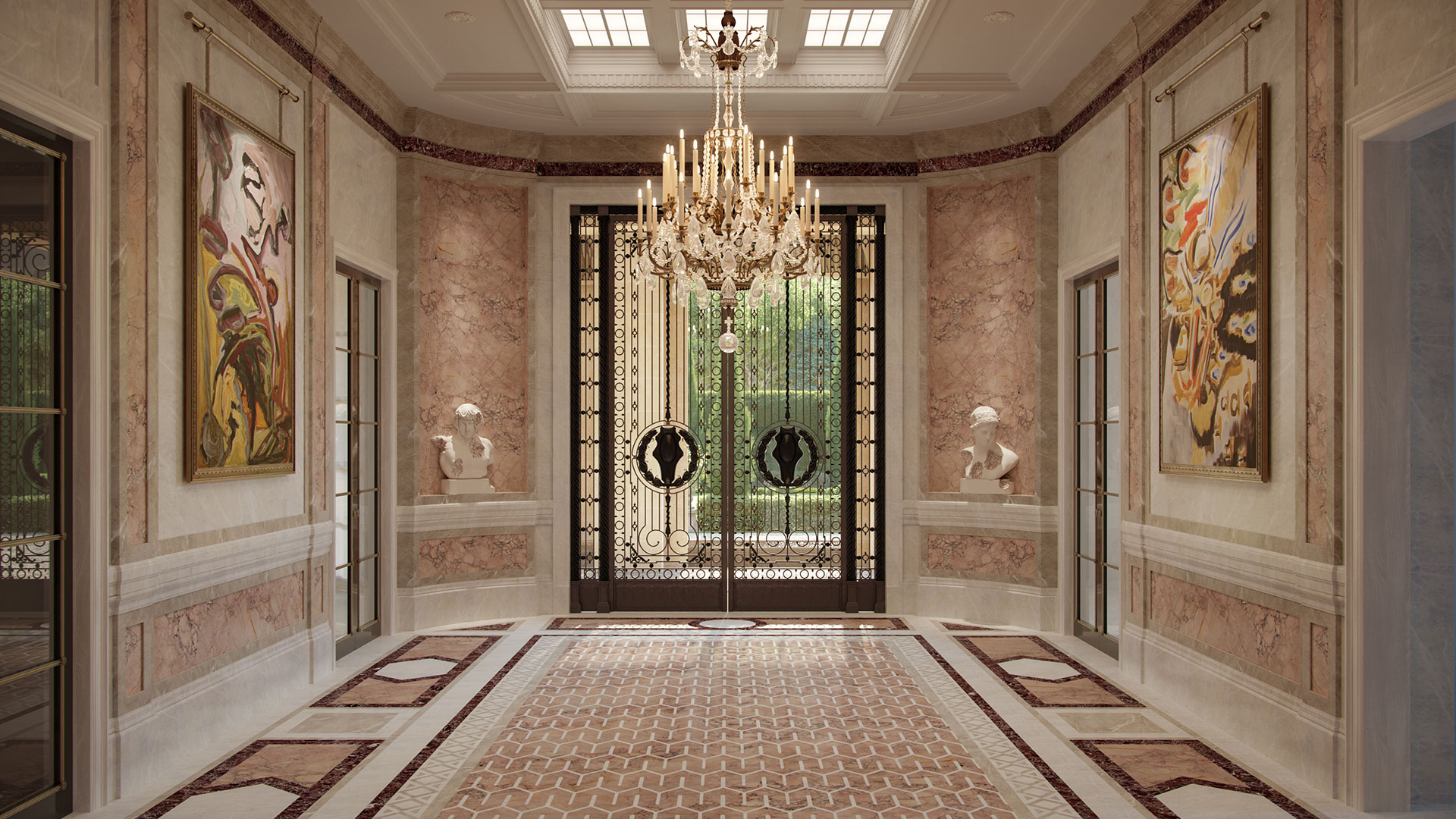
Every slab looks magnificent in a stone yard. It is stood upright, lit from the front, and usually still wet from cutting, which deepens the colour and sharpens the veining in a way the dry, installed stone never will. Clients choose in that light, under that spell, and the decision that follows governs how a house looks for the next thirty years.
The questions that matter are rarely asked in the yard. How porous is this stone. What happens when lemon juice sits on it for an hour. Will there be enough of it, from the same block, to run the floor and the wall without a visible break. How thick is it, what is it sitting on, and what happens when the slab under the dining table is loaded differently from the one by the window. This note sets out how the practice makes that decision, in the order it should be made.
This is the first question almost every client asks, and the honest answer is that it is the wrong comparison. India and Italy both produce stone across the full range of quality, hardness and price. Makrana, the white marble of the Taj Mahal, has held its surface for nearly four centuries in open weather, which is a more demanding test than any drawing room will ever set. There is also Indian marble that will not survive a kitchen.
What separates stone is not the country on the invoice. It is the specific quarry, the specific block, the density of the material and the care taken in cutting it. A dense, tight-grained Indian marble will outperform a soft, highly figured imported one in a hallway that takes traffic every day. The imported slab may still be the right choice for a feature wall where nothing touches it.
Where imported stone genuinely earns, its premium is consistency and scale. The large European quarries supply big blocks, cut to tight tolerances, with reliable slab-to-slab matching, which is what makes a long book-matched wall possible. If that is the effect the design depends on, pay for it. If the stone is going on a floor in a room with furniture over most of it, that premium buys very little.
So, the correct question is not Indian or Italian. It is: how hard is this particular stone, how porous is it, how much of it exists from one block, and is it going somewhere that will punish it.
Marble is a calcium carbonate stone, and that single fact explains most of what goes wrong with it. Anything acidic will react with the surface. Lemon, lime, vinegar, wine, tomato, and many household cleaners will dull the polish where they sit. This is etching, and it is a chemical reaction, not dirt. No amount of cleaning reverses it, and a sealer does not prevent it, because a sealer slows absorption into the stone and does nothing to protect the surface from acid.
Staining is the separate problem. The stone absorbs a coloured liquid, oil or turmeric being the two that cause the most grief in Indian homes, and the mark sits below the surface. Sealing genuinely helps here, because it buys time to wipe a spill before it soaks in. It buys time. It does not make stone waterproof, and it has to be redone periodically.
Understanding that these are two different failures changes the specification. A client who says they want marble in the kitchen is usually picturing the look and has not pictured a dull ring where the lemon sat. That conversation is far easier before the stone is ordered.
The same slab behaves very differently depending on how its surface is worked, and this is the most under-used tool in stone specification.
A practical approach on many projects is to use the same stone throughout and vary the finish by room. The house reads as one material, which is what gives a scheme its calm, while each surface is finished for what will actually happen to it.
Entrance halls, living rooms, staircases and feature walls are where marble does its best work. These are surfaces that are looked at more than they are used, and the stone can be chosen for beauty with a clear conscience.
Kitchen worktops are where the trouble starts. A marble worktop in a household that cooks Indian food daily, with turmeric, oil and acidic marinades in constant use, will not stay pristine. Some owners genuinely like the patina that develops and should be allowed to have it, provided they have been shown what it looks like after two years rather than being sold a photograph. For owners who want it to stay as delivered, a harder stone such as quartzite or a non-porous engineered surface is the honest recommendation, with marble used on the island face or the splashback where it is seen and not worked on.
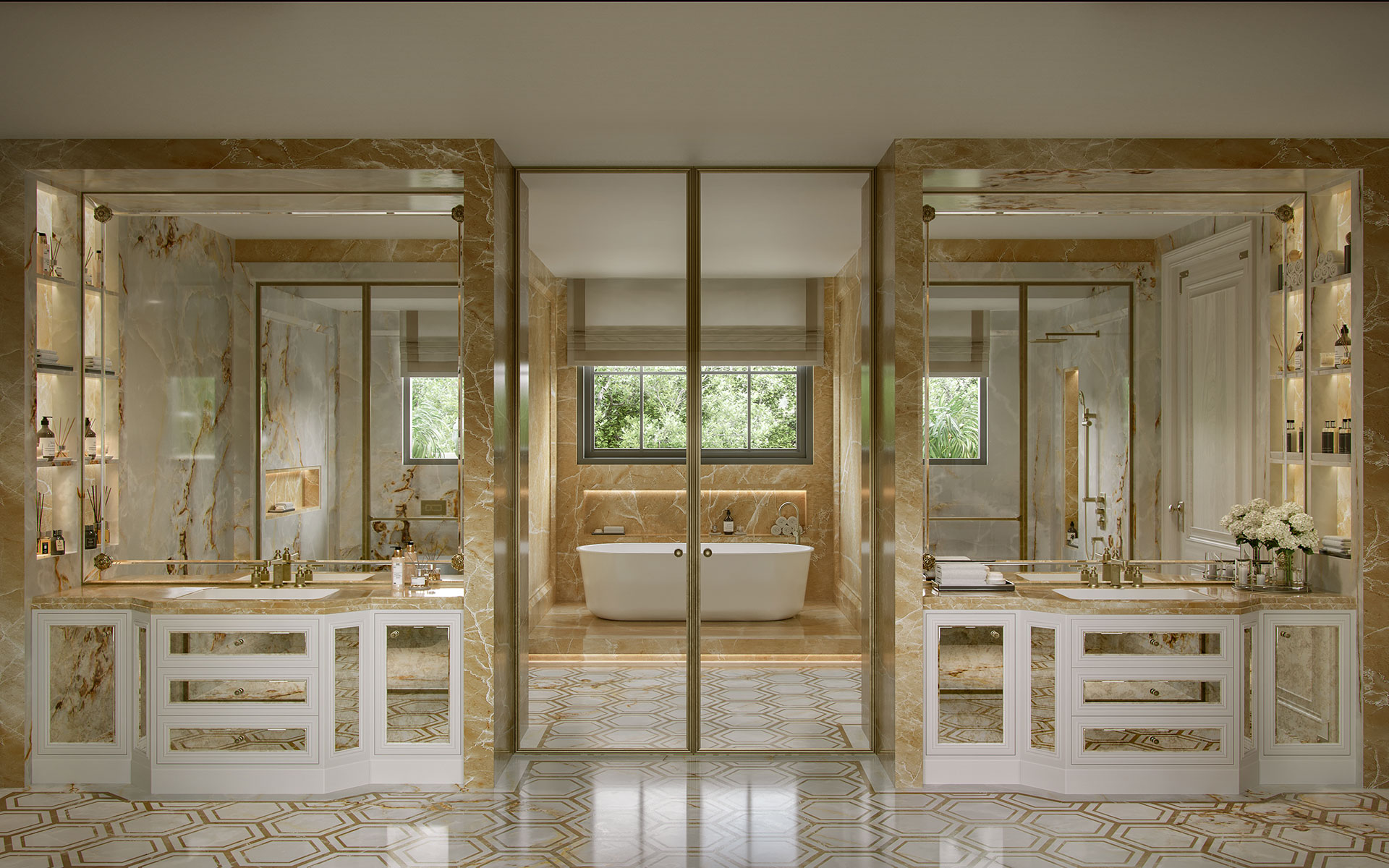
Bathrooms need thought about water rather than acid. Constant wetting, hard water and the mineral deposits it leaves will mark a polished marble floor. A honed or leathered finish, correct falls to the drain and a sensible sealing regime make the difference between a bathroom that ages well and one that looks tired in three years.
Outdoors, in porches, courtyards and around pools, the issues are heat, slip and freeze is rarely a concern in most of India but monsoon exposure certainly is. Polished stone outside is both dangerous underfoot and short-lived. Textured finishes in a stone selected for exterior use are the only sensible route.
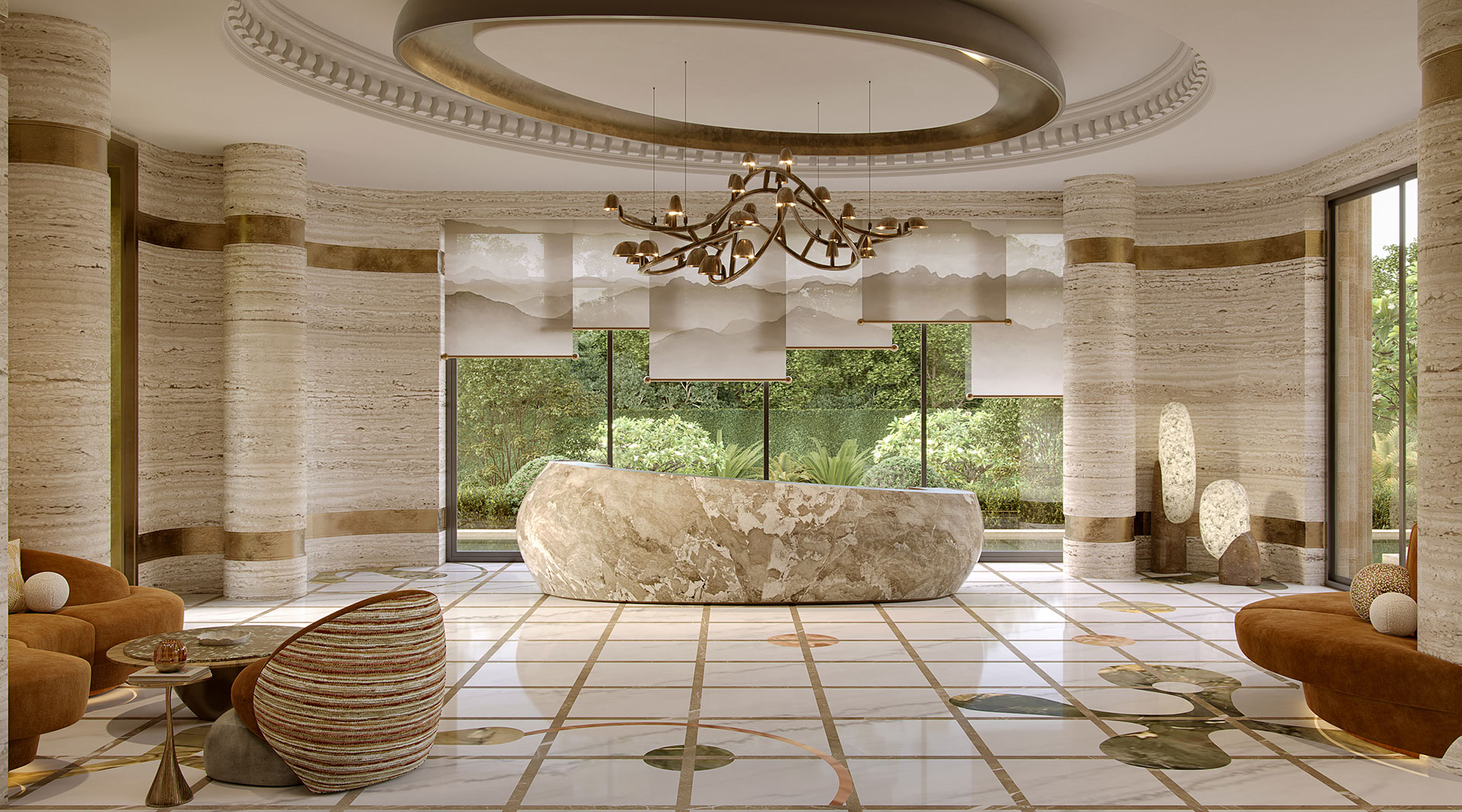
This is the single most expensive mistake available in stone, and it is almost always a sequencing failure rather than a design one. Natural stone varies from block to block and sometimes markedly within a quarry. If the quantity is ordered in stages, the second delivery will not match the first, and on a large floor that break is visible from across the room.
The discipline is to calculate the full requirement, including a wastage allowance for cuts and future repairs, and to reserve it from one block at the outset. Slabs cut consecutively from a block are near-identical and can be laid in sequence so the veining runs across the floor as one field rather than as a patchwork.
Book-matching takes this further. Two consecutive slabs are opened like a book so the veining mirrors across the joint, which is how the dramatic single-vein walls in published projects are achieved. It is only possible with consecutive slabs, it consumes material, and it has to be planned and dry-laid before anything is fixed. A yard cannot produce it retrospectively.
Keep the offcuts. Five years later, when a slab cracks or a wall is altered, matching stone from the original block is the difference between an invisible repair and an obvious one. We specify storage of surplus material as part of the handover on estate projects, which is covered in our brief on mansion interior design in India.
Stone is strong in compression and weak in bending. A slab laid over a bed that is not fully supported, or over a substrate that moves, will crack along its weakest line, and the crack will appear months after handover when everyone has left the site.
The substrate has to be sound, level and fully bedded, with no voids under the slab. Thickness matters and should be matched to the use, with heavier traffic and larger formats calling for thicker material. Large-format slabs are fashionable and unforgiving, because the bigger the piece, the less tolerance it has for an imperfect bed.
Movement joints are the part that gets value-engineered out and should not be. Buildings move, floors expand, and a large stone field laid as one rigid plane will relieve that stress somewhere of its own choosing. Planning the joints into the setting out means they fall at thresholds and changes of plane where the eye expects a line, rather than cracking through the middle of a hall.
Where underfloor heating is used, and it increasingly is in Delhi and the hill stations, the adhesive system has to be rated for it and the heating has to be commissioned gradually rather than switched to full output on the first cold morning. Stone tolerates heat well and tolerates sudden temperature change poorly.
Sealers are useful and oversold. An impregnating sealer soaks into the stone and slows the rate at which liquids are absorbed, which gives the household time to wipe a spill before it becomes a stain. It does not make the surface impervious, it does not stop acid etching, and it wears away, so it has to be reapplied on a cycle that depends on the stone and the traffic.
Daily cleaning should be with a pH-neutral product and nothing else. The common household cleaners, and almost anything marketed as a descaler or a bathroom cleaner, are acidic and will quietly dull a polished marble floor over months. This is worth writing into the handover documents and worth explaining to the household staff who will actually be doing the cleaning, because they are the people the instruction has to reach.
Periodic professional polishing can restore an etched surface, since it removes a very thin layer and re-establishes the finish. It is a real remedy, it is not free, and it is a reason to be realistic at specification stage about how much maintenance a household genuinely wants to take on.
There is no shame in a scheme that uses a spectacular natural stone where it will be admired and a harder material where the household actually works. That is how the best houses are built, and it is part of how we approach material selection across our interior design work.
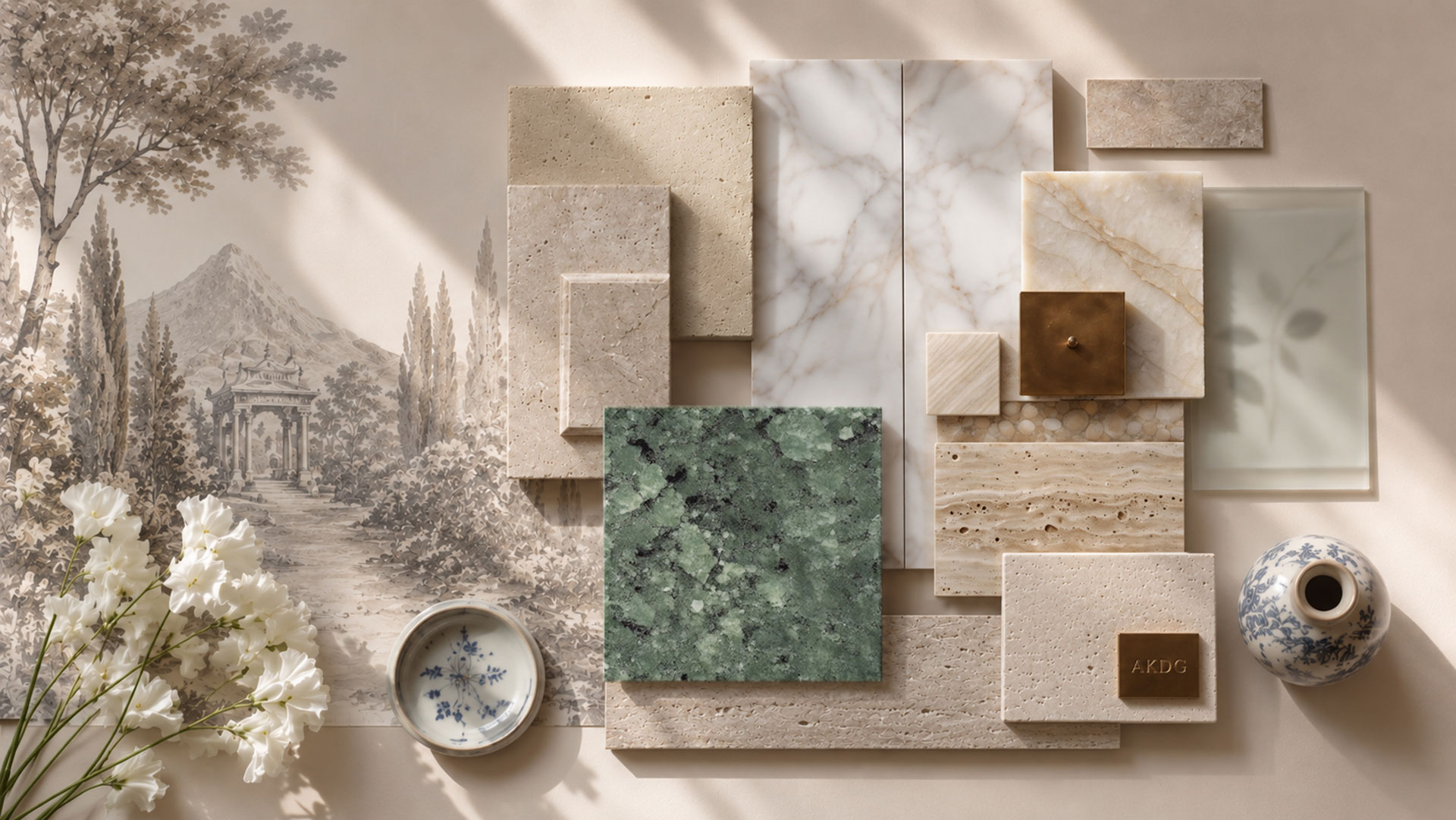
1. Decide what each surface has to survive before choosing any material.
2. Shortlist stone by hardness and porosity, then by appearance, in that order.
3. Test the shortlist. Leave lemon juice, oil and turmeric on an offcut overnight and look at it the next morning.
4. Calculate the full quantity with wastage and reserve it from one block.
5. View the actual slabs dry, full size, standing up, in daylight.
6. Choose the finish per surface, not per house.
7. Dry-lay and number the slabs for veining, and agree the book-matched panels on the floor before fixing.
8. Confirm substrate, thickness, adhesive and movement joints with the contractor in writing.
9. Seal, hand over the maintenance regime, and store the surplus.
Step three is the one client remember. A slab that shrugs off an overnight turmeric test has earned its place in a kitchen. A slab that does not has told you something useful for the price of an offcut, which is a considerably better outcome than learning it from a finished floor.
Neither, as a category. Both countries produce stone across the full range of quality. What matters is the specific quarry and block: its density, its porosity and how consistently it has been cut. Makrana, an Indian marble, has held its surface on the Taj Mahal for close to four hundred years. Imported stone usually justifies its premium where you need large, highly consistent slabs for book-matching. For a floor that will be mostly covered by furniture, that premium buys very little.
A dense, lower-porosity stone in a honed rather than polished finish. Honed hides the inevitable etching and scratching far better, and density is what resists daily traffic. Choose the stone on those two properties first and on colour second. The most beautiful slab in the yard is not automatically the right floor.
No. An impregnating sealer slows absorption, which gives you time to wipe a spill before it stains. It does not make the stone waterproof, it does nothing against acid etching from lemon or vinegar, and it wears off and needs reapplying. Sealing is useful and routinely oversold.
It can, provided the owner understands what it will look like after two years of turmeric, oil and acidic marinades. Some people love the patina. If you want the surface to stay as delivered, use quartzite or a non-porous engineered surface for the working areas and keep the marble for the island face or the splashback where it is seen rather than used.
Because natural stone varies between blocks, and a second order is almost never cut from the first block. The fix is to calculate the whole requirement, including wastage, and reserve it from a single block before work starts. Slabs cut consecutively from one block are near-identical, and only consecutive slabs can be book-matched.
Light stone with restrained veining makes a room feel larger and calmer and is the safer long-term choice, because strong figuring that excites you in the yard can dominate a room you live in every day. If you want drama, concentrate it on one feature wall or one floor panel and keep the surrounding surfaces quiet. Judge any sample dry, at full size and in the room's own daylight, never wet in a showroom.
Stone is the longest-lived decision in an interior. Fabrics are replaced, paint is redone, furniture moves between houses, and the floor stays. That is an argument for choosing with the dull criteria first, hardness, porosity, quantity and substrate, and letting beauty be the final filter applied to a shortlist that has already passed the practical tests.
Our wider brief on what India's ultra-luxury villa clients ask their architect for sets out how material decisions sit inside a whole-house commission, and our note on luxury interior design cost in India explains how stone is scoped and budgeted. For an example of stone used at estate scale, see the restoration of a modernist Delhi residence and our account of Oaklane Villa in Delhi.
The practice carries material selection, specification and supervision inside its turnkey execution scope, so the stone is chosen, reserved, dry-laid and signed off by the same studio that drew the room. You can see the result across our residential projects.
Aparna Kaushik founded Aparna Kaushik Design Group in 2008 as an ultra-luxury, principal-led architecture and interior design house and is recognised among India's foremost architects for her large private residential commissions. Her studio's UAE practice serves UHNW clients across Dubai and Abu Dhabi, delivering architecture, interiors, furniture, lighting, landscape, art curation, and turnkey execution as one coordinated service.
aparnakaushik.com/about-us | enquiries@aparnakaushik.com | @aparnakaushikofficial