How India's ultra-luxury families commission a mansion interior, from the spatial programme to the staff infrastructure, written from the design studio's chair.
Mansion interior design in India is not villa design at a larger scale. It is a different category of commission with its own logic. A villa is a single, legible house. A mansion is a sequence of houses inside one envelope: a formal wing for receiving, a family wing for living, a guest wing for visitors, a staff infrastructure that runs beneath the whole, and increasingly a generational wing for aging parents or married children who remain within the family compound.
The brief, therefore, is one of zoning before it is one of decorating. Before a single material is chosen, the principal architect has to resolve how the mansion separates the formal from the private, how guests move without crossing family space, how staff service every room without being seen, and how three generations live under one roof without friction. Get the zoning wrong and no amount of marble corrects it. Get it right and the interior almost designs itself.
At Aparna Kaushik Design Group, mansion commissions are the most complex work the studio undertakes, and the most rewarding. This piece sets out how the studio approaches a mansion interior in India, what the ultra-luxury family is actually asking for, and how the estate brief differs from the penthouse and villa briefs we have written about elsewhere.
A villa typically holds one formal living room, one dining room, a family space, three to five bedrooms, and a kitchen. A mansion, however, holds multiples of each, organised into wings, with circulation that keeps the wings separate. The formal living room does not open onto the family breakfast room. The guest suite has its own entry.
This multiplicity changes the design discipline. In a villa, the interior is a single composition. In a mansion, it is a set of related compositions that must read as one house while functioning as several. The material palette has to hold across wings that serve very different purposes. The formal wing carries one register, the family wing a softer one, the guest wings a third, and yet the whole has to feel like a single family's home rather than a hotel.
The second difference is permanence. A penthouse is bought and may be sold within a decade. A mansion is built to hold a family for two or three generations. The interior is commissioned with that timeline in mind. Materials are chosen to age, not to date. Joinery is built to be repaired rather than replaced. The art programme is assembled as a collection that will grow, not as a one-time decoration.
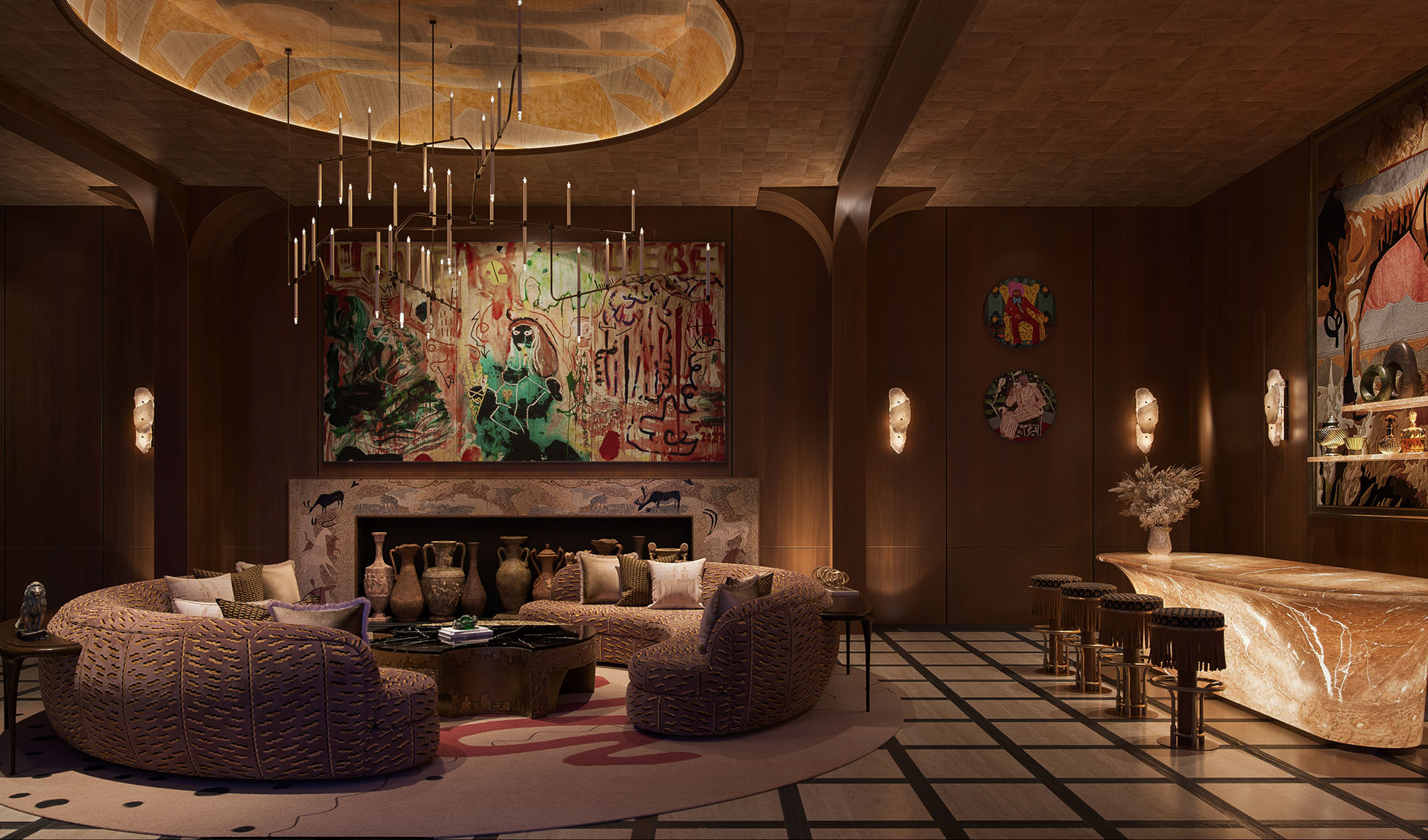
In our practice, we resolve every mansion plan into five functional zones before we begin the interior. Each zone has its own design logic, its own material register, and its own relationship to the others.
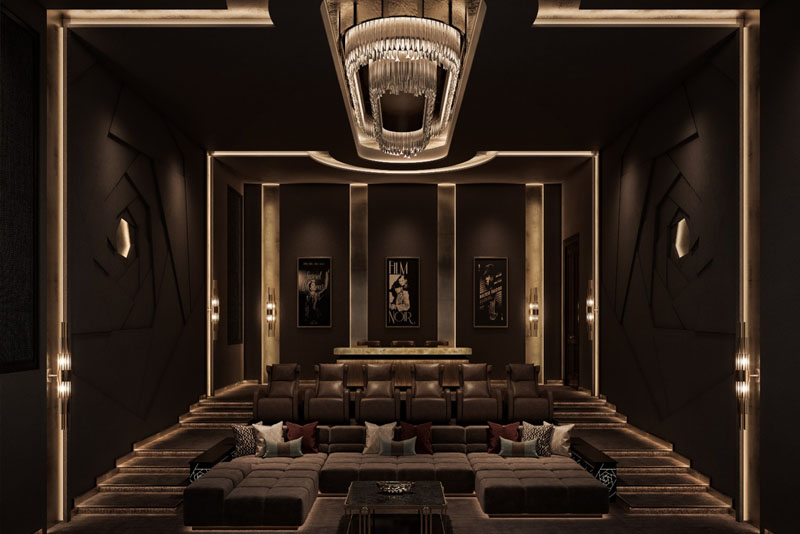
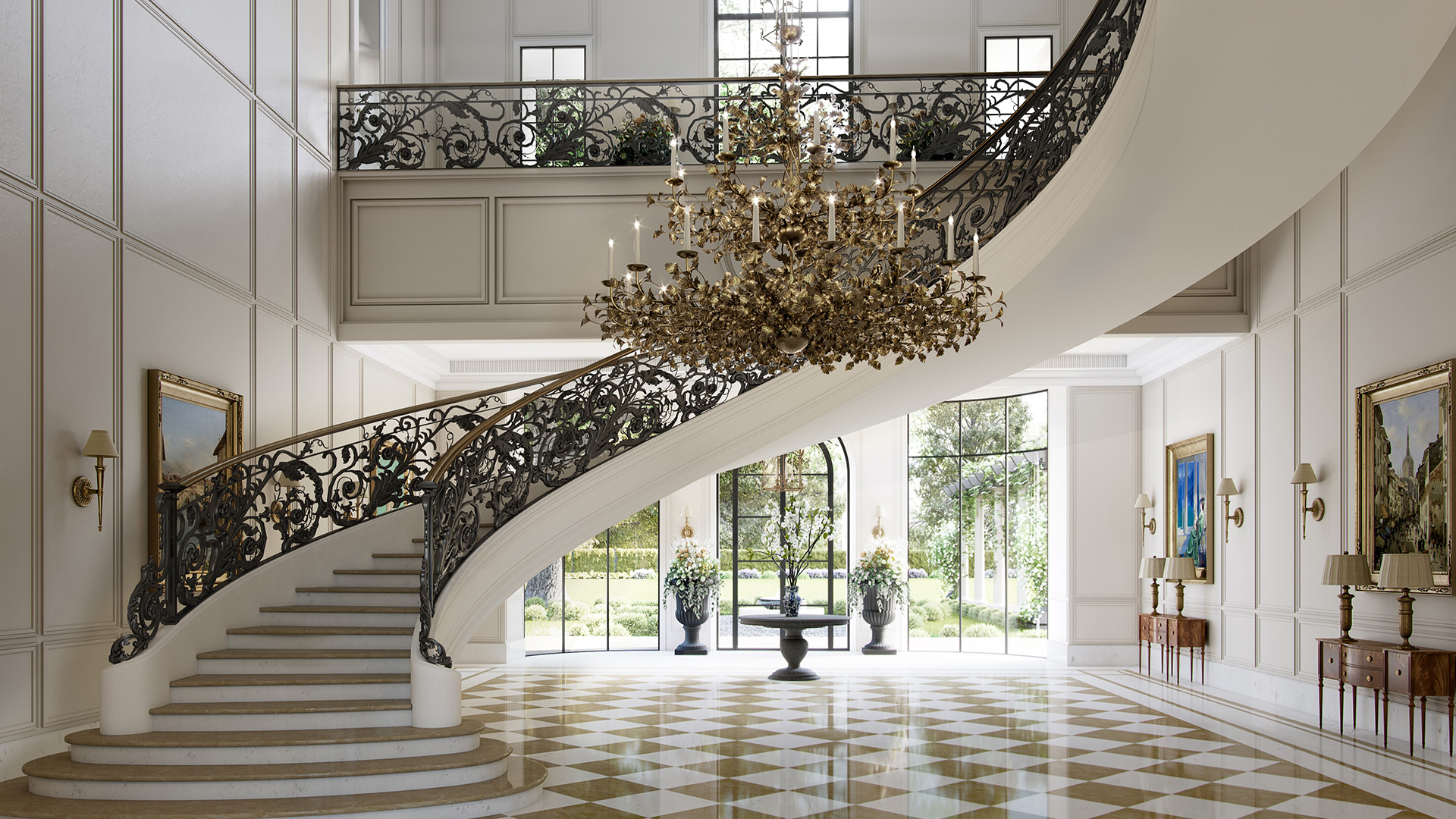
The receiving rooms: the entrance hall, the formal drawing room, the formal dining room, the bar, and the powder rooms that serve guests. This zone carries the highest register in the house. It is where the family's public face lives. Proportions are generous, ceilings are high, and the material palette is at its richest. Stone floors, hand-knotted carpets, statement lighting, and the most significant pieces of the art programme concentrate here. The formal zone is designed for the largest gathering the family realistically hosts, which in our experience is usually a wedding-adjacent event of eighty to two hundred guests.
The rooms the family actually lives in: the family living room, the breakfast room, the everyday kitchen, the children's spaces, and the informal terraces. This zone is softer, warmer, and more forgiving than the formal zone. Materials are chosen for daily use. The register drops from grand to comfortable. This is where the family spends ninety percent of its time, and the design honesty of the studio is tested here more than anywhere: the family zone has to be beautiful and livable at once.
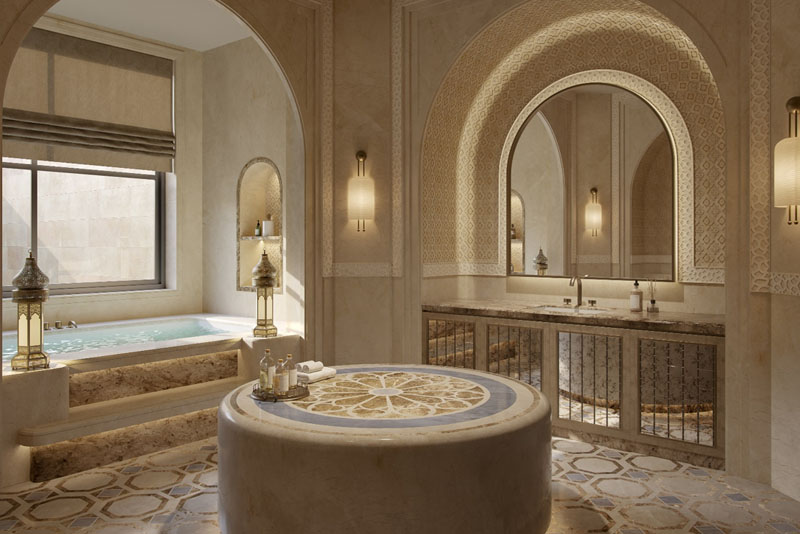
The principal bedroom suite and the immediate family bedrooms. The principal suite in a UHNW mansion is itself a small house: a bedroom, a sitting area, dual dressing rooms, dual bathrooms, often a private pantry and a private terrace. The design here is intimate and personal, calibrated to the principals' specific preferences rather than to any public expectation. The private zone is the one room sequence the studio designs entirely for the client and not at all for the guest.
The guest suites, designed to give visitors hotel-grade independence: their own entry where possible, their own service, and a register that signals welcome without competing with the principal suite. In multi-generational Indian families, the guest zone often doubles as the visiting-children zone, designed for married sons or daughters who return for extended stays with their own families.
The staff infrastructure: the service entry, the catering kitchen distinct from the show kitchen, the staff quarters, the laundry, the stores, the plant rooms, and the service spine that connects them to every room in the house. This zone is invisible to guests and essential to function. A mansion that does not design its service zone properly fails in use, however beautiful its formal rooms. We design the service spine first, before the formal rooms, because everything else depends on it.
The defining feature of the Indian UHNW mansion, and the one that most distinguishes it from its European or American equivalent, is multi-generational occupancy. The mansion is built to hold the principal couple, their parents, and often their adult children with families of their own. Three generations, sometimes four, under one roof, by choice and by culture.
This shapes the plan in specific ways. Aging parents need single-level access, lift provision, and proximity to the family zone without loss of independence. Adult children with young families need a degree of separation that allows their own household rhythm. The principal couple needs a private zone that is genuinely private from both. The design problem is to give each generation autonomy while keeping the family connected. The mansion that solves this is a quiet triumph of planning.
The studio approaches this through what we call soft separation: distinct wings with their own services and entries, connected through shared formal and family zones, so that each generation can live independently but the family gathers naturally. The shared dining table, the family living room, and the gardens become the connective tissue. The private wings become the autonomy. We touched on related principles of how families brief the studio in our piece on villa interior design for India's ultra-luxury clients.
"A mansion is not built for the family it has today. It is built for the family it will become. The design has to hold a wedding, a grandchild, and a quiet evening with equal grace." Aparna Kaushik, Founder and Principal Architect
Material specification for a mansion carries a discipline that smaller projects do not demand: continuity at scale. A material palette that reads beautifully in a single villa room can feel monotonous across a mansion's many rooms, or worse, can fragment if the studio varies it too freely. The craft is to hold a coherent palette across thousands of square feet while giving each zone its own character.
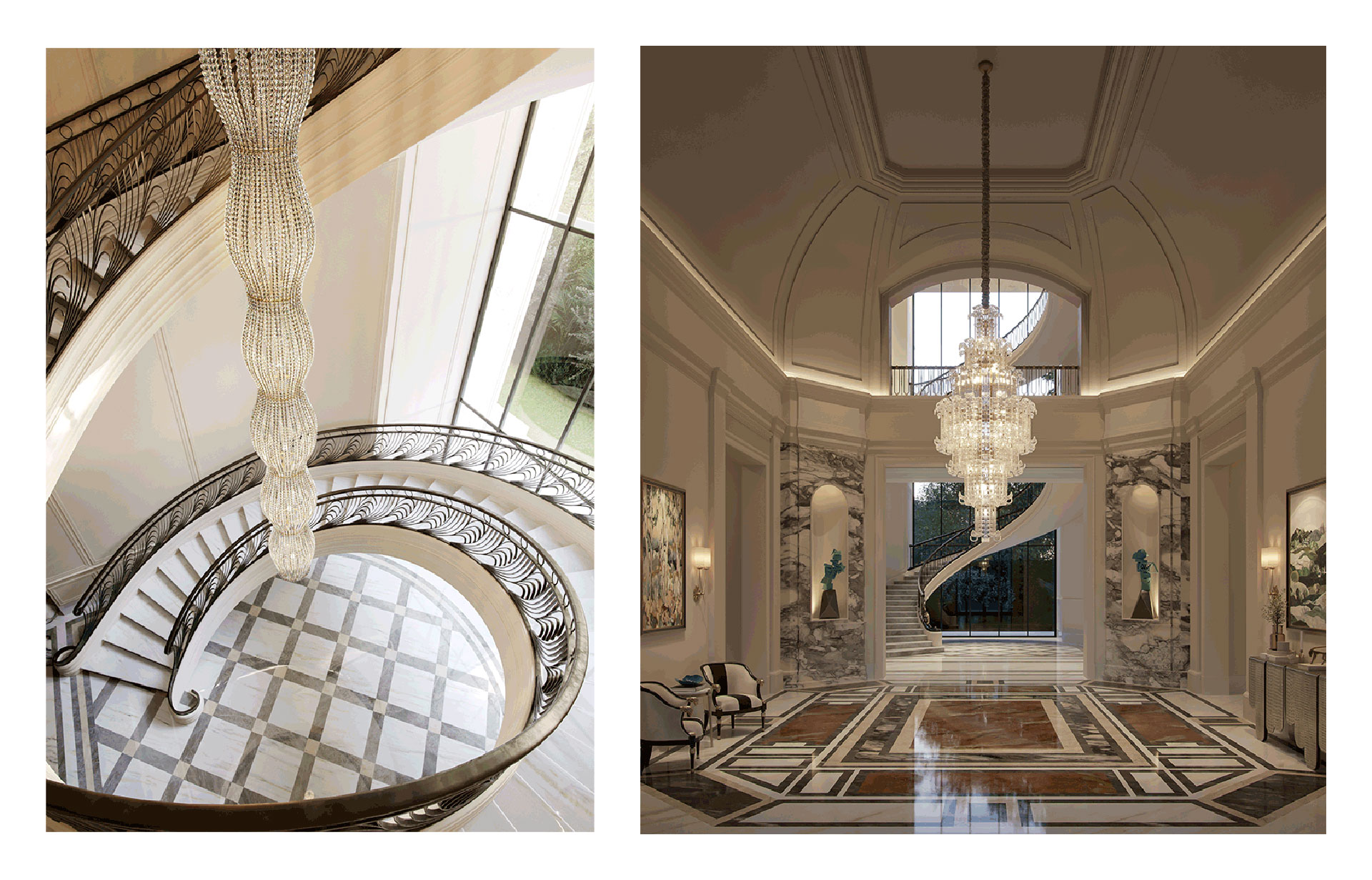
Stone is the spine of a mansion interior. The formal zone typically uses large-format marble, book-matched at the entrance and in the formal rooms, with the block selection made at the quarry by the studio's principal designer. For an estate-scale project, stone is ordered as reserved blocks twelve to eighteen months ahead, because the quantity required cannot be sourced on short notice and because consistency across the formal floors demands a single block run.
Hardwood in a mansion is both floor and joinery. European oak and walnut predominate, with the formal zone leaning toward the deeper register of walnut and the family zone toward the warmth of oak. Joinery at mansion scale is a workshop programme of its own, often running to hundreds of running feet of bespoke cabinetry, paneling, and built-in furniture, sequenced over the full build timeline.
At estate scale, the wall finish itself becomes a material decision. Lime plaster, Venetian polished plaster, and hand-applied textured finishes are specified where the budget and the register allow, because flat paint reads thin across the large wall planes a mansion presents. The wall finish is one of the quiet decisions that separates an estate-grade interior from a merely large one.
Bronze, brass, and blackened steel detail the joinery, the stair balustrades, and the door hardware. At mansion scale, the metalwork is often custom-fabricated to the studio's drawings rather than specified from a catalogue, because the proportions of an estate staircase or a double-height window screen exceed standard sizes. Glass, in the form of steel-framed internal screens and large external glazing, connects the zones with light while maintaining acoustic and visual separation.
A mansion interior runs to a programme measured in years, not months. From the studio's engagement to the family's move-in, an estate-scale interior typically takes eighteen to thirty months, depending on whether the studio is engaged at the architectural design stage or after the structure is built. The earlier the engagement, the better the result, because the interior and the architecture are then designed together rather than the interior being fitted into a structure that did not anticipate it.
Procurement at mansion scale is a logistics discipline in itself. Reserved stone blocks, custom-fabricated metalwork, hundreds of running feet of bespoke joinery, furniture from named European houses, hand-knotted carpets woven to order, and an art programme assembled over the build period all have to arrive in the right sequence. A delivery that arrives too early has nowhere to be stored; one that arrives too late holds up an entire wing. The studio's procurement lead manages this as a parallel programme to the design itself.
Cost at this scale resists generalisation, but the honest range, for a full estate-grade interior fit-out inclusive of joinery, stone, lighting, furniture, art, and technology, runs meaningfully above the per-square-foot figures of a penthouse or villa, because the formal-zone materials and the custom fabrication carry a higher unit cost. The studio sets the budget envelope at engagement and designs to it; the families who commission this work value the honesty of a fixed envelope over the surprise of an open one.
The studio's mansion work spans Delhi NCR, Mumbai, Hyderabad, and selectively other Indian cities, alongside estate commissions in the UAE. The engagement begins with a single in-person meeting between the principal family, Aparna Kaushik, and the lead designer, at which the studio listens before it proposes. From that meeting, a scoping memorandum and a project programme follow.
Because the mansion brief is most successful when the interior and the architecture are designed together, the right time to engage the studio is at the architectural design stage, before the structure is finalised. Engaging at this point allows the five-zone logic to shape the building itself, rather than the interior working around a structure that did not anticipate it.
To begin, the AKDG enquiry path sits on every page of this site, or write to enquiries@aparnakaushik.com. Prior estate and residence work is documented in the projects gallery, and the Panther House case study sets out one recent Delhi commission at length.
A. The difference is programme, not just size. A villa is a single, legible house with one of each principal room. A mansion is a set of related houses inside one envelope, organised into wings, a formal zone, a family zone, a private zone, a guest zone, and a service zone, with circulation that keeps them separate. The mansion brief is one of zoning before it is one of decorating.
A. An estate-scale interior typically takes eighteen to thirty months, depending on whether the studio is engaged at the architectural design stage or after the structure is built. Engaging earlier produces a better result, because the interior and the architecture are then designed together rather than the interior being fitted to a finished structure.
A. At the architectural design stage, before the structure is finalised. This allows the five-zone logic, formal, family, private, guest, and service, to shape the building itself, rather than the interior working around a structure that did not anticipate it. The earlier the engagement, the more coherent the result.
A. The formal zone for receiving guests, the family zone for daily living, the private zone of the principal and family bedrooms, the guest zone for visitors, and the service zone of the staff infrastructure. In our practice, these five zones are resolved before any material is chosen, because everything else depends on the zoning being right.
A. Through soft separation: distinct wings with their own services and entries, connected through shared formal and family zones. Each generation lives with autonomy, aging parents with single-level access, adult children with their own household rhythm, the principal couple with genuine privacy, while the shared dining table, family living room, and gardens keep the family connected.
A. Because the house lives or dies on it in daily use. The catering kitchen, the staff route, the stores, the laundry, and the plant rooms all have to function invisibly and serve every room. A studio that designs the formal rooms first and fits the service infrastructure around them produces a beautiful house that fails in use. The service spine is designed before the formal rooms.
A. Large-format book-matched marble in the formal zone, European oak and walnut for floors and joinery, hand-applied plaster wall finishes, custom-fabricated bronze and steel metalwork, and steel-framed glass screens connecting the zones. The discipline at estate scale is holding a coherent palette across many rooms while letting the register, not the materials, distinguish the zones.
A. As a managed parallel programme to the design. Reserved stone blocks, custom metalwork, hundreds of running feet of bespoke joinery, furniture from European houses, carpets woven to order, and an art programme assembled over the build all have to arrive in sequence. A dedicated procurement lead, engaged at the design freeze, prevents the cascading delays that a single missed deadline would otherwise cause.
A. Resolving the zoning too late. A studio that begins specifying materials before the five zones are fixed will find formal and family circulation crossing, the staff route visible from the guest suite, or the generational wings inadequately separated. By the time the error appears in the built fabric, it is a structural problem rather than a finishing one.
A. Begin with a single enquiry through the website or to enquiries@aparnakaushik.com. The studio responds with a request for an in-person meeting between the principal family and Aparna Kaushik, at which the studio listens before it proposes. A scoping memorandum and project programme follow. For the best result, engage the studio at the architectural design stage, before the structure is finalised.
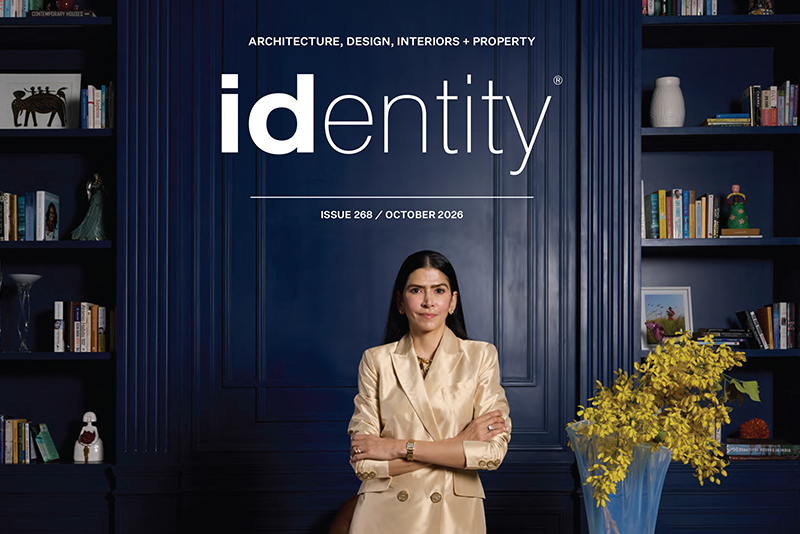
Aparna Kaushik is one of India's foremost architects, recognised among the country's top five for her work on ultra-luxury private residences. With over 18 years of practice and a studio founded in 2008, she has completed landmark estates across India and is now working with UHNW clients in the UAE. Her work blends European classicism with modernist tropical architecture — a sensibility shaped by India's design heritage and executed to a standard that is increasingly sought by Dubai's most discerning villa owners.
aparnakaushik.com/about-us | enquiries@aparnakaushik.com | @aparnakaushikofficial