KEY TAKEAWAYS
USD 64.21BIndia luxury residential market 2026 Mordor Intelligence, 2026 |
85,698HNWIs in India (net worth >$10M) Knight Frank Wealth Report 2025 |
85%YoY luxury housing sales growth H1 2025 CBRE-ASSOCHAM, 2025 |
57%Delhi NCR share of luxury transactions CBRE-ASSOCHAM, H1 2025 |
The 8 demands below are consistent across project type, geography, and client profile. Each is explored in full in the sections below.
| # | Demand | Definition | Signature Expression | Priority |
|---|---|---|---|---|
| 1 | Architectural Originality | Design specific to this family and this site. No templates, no reference projects from previous clients. | Bespoke spatial layouts, site-responsive architecture, geometry designed from inside-out | Non-negotiable |
| 2 | Spatial Integration | Architecture and interiors conceived as one act. Material palette begins at structural level. | Continuous stone floors, joinery integrated into architecture, sightlines from structure | Non-negotiable |
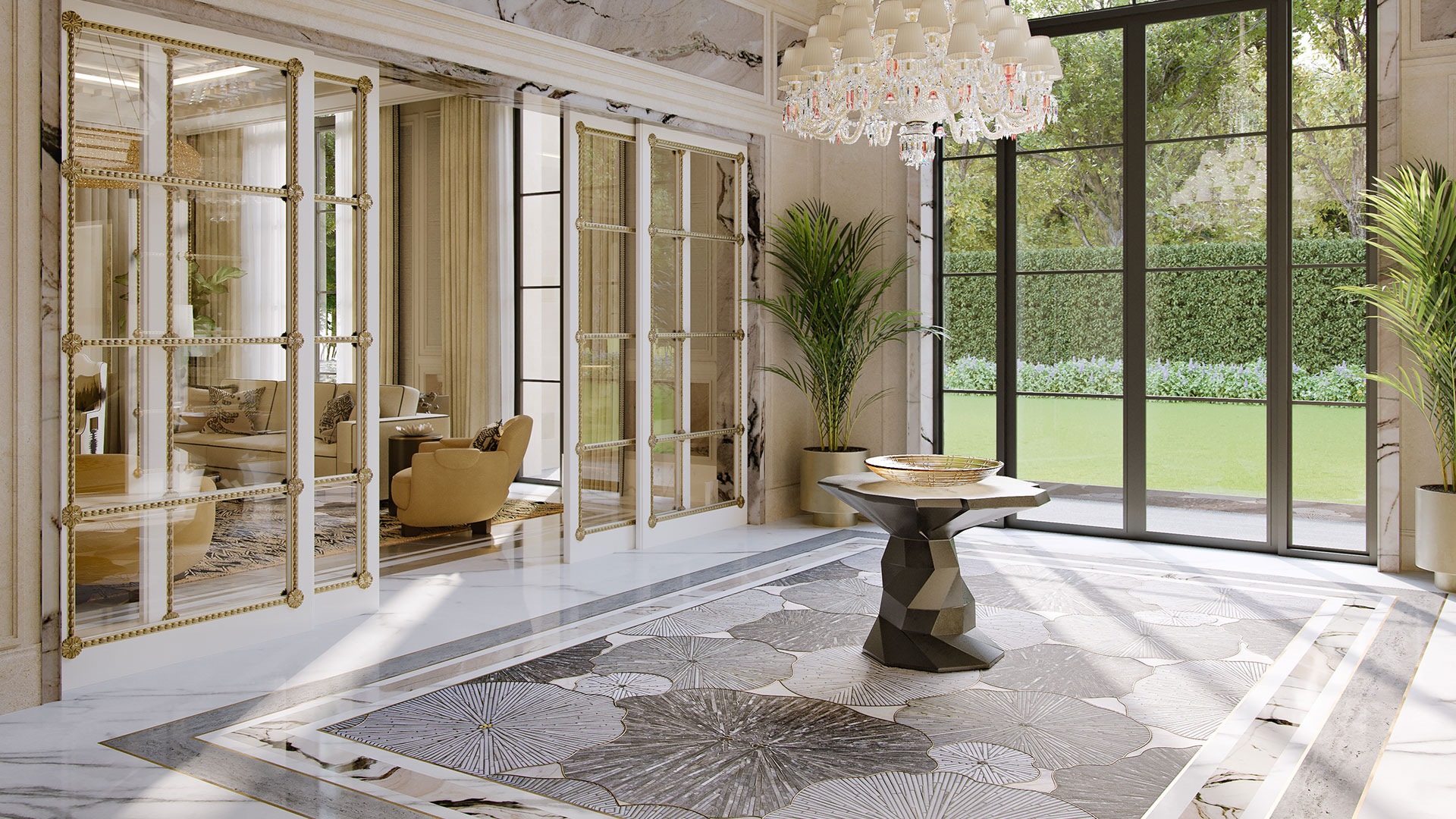
| 3 | Material Mastery | Indian natural stone alongside international marble and timber. Materials with provenance, not just price. | Hand-selected slabs, artisan stone inlay, Kota stone, Makrana marble, natural textiles | Essential |
| 4 | Multi-Generational Design | Spaces for how an Indian family actually lives. Privacy and togetherness within the same envelope. | Separate courtyards, acoustic zoning, dedicated puja space, independent entry points | Essential |
| 5 | Personal Narrative | The home reflects this family's specific story. Not a global luxury template at an Indian address. | Family art integrated into architecture, materials from ancestral regions, spaces carrying specific memories | Fundamental |
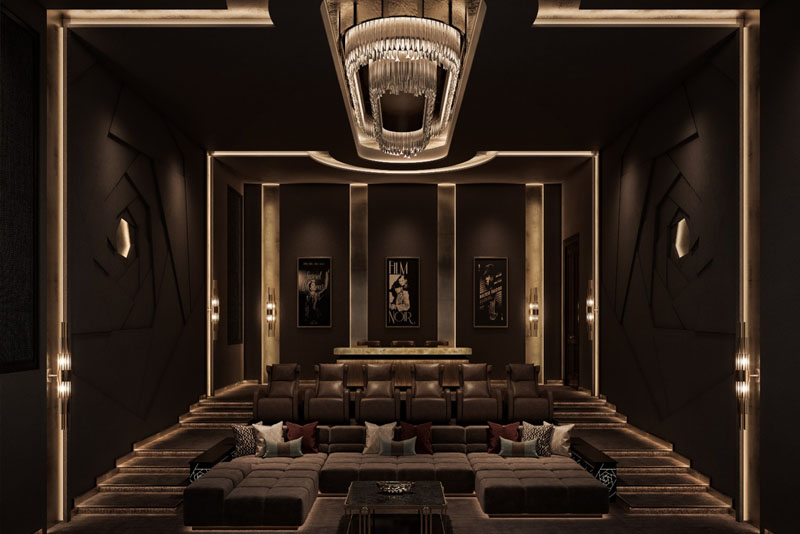
| 6 | Invisible Technology | Smart home systems seamlessly integrated. The test: no visitor should know the technology is present. | Lutron lighting control, motorised glazing, concealed AV, smart climate zoning room by room | High |
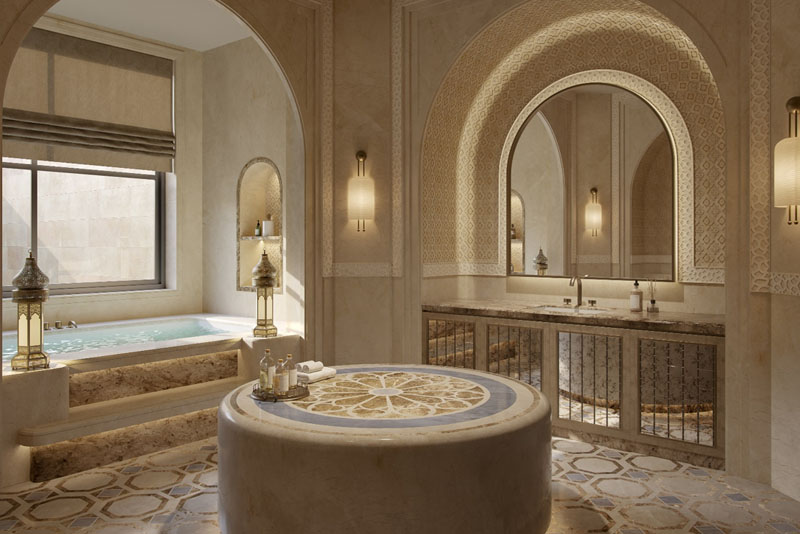
| 7 | Wellness Architecture | Dedicated wellness spaces designed as architecture, not added as amenities. | Private yoga room, hammam or spa-standard bathroom, biophilic integration, indoor garden | High |
| 8 | Vastu Integration | Vastu applied as spatial philosophy. Orientation, placement, and proportion interpreted architecturally. | Vastu-compliant orientation, entry design to cardinal principles, proportions from Vastu geometry | High |
Villa interior design in India is operating in a market that has changed significantly in the last three years.
India's luxury residential market is valued at USD 64.21 billion in 2026 and forecast to reach USD 107.99 billion by 2031 at a CAGR of 10.95% (Mordor Intelligence, 2026). The India luxury interior design market reached USD 1.6 billion in 2024 and is projected to reach USD 2.9 billion by 2033 (IMARC Group). Luxury housing sales grew 85% year-on-year in H1 2025, led by Delhi NCR, which accounted for 57% of total luxury transactions.
The country ranks fourth globally in high-net-worth individuals, with 85,698 people holding net assets exceeding USD 10 million (Knight Frank Wealth Report 2025). Luxury home prices appreciated 40% on average across India's top seven cities over the past three years. Delhi NCR led that figure at 72% appreciation (Anarock, 2025).
But the market data only tells you what is being commissioned. It does not tell you what is being asked for. What does an ultra-luxury villa client in India actually demand from their architect?
"The brief that defines an ultra-luxury villa in India is never about budget. It is about permanence. Our clients are designing homes that will be lived in by three generations. That changes everything: how space flows, how materials are chosen, how a room feels at 7am and at midnight"
- Aparna Kaushik, Founder and Principal Architect, Aparna Kaushik Design Group
The ultra-luxury villa client in India in 2026 is not asking for the most expensive option. They are asking for the most considered one.
They are UHNW entrepreneurs, technology founders, second-generation business families, and NRIs returning to India. They have lived in London, New York, Dubai, and Singapore. They know what considered villa interior design looks like and they know when it is absent. India Sotheby's International Realty reports that 60% of luxury buyers in 2024 sought customised wellness spaces or private gardens, not as amenities but as architectural spaces designed with the same rigour as the primary living areas.
Three client typologies appear consistently in ultra-luxury villa interior design in India:
Commissioning a home for three generations. The brief includes every family member's specific requirements: a grandfather's room with a particular quality of afternoon light, a daughter's studio adjacent to but private from the main house, a puja room with specific spatial orientation. Design is inseparable from family narrative. The budget is rarely discussed before the family's story is understood.
An NRI or frequent traveller who has experienced the world's finest residential design and is making a deliberate choice to commission something rooted in India's design intelligence. They want Indian materials, Indian craft, Indian spatial rhythm, executed to a global standard they can recognise. They are not asking for what they have seen elsewhere. They are asking for something that could only exist here.
A technology founder or entrepreneur commissioning their first truly personal home. The brief is shaped by global design literacy and a strong sense of personal identity. They know exactly what they do not want. The architect's job is to help them understand what they do.
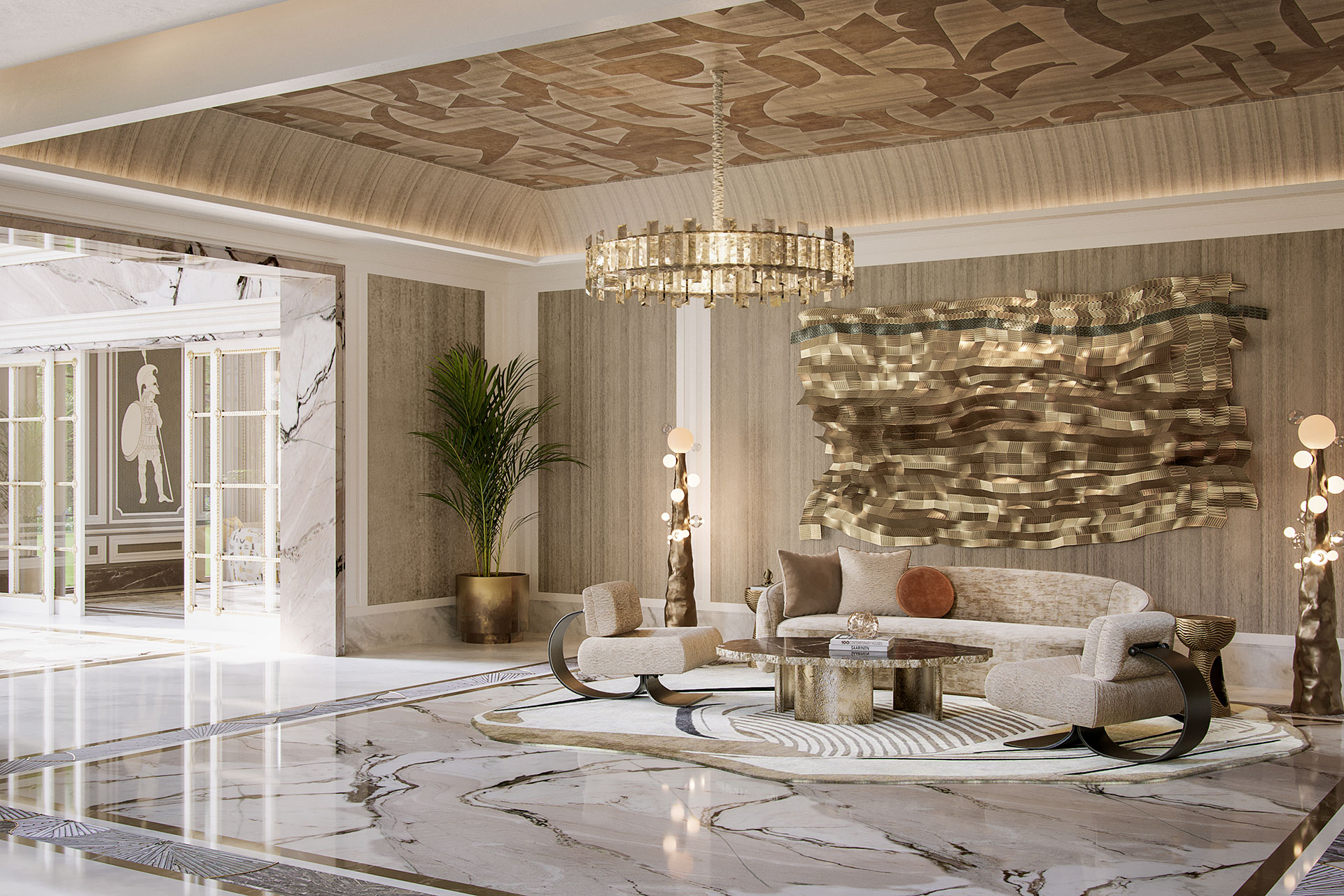
The most consistent demand at this level is also the most difficult to meet: a villa interior design in India that has never been done before.
Not original in the sense of unusual or experimental. Original in the sense of being absolutely specific to this family, this site, and this brief. Ultra-luxury clients in India have seen enough design to recognise a template. They are not paying for a version of something they have already seen in Architectural Digest. They are paying for something that could not have been designed for anyone else.
Architectural originality begins with the site. Every great villa begins with a detailed reading of how light moves across the plot through every season, where the wind comes from, what views should be held and what screened. Architecture that ignores these conditions is applied, not original. In The Panther House in Delhi, one of Aparna Kaushik Design Group's most recognised residential projects, the design begins with the site's specific afternoon light, which determines ceiling heights and the orientation of every primary space.
To see how this approach is applied in practice: The Panther House, Delhi -- 15,000 Sq Ft Contemporary Villa
The single clearest marker of ultra-luxury villa interior design in India, and the most frequently absent one, is the integration of architecture and interiors as one creative act.
When architecture and interiors are designed by separate teams at different stages, the seam is always visible. The joinery sits against the wall rather than growing from it. The interior material palette contradicts the logic of the building. The lighting design was added after the spatial planning was complete.
When villa interior design and architecture are conceived together, the result is different. The stone that begins on the exterior continues to the interior. The ceiling geometry of the living room is the structural logic of the building expressed from below, not applied plasterwork. Every threshold between spaces is designed rather than implied. The home has a grammar, and every room speaks it.
For an overview of how Aparna Kaushik Design Group approaches this integration across all projects:
See: Villa Interior Design Services by Aparna Kaushik Design Group.
India has natural stone resources that are unparalleled anywhere in the world. Kota limestone, Makrana white marble, Jaisalmer yellow sandstone, Agra red sandstone. These materials have been used in India's finest buildings for centuries. They respond to Indian light in a way that imported stone cannot.
At the ultra-luxury level of villa interior design in India, the conversation is not between Indian materials and imported ones. It is about knowing which material does which job best, and having the technical knowledge to use both at the level the design requires.
In The Heritage House, Makrana white marble forms the primary entrance sequence, its luminosity a deliberate contrast to the dark teak joinery used throughout. In Colonial Charm, Jaisalmer yellow sandstone was selected for the courtyard walls specifically for how it reads in the amber light of a Delhi evening. These are not decorative decisions. They are material decisions made in response to specific light conditions at specific times of day.
See a project where material intelligence is central to the design: La Maison -- Luxury Private Villa.
The ultra-luxury villa brief in India is rarely about one generation. More often it is about three.
The parents who commissioned the home. The adult children who will take it over. The grandchildren who will grow up in it. Sometimes the grandparents who are living in it now. This multi-generational dimension shapes everything: the number of separate dwelling wings within the compound, acoustic separation between zones, the location of the puja space, provision for domestic staff, and the design of the arrival sequence so that guests and family use different entrances.
Good multi-generational villa interior design in India is not about size. It is about the intelligence of zoning. How privacy and togetherness are simultaneously preserved within the same envelope. A courtyard that connects four wings and serves as the family's shared heart. A kitchen that opens for family occasions and closes for private household management. A service route that is invisible to guests.
The villa that carries the family's specific story is categorically different from one that has been executed to a generic luxury standard.
Personal narrative in villa interior design in India means the home contains art the family has collected, uses stone sourced from a region with personal significance, has a library whose orientation was chosen because one family member reads only in morning light, and holds within its walls the things that matter to this specific family rather than the things that matter to a target market.
Building this level of personal narrative into a design requires a different kind of working relationship. It requires an architect who spends a long time listening before beginning to draw. Conversations about childhood homes, about travel, about which rooms in previous homes felt right and which did not. The design emerges from these conversations. La Maison is one project where this approach is most visible: a design that grew entirely from the clients' world, their material history, and the specific quality of life they wanted to preserve.
"We never begin with what the house will look like. We begin with how the family lives. The design follows from that understanding. If the understanding is right, the design cannot be wrong"
- Aparna Kaushik
Ultra-luxury villa clients in India in 2026 expect complete smart home integration. The test is not whether the technology works. The test is whether a visitor knows it is there.
When technology is visible, it becomes the dominant feature of a room. Screens on walls, devices on tables, visible cable runs. When it is integrated properly, it disappears entirely. Lighting changes based on the time of day without anyone touching a switch. The glazing opens automatically at the hour when the outdoor temperature becomes comfortable. The AV system is present throughout the home and never seen in any room.
For villa interior design in India at this level, the technology specification is part of the architectural brief, not a separate conversation with a systems integrator after the building is complete. Lutron lighting control, motorised glazing, concealed AV, and smart climate zoning room by room are the baseline. The brief goes further: every technology decision is reviewed against whether it can be concealed within the architecture before it is approved.
Wellness is now a structural demand, not an amenity upgrade, in ultra-luxury villa interior design in India.
India Sotheby's International Realty reports 60% of luxury buyers in 2024 sought dedicated wellness spaces. At the ultra-luxury level, this goes beyond a gym. It means a yoga room designed to face the morning light at the hour it gets used. A meditation courtyard with water, natural stone, and acoustic separation from the rest of the house. A bathroom that is an architectural space rather than a fitting specification, with a hammam element, a separate cold plunge, and materials chosen for how they feel under bare feet.
Biophilic integration is part of this demand: internal gardens that bring outdoor air and natural light deep into the plan, water features positioned to provide acoustic privacy as well as atmosphere, and planting that responds to the specific climate of the site. In a Delhi farmhouse, this means species that hold their quality through the summer and the monsoon. In a Mumbai property facing the sea, it means planting that performs in salt air.
Vastu Shastra remains important to the majority of ultra-luxury villa clients in India. At this level, the approach has evolved significantly.
Rather than a checklist of rules, Vastu is applied as a spatial philosophy. The orientation of the main entrance relative to cardinal directions. The placement of the kitchen relative to the south. The proportion and ceiling height of the puja room. The position of the master suite. Interpreted architecturally, Vastu principles often produce exactly the spatial outcomes that good design demands: considered orientation, natural light maximisation, and a logical hierarchy of private and shared spaces.
The most effective application of Vastu in villa interior design in India is when the architect understands it well enough to integrate it into the spatial logic from the start, rather than applying it as a correction at the end of the process. This requires both architectural knowledge and genuine familiarity with Vastu principles as a design system.
The materials below are the most widely used across India's finest private residences. Each includes finish guidance, application notes, and the specific quality that makes it perform at the ultra-luxury level.
Note: In India's varied climatic zones, material specification must account for local humidity, temperature range, and UV exposure. All natural stone should be specified with appropriate sealing for the specific region
| Material | Finish | Best Used In | Why It Defines Ultra-Luxury in India |
|---|---|---|---|
| Kota Stone | Sawn or honed | Courtyard floors, verandah paving, transitional spaces | India's finest sedimentary limestone. Warm blue-brown, extraordinary durability. Impossible to replicate with imported stone. |
| Makrana White Marble | Polished or honed | Entrance halls, feature walls, puja spaces | The stone of the Taj Mahal. Pure white, luminous, carries centuries of Indian craft tradition. The choice for clients who want genuine Indian provenance. |
| Jaisalmer Yellow Sandstone | Brushed or sawn | Exterior walls, transitional zones, feature panels | The warm gold of Rajasthan. Responds to Indian light in a way no imported stone achieves. Ages over decades without losing its quality. |
| Agra Red Sandstone | Smooth or rough-hewn | Statement walls, landscape elements, garden pavilions | Used in the great Mughal estates. Carries the weight of Indian architectural history. Grounding, warm, and specific to this country. |
| Calacatta or Statuario Marble | Polished or leathered | Kitchen islands, master bathroom surfaces, fireplace surrounds | Dramatic veining. Works in both classical and contemporary schemes. Specify leathered finish for high-traffic areas. |
| European Oak or Walnut | Oiled matte or smoked | Cabinetry, wall panelling, custom joinery, bedroom floors | Adds warmth and depth without heaviness. Essential counterbalance to the dominance of stone in large Indian villas. |
| Hand-knotted Textiles | Woven — Kashmiri, Jaipur, or Bhadohi | Bespoke rugs, wall hangings, upholstery fabric | India's finest craft tradition. Made to custom size and colour. Nothing from a European showroom achieves this quality. |
| Aged Brass or Bronze | Unlacquered | Door hardware, lighting fixtures, bathroom fittings, stair rails | Patinas over time rather than deteriorating. The single most important quality difference between luxury and ultra-luxury hardware specification. |
The ultra-luxury villa brief in India is not a document. It is a process.
It typically begins months before a single sketch is made. In conversations about the family's life and their history with this land or city. About the things they want to carry forward from previous homes and the things they want to leave behind. By the time the design brief is formalised, the architect already understands the family well enough to design for them specifically.
The five things that consistently define the brief at this level, regardless of location or client profile, are: permanence (a home designed to be lived in for generations, not remodelled in ten years); specificity (architecture that could not exist for any other family); material provenance (materials with a story, whether Indian or international); spatial intelligence (the ratio of private to shared space and the quality of transitions between them); and the invisible (service systems, technology, and structural decisions that are never seen but always felt).
For the elements that define elevated villa interior design across all projects: 10 Luxury Interior Design Elements Every Dubai Villa Needs.
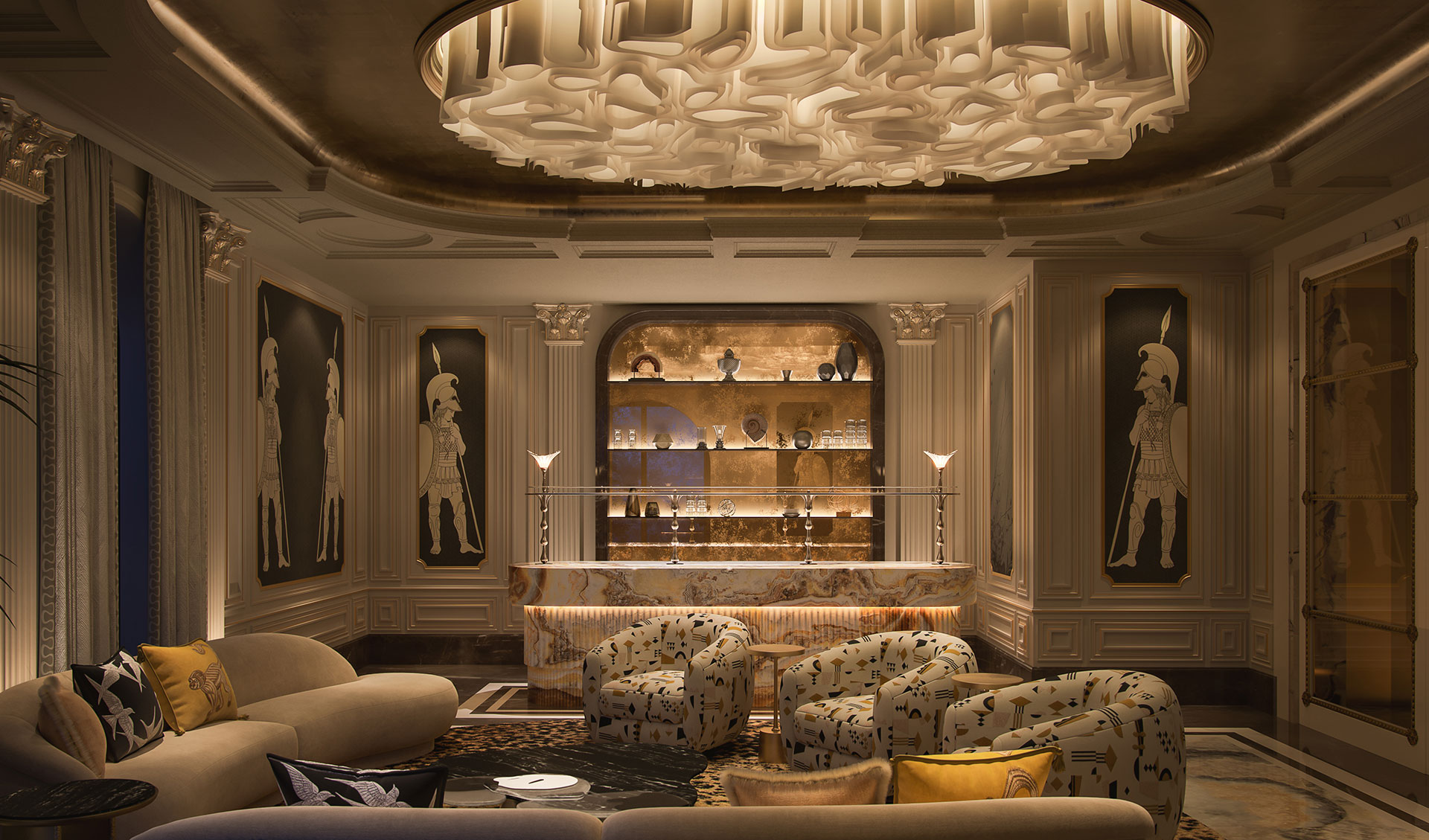
India has one of the most sophisticated craft traditions in the world, built over centuries of working with natural materials and creating spaces for multi-generational habitation. At Aparna Kaushik Design Group, this heritage is not applied as a decorative gesture. It is the foundation of how we approach villa interior design in India.
In practice this means a technical understanding of Indian materials: the weight of Kota stone against the warmth of teak, the specific quality of morning light on Makrana marble, the acoustic softness of hand-knotted wool against the resonance of stone floors. It means working relationships with Indian craftspeople, stone carvers in Rajasthan, weavers in Kashmir, bronze casters in Tamil Nadu, that produce objects and surfaces available nowhere else.
The finest ultra-luxury villa interiors in India today are not the ones that look most like their counterparts in London or Singapore. They are the ones that feel unmistakably, specifically Indian in the quality of their light, the depth of their materials, and the intelligence of their spatial organisation. The Vintage House is one project where this integration is most fully realised: hand-knotted textiles, bronze hardware, and Kota stone floors working as a single material language.
See the full residential portfolio: aparnakaushik.com/projects .
At this level, clients demand eight things: architectural originality specific to their brief, complete spatial integration between architecture and interiors, mastery of Indian natural materials alongside international stone and timber, multi-generational spatial design, a personal narrative woven into the design, invisible technology integration, wellness architecture designed as structure rather than amenity, and Vastu applied as a spatial philosophy. Budget is rarely the first conversation. Permanence is.
At the upper tier of India's luxury residential market, in Delhi NCR farmhouses, Mumbai's premium enclaves, and Hyderabad's gated villa communities, full architectural and interior design fees typically range from Rs 1,500 to Rs 4,000 per square foot depending on scope, specification level, and whether procurement, project management, and bespoke furniture design are included. The construction and fit-out cost for a villa at this level begins separately at approximately Rs 5,000 per square foot for a premium specification.
Delhi NCR dominates, accounting for 57% of total luxury residential sales in H1 2025 (CBRE-ASSOCHAM). Farmhouses in the Chattarpur-Mehrauli corridor, private estates in Lutyens' Bungalow Zone, and gated villa communities in Gurgaon and Noida are the most active markets. Mumbai follows, particularly in Juhu, Bandra, and the sea-facing bungalows of Worli and Altamount Road. Hyderabad is the fastest-growing market, driven by technology wealth, followed by Bangalore and Goa for second homes and estate properties.
Luxury villa design in India is defined by premium specification: imported marble, quality joinery, branded fittings. Ultra-luxury is defined by something different: a bespoke brief, a specific design narrative, and a level of spatial integration between architecture and interiors that cannot be achieved through standard procurement. The most important indicator is whether the architect designed the building and the interior as one, or whether an interior designer was appointed after construction was complete. The first approach produces ultra-luxury. The second produces a premium home.
Indian craft, Kota stone floors, hand-knotted Kashmiri rugs made to custom dimensions, artisan stone inlay panels, is the foundation of material intelligence in ultra-luxury villa interior design in India, not a decorative gesture. Clients at this level want homes that feel unmistakably Indian in their atmosphere and material depth, not merely styled with Indian accents.
Vastu Shastra is important to the majority of ultra-luxury residential clients in India. At this level, the approach has matured. Rather than a checklist of rules, Vastu is applied as a spatial philosophy: the orientation of the main entrance relative to cardinal directions, the placement of the kitchen, the proportion of the puja room. Interpreted architecturally, Vastu principles produce exactly the spatial outcomes good design demands: considered orientation, natural light maximisation, and a logical hierarchy of private and shared spaces.
Ultra-luxury villa interior design in India is defined not by how much is spent but by how clearly the architect understands who they are designing for.
The 8 demands documented in this guide are not aspirational features. They are the baseline expectations of clients commissioning at this level. Architectural originality, spatial integration, material mastery, multi-generational design, personal narrative, invisible technology, wellness architecture, and Vastu integration. Together, they describe what it means to design a home that will be lived in, loved, and passed on.
India's extraordinary craft traditions, richness of natural materials, and deep culture of multi-generational habitation mean these demands can be met at a level available nowhere else in the world.
To understand Aparna Kaushik Design Group's approach: About the Practice
Related reading: 10 Luxury Interior Design Elements Every Dubai Villa Needs
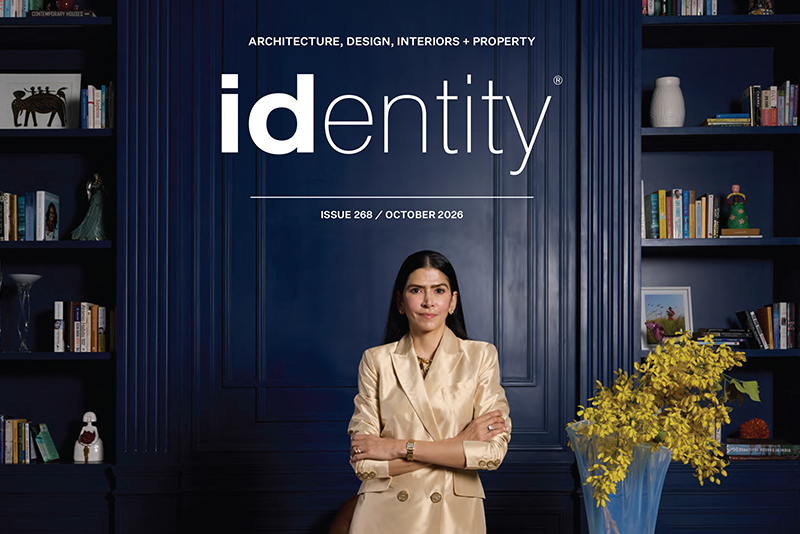
Aparna Kaushik is one of India's foremost architects, recognised among the country's top five for her work on ultra-luxury private residences. With over 18 years of practice and a studio founded in 2008, she has completed landmark estates across India and is now working with UHNW clients in the UAE. Her work blends European classicism with modernist tropical architecture — a sensibility shaped by India's design heritage and executed to a standard that is increasingly sought by Dubai's most discerning villa owners.
aparnakaushik.com/about-us | enquiries@aparnakaushik.com | @aparnakaushikofficial