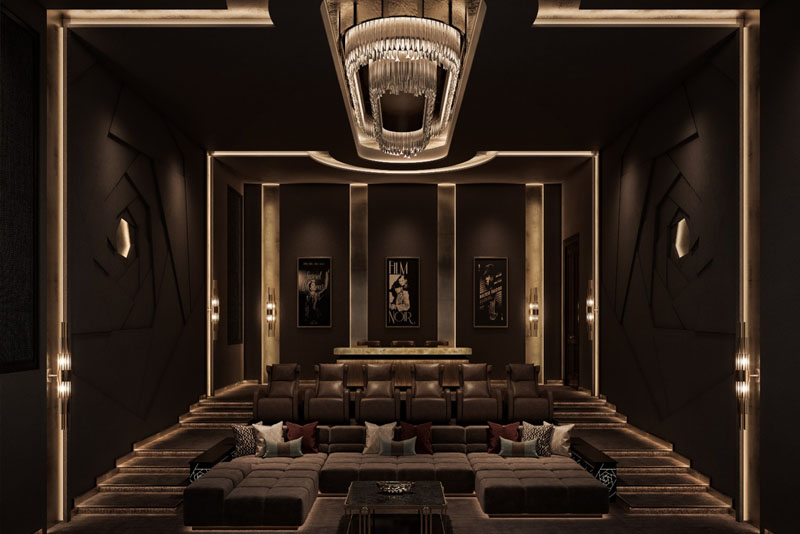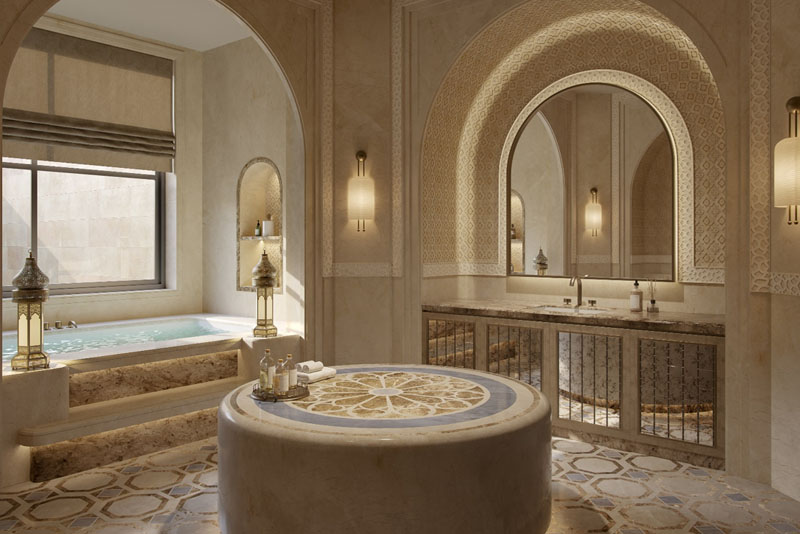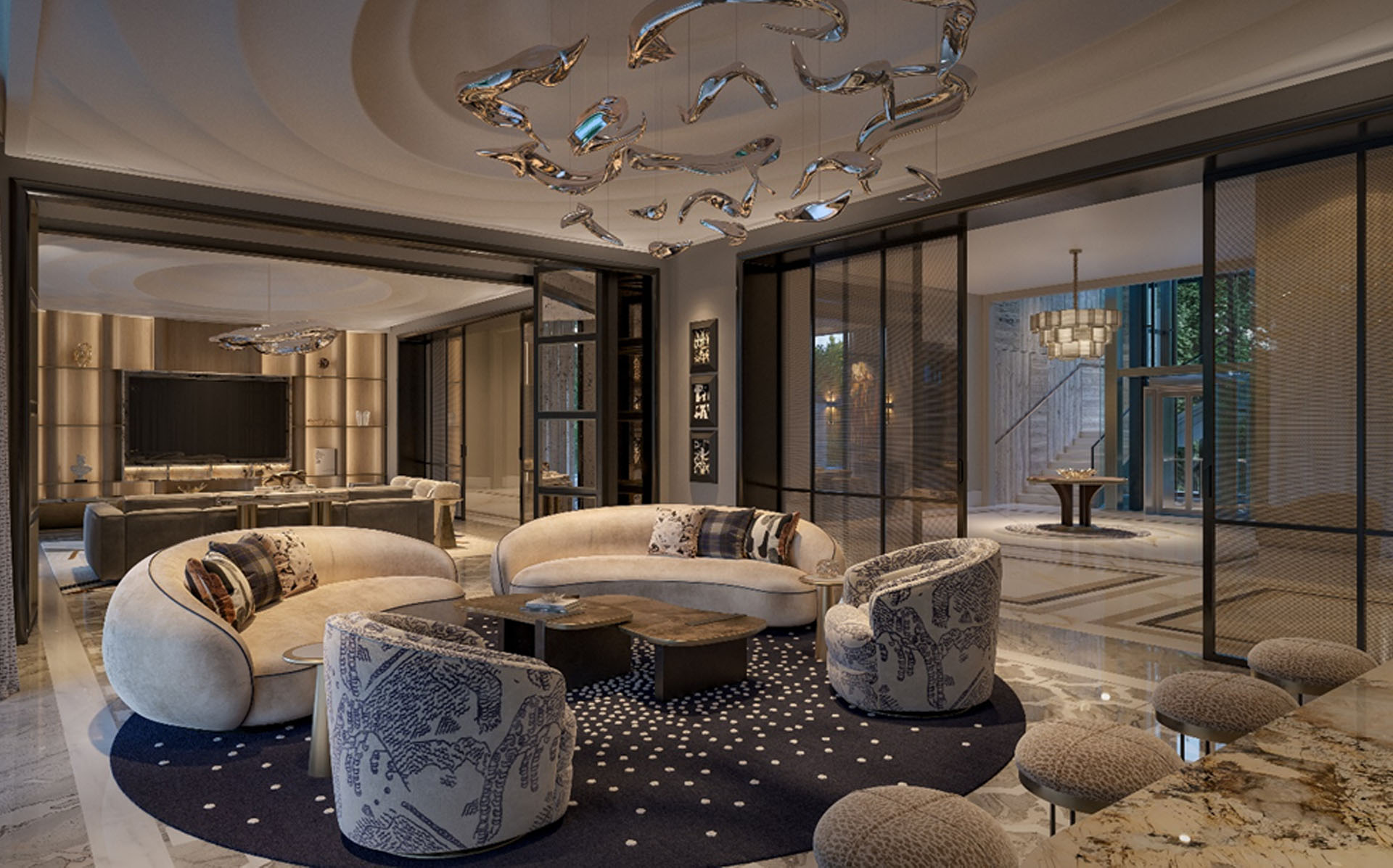
There is a particular quality to a Dubai villa that has been designed without compromise. It is not immediately obvious and not in the way that excess announces itself. It is felt first in the weight of a door, then in the way afternoon light moves across a stone floor, and then in a growing awareness that nothing in the room is accidental. Every surface, every proportion, every threshold has been considered.
Dubai's most distinguished private residences share a set of interior design elements that set them apart from the merely expensive. These are not trends. They are the principles that the world's best architects and interior designers have always known that Dubai's most discerning villa owners are now demanding with increasing clarity.
This guide outlines the ten essential elements of luxury interior design in Dubai villas: what they are, why they matter, and how they work together to produce spaces that endure.
USD 7.5BDubai luxury villa market by 2026 Source: Savills UAE, 2025 |
288K+Aparna Kaushik Instagram followers India's most followed luxury architect |
18+Years designing ultra-luxury estates Founded 2008, New Delhi |
Top 5Architects in India Recognised across multiple publications |
KEY TAKEAWAYS
Your Dubai villa is either designed or it is decorated. The difference is the quality of thinking behind every decision.
Dubai's villa clients have shifted. The people commissioning homes in Emirates Hills, Palm Jumeirah, and District One today have lived in London, Singapore, and New York. They know what considered design looks like. They are not asking for larger spaces or more expensive finishes. They are asking for better decisions at every level.
The luxury interior design elements that distinguish the best private residences in Dubai come from one source: an architectural approach to interior design, where material choices, spatial hierarchy, and the response to the site are resolved before a single piece of furniture is chosen.
The ten elements below are the non-negotiables. They are present in every exceptional Dubai villa, regardless of whether the design language is classical, contemporary.
The 10 elements below are the non-negotiables. They are present in every genuinely exceptional Dubai villa interior, regardless of style, whether that villa is classical, contemporary, biophilic, or somewhere in between."True luxury in a Dubai villa is not what you see. It is the discipline behind everything you cannot quite identify: the proportion, the restraint, the considered space between objects."
- Aparna Kaushik, Founder and Principal Architect, Aparna Kaushik Design Group
The table below summarises each element, its function, and the materials most commonly used to achieve it at the highest level.
|
# |
ELEMENT |
WHAT IT DOES |
SIGNATURE MATERIALS |
PRIORITY |
|---|---|---|---|---|
|
1 |
Material Palette |
Sets the entire tonal and tactile register of the space |
Travertine, honed marble, brushed walnut, aged brass |
Essential |
|
2 |
Ceiling Architecture |
Adds volume, drama, and spatial hierarchy the fifth wall |
Coffered plaster, micro-cement, oak cladding, skylight integration |
Essential |
|
3 |
Statement Lighting |
Defines atmosphere and anchors each room as a composition |
Murano glass, hand-forged brass, bespoke chandeliers, LED coves |
Essential |
|
4 |
Bespoke Furniture |
Eliminates any trace of the mass-produced every piece designed to fit |
Solid walnut, hand-stitched leather, stone-top commodes, bronze hardware |
Essential |
|
5 |
Curated Art & Objects |
Transforms a beautiful interior into a lived-in, personal one |
Original works, sculptural ceramics, antique finds, commissioned pieces |
High |
|
6 |
Indoor-Outdoor Continuity |
In Dubai's climate, the boundary between inside and outside must dissolve |
Frameless glass, consistent stone floors, matching outdoor furniture |
High |
|
7 |
Layered Lighting Design |
Three layers: ambient, task, and accent never a single overhead fixture |
Recessed, concealed LED strips, floor lamps, picture lights |
High |
|
8 |
Textural Contrast |
Prevents visual monotony richness in how surfaces feel, not just appear |
Linen, velvet, raw silk, carved plaster, ribbed oak, polished stone |
High |
|
9 |
Proportion & Spatial Flow |
The relationships between rooms, volumes, and voids felt, not noticed |
Architecture-led planning, considered thresholds, intentional sightlines |
Fundamental |
|
10 |
Climate Intelligence |
Design that responds to Dubai's heat, light intensity, and dust |
Double-glazed low-E glass, solar shadings, passive ventilation strategies |
Fundamental |
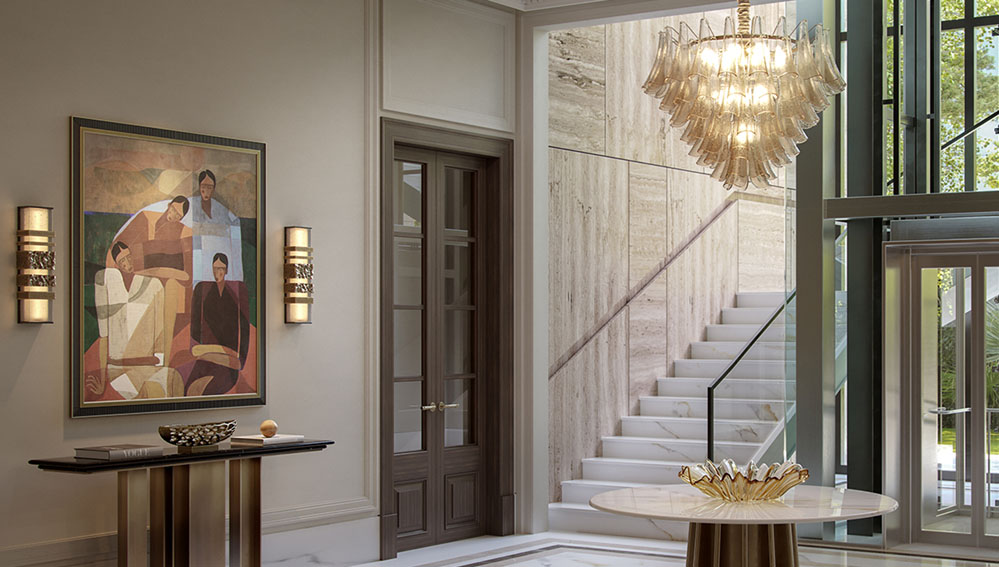
Before you decide on a fixture, a furniture piece, or a wall colour, the material palette sets the character of every room in your villa.
The best Dubai villas share one discipline in how they approach materials: the palette is edited, not elaborate. Travertine, honed marble, brushed walnut, aged brass, and micro-cement appear in the finest properties in Emirates Hills and on the Palm not because they are in fashion but because they perform over time. They age without losing their quality. They respond to Dubai's light conditions, which are extraordinary for several months of the year and intensely bright for the rest.
Your material palette determines how warm or cool, how heavy or light, how tactile or polished your home feels across every room. Specify it with a governing logic and subsequent decisions become clearer. Specify it without one and no amount of expensive furniture corrects what follows.
Most interior design stops at floor level. The ceiling is where thinking often ends.
In Dubai's best private residences, the ceiling is treated as the fifth wall. A coffered plaster ceiling in a formal reception room adds a quality of craft that nothing at floor level replicates. A sculpted timber ceiling in a study changes the acoustic and thermal character of the space. A recessed skylight over a double-height entrance hall brings changing natural light into the home across the full day.
Look up when you walk into a room. In a well-designed Dubai villa, there is always something worth seeing above the average room height.
Every room in a well-specified Dubai villa operates on three lighting layers. Ambient light establishes the mood. Task light serves a specific function. Accent light reveals material texture and spatial detail.
The statement fixture, a chandelier in the entrance hall or a brass pendant above a kitchen island, serves a fourth purpose. It is the piece the room is composed around. Its scale, material, and placement are part of the spatial logic rather than additions to it.
The real test of a lighting design is not how a room looks at 7pm. A well-designed scheme makes the room feel different and right at 8am, at noon, and at midnight. If it only works at one of those times, the scheme has not been fully resolved.
A standard-size piece of furniture announces itself in a room that has been designed with intention. Not because it is poor quality in isolation. Because it carries the proportions of a product line rather than the proportions of the room.
Bespoke furniture is designed to the space. A dining table sized to your room's specific dimensions and ceiling height, for the exact number of people who regularly sit at it. A sofa built to the bay it will occupy, upholstered in a textile chosen in response to the light quality of that room at the hours it gets used most.
This single decision, bespoke versus bought, is the most visible difference between a Dubai villa that has been decorated and one that has been designed.
Dubai's climate demands a specific design intelligence. For eight months of the year, the distinction between indoors and outdoors should be architectural rather than climatic. Frameless sliding glass walls, continuous stone floors that move from living room to pool terrace, covered outdoor rooms furnished to the same standard as interior spaces, these are not luxuries in Dubai. They are requirements. A villa that closes itself off from its outdoor spaces at the very moment that the climate is perfect is a villa that has not been designed for where it lives.
Lighting is the element most often specified as an afterthought and most noticed when it is wrong.
A single overhead source in a formal living room produces flat, unflattering light regardless of how the room is furnished. Three layers change the quality entirely. Concealed LED coves or recessed sources set the ambient base. Task sources, reading lamps, under-counter lights, and picture lights serve specific purposes at specific locations. Accent sources wash textured surfaces, reveal the grain of timber panelling, and bring colour out of stone.
Your lighting brief for each primary room should specify what the room is doing at different times of day and what the lighting needs to achieve at each of those times. A brief written to this level of detail, given to a designer with real experience in Gulf projects, produces a scheme that makes every other element in the room look better.
Rooms specified to a high budget but without textural variation look expensive and feel flat.
When all surfaces are polished, or all materials are matte, when the hardness of stone and the softness of fabric are not balanced against each other, a room loses the depth that makes it feel inhabited. You end up noticing the individual materials rather than the composition of the space.
Textural contrast is what gives a room warmth when the primary palette is stone and plaster. Raw linen against a travertine wall. Bouclé on a sofa facing a ribbed oak panel. Carved plaster in a ceiling recess alongside polished marble on the floor. Each of these pairings works because the two materials were chosen in relation to each other, not independently.
Art and objects are where a villa becomes personal.
The difference between a designed home and a show apartment is the presence of things chosen by a specific person for specific reasons. They do not need to be expensive. They need to be chosen rather than placed.
In practice this means commissioning original work where the budget allows. It means bringing pieces from family history and from travel. It means resisting the temptation to fill every surface, and instead selecting fewer objects with real significance.
A well-curated room tells you something about the family who lives in it. A room where every object arrived from a supplier catalogue tells you nothing.
Proportion is what your guests will feel and not be able to name.
It is the relationship between ceiling height and floor area. The width of a corridor relative to what it connects. The scale of a door in the wall that contains it. The distance from a sofa to the fireplace it faces. When these relationships are right, a room is comfortable in a way that has nothing to do with how it is furnished. When they are wrong, expensive materials and furniture do not fix the underlying discomfort.
In Dubai's finest villa interiors, proportion is resolved at the architectural stage. This is the core argument for architecture-led interior design: where architecture and interiors are handled by one practice from day one rather than interior design applied after construction is complete. The spatial quality that results from the first approach is consistently better.
Dubai's climate is extreme. Summer temperatures exceed 45 degrees Celsius. UV intensity is among the highest in the world. Dust and sand affect how every exterior surface ages.
Luxury villa interior design elements in Dubai that ignore these conditions look right on completion and show their weaknesses within three years. Natural stone on exterior terraces must be specified for thermal expansion and UV exposure, not just for appearance. Glazing must balance natural light against solar heat gain. Outdoor furniture and finishes must age well in Gulf conditions.
Climate intelligence is what separates a practice with genuine UAE experience from one applying an international luxury template to a Dubai brief. Ask your designer how their material specifications respond to this city's specific conditions. The quality of that answer tells you a great deal.
The table below covers the seven materials most widely used in Dubai's finest villa interiors with guidance on finish, application, and why each performs so well in this specific context.
|
MATERIAL |
FINISH |
BEST USED IN |
WHY IT WORKS IN DUBAI |
|---|---|---|---|
|
Travertine |
Honed or filled |
Living room floors, entrance halls, feature walls |
Warm, timeless, responds beautifully to Dubai's intense natural light |
|
Marble (Calacatta / Statuario) |
Polished or leathered |
Kitchen islands, bathroom surfaces, fireplace surrounds |
Elevates any space instantly works with both classical and contemporary schemes |
|
Brushed Walnut |
Oiled matte |
Cabinetry, wall panelling, built-in joinery |
Adds warmth and depth without weight counterbalances stone and plaster |
|
Aged / Brushed Brass |
Unlacquered |
Door hardware, lighting fixtures, bathroom fittings |
Patinas beautifully over time replaces the sterility of chrome in luxury interiors |
|
Micro-cement / Tadelakt |
Seamless matte |
Ceiling details, wet rooms, feature walls |
Zero grout lines fluid, sculptural. Perfect for spa-quality bathroom finishes |
|
Honed Limestone |
Matt |
External terraces flowing to interior |
Unifies indoor-outdoor critical in Dubai's indoor-outdoor living culture |
|
Natural Linen / Bouclé |
Raw, textured |
Upholstery, curtains, headboards |
Softens the dominance of hard stone essential for acoustic and tactile warmth |
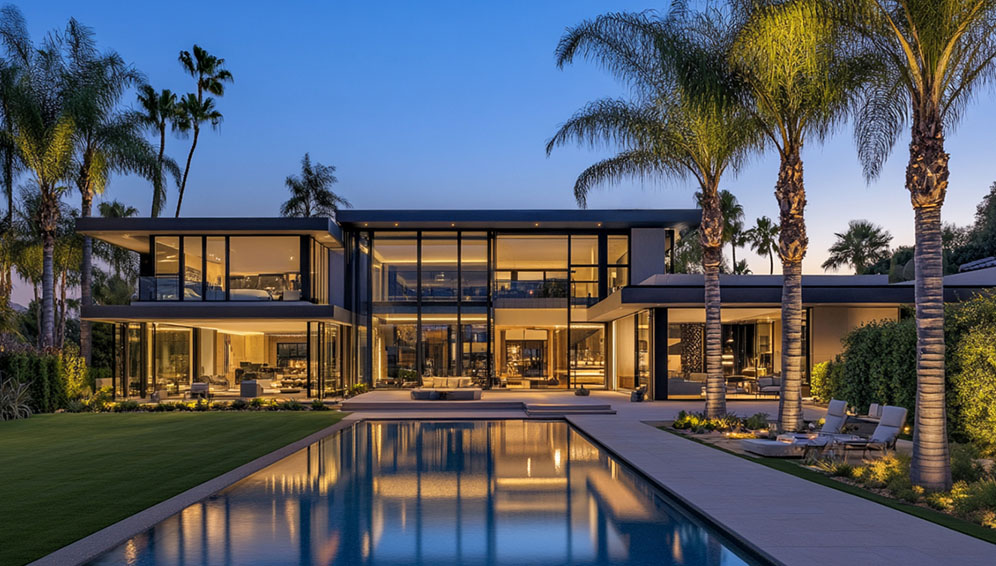
These ten elements produce the best results when they are developed together. Selected independently, each one improves a room. Developed in relation to each other, they produce the quality that defines Dubai's finest villa interiors.
The sequence matters. Start with the material palette and ceiling architecture. These two decisions set the spatial character of the villa before any furniture arrives. Develop the indoor-outdoor strategy and the glazing specification alongside these. Then develop the lighting design in parallel with the material choices, because the same light source reads differently on travertine versus polished marble.
Bespoke furniture comes after the spatial framework is set. Art and objects come last, chosen in response to the finished space rather than specified in advance.
The most common failure in luxury villa interior design in Dubai is deciding on furniture before the ceiling architecture is resolved, or selecting art before the lighting scheme is designed. The result is a villa with beautiful individual elements that does not fully work as a whole.
The quality of a finished luxury home interior in the UAE is determined as much by the sequence of decisions as by the quality of any single one.
For a full guide to the villa interior design process, see: Villa Interior Design Dubai
The five most essential are: the material palette (travertine, marble, walnut, aged brass), ceiling architecture (coffered plaster, skylights, timber), bespoke furniture designed to the room's specific proportions, a three-layer lighting design, and indoor-outdoor continuity through frameless glass and continuous flooring. These work as a system. Selecting them individually produces strong components. Developing them together produces exceptional spaces.
Three factors are specific to Dubai: the quality and intensity of the light, which demands materials that respond rather than fade; the climate, which requires a serious indoor-outdoor design strategy for eight months of the year; and a client base that is globally experienced and asks for specificity over spectacle. A design practice without genuine UAE experience will miss at least one of these three.
At the upper end of Dubai's villa market, in communities such as Emirates Hills, Palm Jumeirah, and District One, full interior design fees range from AED 150 to AED 500 per square foot of gross internal area. This figure varies based on scope, specification level, and whether furniture procurement and project management are included. Bespoke furniture, custom joinery, and high-specification materials are costed separately.
The most enduring interiors in Dubai's villa market begin with spatial quality and material intelligence rather than a named style. Warm contemporary (travertine, walnut, aged brass), classically restrained, and biophilic are all producing strong results in 2026. What does not hold its quality over time is style applied without an underlying architectural logic.
Look at completed villa projects, not renders or mood boards. Ask to see a villa at different times of day. Ask the designer to explain a specific decision in a project you are looking at. A designer who understands why a choice was made will produce better results than one who can only show you what it looks like. Look for UAE or Gulf project experience specifically: a practice that has worked in Dubai understands the climate conditions, the material performance requirements, and the client expectations specific to this market.
Emirates Hills, Palm Jumeirah, District One, Dubai Hills Estate, and Palm Jebel Ali are the most active for ultra-luxury residential interior design briefs in 2026. Each community has different architectural conditions. Emirates Hills villas are typically larger and more private, favouring grand-scale interiors. Palm Jumeirah villas require a strong response to waterfront orientation and open sea views. Palm Jebel Ali is emerging as the next major site for ultra-premium residential commissions.
The difference between a luxury villa in Dubai and an exceptional one is not budget. It is the quality of thinking behind every decision, and whether that thinking is architectural or decorative.
The 10 luxury interior design elements covered in this guide are the non-negotiables: material palette, ceiling architecture, statement lighting, bespoke furniture, curated objects, indoor-outdoor continuity, layered lighting, textural contrast, proportion, and climate intelligence. Each one matters. Together they produce homes that hold their quality for decades.
At Aparna Kaushik Design Group, every project in Dubai and across the UAE is held to this standard. The work in Emirates Hills, on the Palm, and in District One reflects the same principles described here: architecture and interiors developed together by one team, from the first conversation to the final specification.
Explore completed UAE villa projects: UAE design portfolio
Related reading: The Panther House, Delhi: Inside a 15,000 Sq Ft Contemporary Villa
The difference between a luxury villa and an exceptional one is not measured in budget. It is measured in the quality of thinking applied to every decision, and in whether that thinking is architectural or merely decorative.
The ten elements outlined above are the non-negotiables: the material palette, ceiling architecture, statement lighting, bespoke furniture, curated objects, indoor-outdoor continuity, layered light, textural contrast, spatial proportion, and climate intelligence. Individually, each one elevates a space. Together, they produce the quality that is impossible to define but immediately felt — the quality that makes a villa feel as though it could not exist anywhere else, or belong to anyone else.
This is the standard that Aparna Kaushik Design Group holds every project to. It is the only standard worth holding.
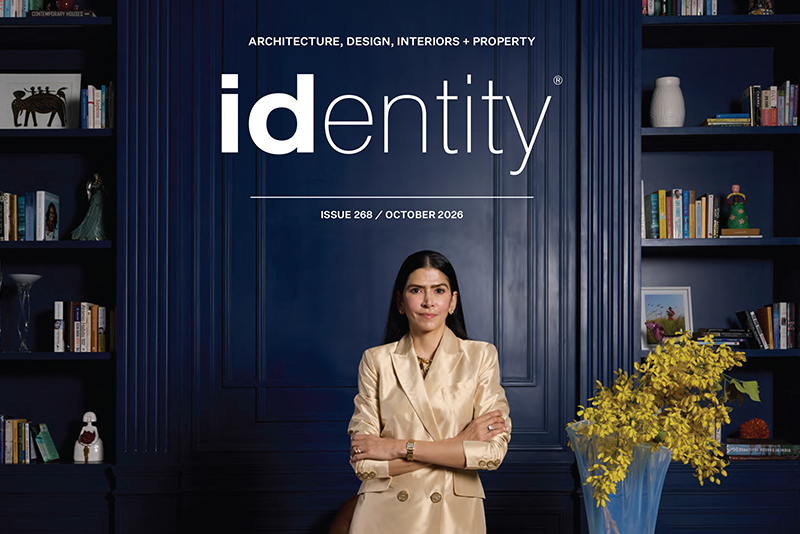
Aparna Kaushik is one of India's foremost architects, recognised among the country's top five for her work on ultra-luxury private residences. With over 18 years of practice and a studio founded in 2008, she has completed landmark estates across India and is now working with UHNW clients in the UAE. Her work blends European classicism with modernist tropical architecture — a sensibility shaped by India's design heritage and executed to a standard that is increasingly sought by Dubai's most discerning villa owners.
aparnakaushik.com/about-us | enquiries@aparnakaushik.com | @aparnakaushikofficial