KEY TAKEAWAYS
The search for the top architects in India in 2026 is not what it was ten years ago.
India has more than 150,000 architects registered with the Council of Architecture. Several thousand firms across the country describe their work as luxury, high-end, or premium. A much smaller subset describes their work as ultra-luxury. A smaller subset still genuinely operates at that level, with confirmed portfolios of completed residences above the INR 25 crore design-and-build mark, principal-led engagement from first conversation to handover, and the operational infrastructure required to deliver one-of-one architectural work at the pace of two or three commissions per year.
The families commissioning at this tier have become more systematic in how they evaluate and appoint an architect. The criteria have become more specific. The framework is less about who wins industry awards and more about how a practice actually works when the brief is an ultra-luxury estate, a South Delhi farmhouse, or a bespoke villa on Palm Jumeirah.
This piece sets out, in detail, what separates the top architects in India from the rest in 2026. The market context that has reshaped the tier. The six markers that define a principal-led practice. The cities where top Indian architectural work is concentrated. And what UHNW families can reasonably expect when commissioning at this level. AKDG's own view of how a top-tier practice should operate is documented across the brand story and the practice's active work in India and the UAE.
Three structural shifts have reshaped the top tier of India's architectural profession, and together they explain why the shortlisting process has become more rigorous.
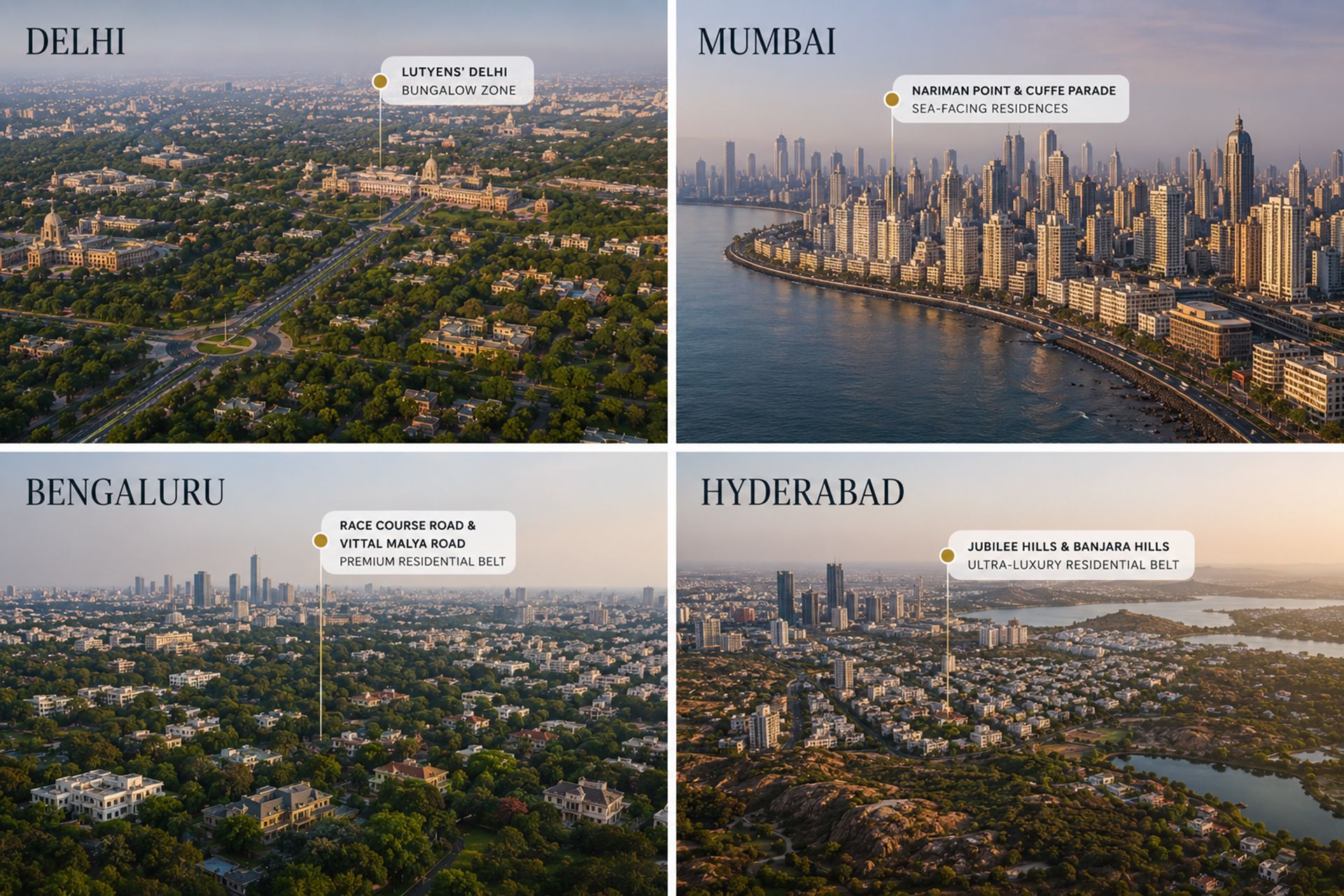
According to Knight Frank's 2026 Wealth Report, India's ultra-high-net-worth population is forecast to grow from 19,877 today to 25,217 by 2031, a 26.9 percent increase. Altrata's World Ultra Wealth Report 2025 places Bengaluru, Mumbai, Hyderabad, and Delhi among the global top ten for wealthiest cities. In 2025, India's uber-rich completed 51% transactions above INR 100 crore, spending a combined INR 7,186 crore. Nine deals crossed the INR 200 crore threshold. The largest individual transaction was a INR 739 crore sea-facing Mumbai residence. The consequence for top architectural practices is direct. The ultra-luxury architectural commission in India is now, in scale and complexity, closer to a privately commissioned hotel than to a domestic build. The top practices have reorganised their teams, sourcing, and project management to match.
The UHNW family commissioning a top architect in India is typically a well-travelled, well-informed client with a global reference set. Many have previously lived in homes designed by leading European, American, or Asian studios. The expectation is that an Indian architectural practice can match, and in many cases exceed, that international standard, while drawing on Indian craft tradition that is genuinely difficult to source elsewhere.
This has raised the bar for every part of the practice, from concept through documentation through site execution. It has also widened the gap between practices that can genuinely operate at this level and those that work at more accessible residential tiers.
A bespoke villa commission in Dubai requires sequenced approvals from Dubai Municipality (the building permit through the Trakheesi platform), the master developer (a No Objection Certificate, or NOC, before any DM submission), Dubai Civil Defence (fire and life safety), DEWA (electricity and water), and Etisalat or du (telecoms). Some districts require additional approvals: District Cooling permits from Empower, JOPD authority for jointly owned developments, and freehold zone confirmations from the Dubai Land Department. The stack runs in a specific sequence, and each layer can introduce 4 to 12 weeks of programme delay if approached out of order.
A decade ago, coverage of a completed residence in a design publication was treated as a marketing win. Today, many UHNW clients explicitly require that their homes are never published, never photographed beyond internal studio records, and never publicly attributed. The top architects in India have adapted. NDAs are standard from the first substantive conversation. Project names are coded internally. Client identity is not disclosed. The studios most willing to work under these constraints are, in most cases, the studios most actively commissioned at the top of the market.
Once a working shortlist of three to six architects has been established, the following six markers have become the working framework UHNW families use to evaluate a top architectural practice in India. These are not preferences. They have become the baseline.
| # | MARKER | WHAT IT MEANS IN PRACTICE |
|---|---|---|
| 1 | Principal-led design throughout the project | The lead architect personally directs the project at every phase: concept, design development, material selection, and on-site supervision during construction. The principal is in the room when decisions are made, not receiving summary reports. Ask specifically how much of the principal's time the project will receive. A studio that cannot answer this directly is not operating at this tier. |
| 2 | Integrated architectural and interior capability | A practice that develops architecture, interiors, furniture, lighting, landscape, and art curation under one team and one creative direction. The integration removes coordination friction between separate consultants and produces a coherent finished residence. The alternative, which is a separately appointed architect, interior designer, and fit-out contractor, almost always produces a less resolved result at this tier. |
| 3 | Demonstrated portfolio at the budget tier being commissioned | A portfolio that includes completed homes at the specific budget level the client is commissioning at. A villa completed at INR 10 crore and a villa completed at INR 100 crore are different projects, with different material vocabularies, different project management requirements, and different team structures. A top architect's portfolio should include multiple completed examples at the relevant tier. |
| 4 | Direct craft and material sourcing relationships | Long-standing direct relationships with the quarries, mills, workshops, and ateliers capable of producing bespoke material at the required level. Marble from Makrana, timber from Maharashtra mills, brass from Moradabad workshops, hand-loomed textiles from dedicated mills. These are relationships that take decades to build and cannot be procured by a junior associate at short notice. |
| 5 | Multi-city and multi-market execution capability | The capacity to deliver projects across India and, increasingly, in Dubai, London, Singapore, and other international markets where Indian UHNW families maintain residences. This requires confirmed local approvals experience, contractor relationships, and the logistical infrastructure to move bespoke material between geographies. A single-city studio is a different proposition than a practice operating at international scale. |
| 6 | Genuine confidentiality as a default | NDAs from the first substantive conversation. Coded project names used internally. Controlled photography rights. Absolute discretion around client identity. UHNW families in India now require this as a baseline. A studio that does not default to it is signalling that it does not work at this level. |
A top architectural practice in India meets all six of these markers. A competent, capable practice at the next tier down typically meets four or five. A studio that meets fewer than four is operating at a different point in the market, and in commercial terms, is a different appointment decision.
India's top architectural practices are concentrated, unsurprisingly, in the cities where UHNW residential demand is also concentrated. The geography below reflects both the distribution of practices and the distribution of the commissions they serve.
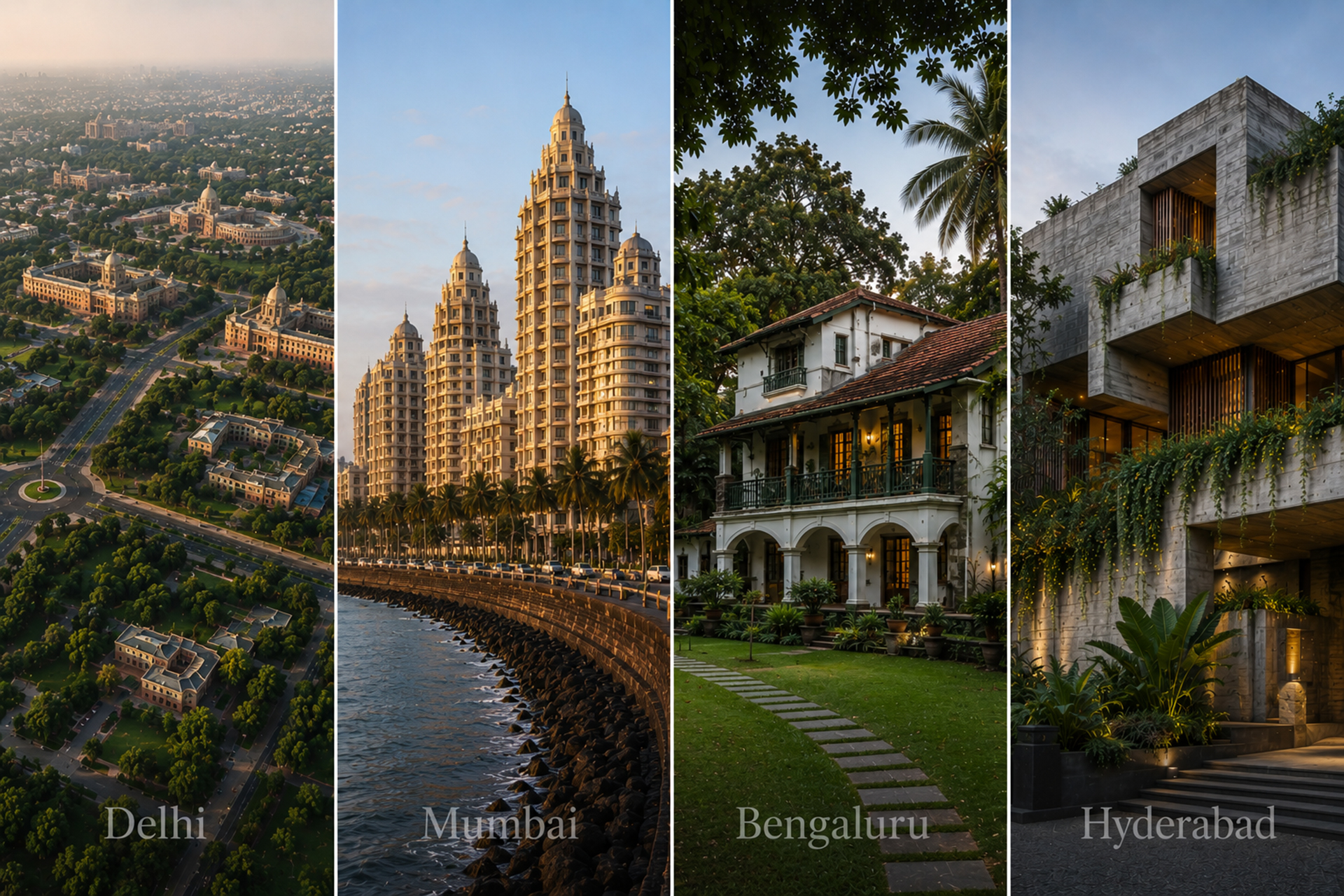
Delhi NCR accounted for 12 of the 51 INR 100 crore-plus residential transactions in 2025, with most concentrated in the Lutyens Bungalow Zone, Golf Links, APJ Abdul Kalam Road, Vasant Vihar, and the South Delhi farmhouse belt running through Chhatarpur, Mehrauli, and Westend Greens. The brief in Delhi NCR is distinctive: larger plots, deeper integration with landscape, formal spatial planning, and an architectural language that is frequently more classical in proportion than Mumbai or Bengaluru.
India's largest ultra-luxury market by transaction volume, with 35 of the 51 INR 100 crore-plus deals in 2025. Worli alone accounted for 21 of these transactions, making it the single most active ultra-luxury address in India. Knight Frank's Prime International Residential Index placed Mumbai at tenth globally in 2025, with 6.9 percent year-on-year price growth. Top architectural practices based in or active across Mumbai typically specialise in vertical luxury living: sea-facing high-rise apartments in Worli, Prabhadevi, Lower Parel, and Bandra, where the architectural challenge is to design a fully bespoke residence within the constraints of a tower shell.
Bengaluru entered the global top ten of Knight Frank's PIRI 100 in 2025, jumping from 40th to 8th with 9.4 percent year-on-year price growth. Top practices in Bengaluru are primarily commissioned by technology founders, operators, and family offices. The brief tends to be more contemporary in register than Delhi NCR, with a strong preference for resort-style residences on larger plots in Sadashivanagar, Koramangala, Indiranagar, and the Whitefield belt. AKDG's services framework across architecture, interiors, and landscape is well suited to the integrated resort-style brief now common in Bengaluru.
One of Altrata's four Indian cities in the global top ten for UHNW population growth is Hyderabad. Luxury residential demand in Hyderabad is concentrated in Jubilee Hills, Banjara Hills, and Film Nagar, with steady expansion into adjacent neighbourhoods. The Hyderabad brief is distinct: typically, a larger ground-up villa builds on a substantial plot, with significant outdoor living, infinity pool provision, conservatory or cabana adjacencies, and a preference for architecturally considered landscape integration. AKDG has delivered work in Hyderabad that has been featured in Harper's Bazaar Arabia and other regional publications.
The Delhi NCR ultra-luxury market increasingly extends into Gurgaon, as well as the emerging luxury farmhouse zones further out. Top architectural practices operating in this belt serve a mix of business family legacy commissions, second-generation family home builds, and a growing share of founders from Gurgaon's technology sector.
Smaller in scale than the four primary markets, but each with a clearly defined top tier. Pune's luxury market is concentrated in Koregaon Park, Kalyani Nagar, and the Boat Club Road area. Chennai remains driven by Boat Club Road and Poes Garden. Kolkata is concentrated in Alipore and Ballygunge. Top Indian architectural practices typically have confirmed experience in these cities as extensions of their primary base rather than as standalone offices.
The commissioning process for a top Indian architectural practice follows a structured sequence. It differs from engagements at lower tiers of the residential market in several specific ways.

The first substantive conversation is conducted by the principal architect, not by a business development associate. It typically runs one to two hours. The focus is the family, not the project specification. How they live day-to-day, how they entertain, who will live in the residence full-time, how children's requirements will evolve, what the family's relationship is with staff, what their existing collections look like, what the residence needs to accommodate over the next thirty years. The architectural brief emerges from this conversation, not the reverse.
A top architect will visit the site in person within the first two to three weeks of appointment. The visit is not a formality. It is where the studio's actual architectural response to this specific property begins. A studio that proposes a design language before visiting the site is working from a template, not a contextual response.
Within four to eight weeks of appointment, the studio presents a coherent architectural concept. The concept articulates the architectural idea, the spatial logic, the proposed material palette, and a clearly articulated point of view on how the residence will hold up over the next twenty to thirty years. The depth and coherence of this concept is the single strongest predictor of how the rest of the project will unfold. A mood board is not a concept. A catalogue of precedents is not a concept. A concept is an architectural idea, defended on its own terms.
Fee structures at the top tier are typically a percentage of construction or fit-out value (10 to 20 percent), a fixed principal-led retainer for the full project duration, or a hybrid combining the two. Per-square-foot pricing, common at lower tiers of the market, is largely irrelevant at this level because the work is bespoke from the first sketch. A top Indian architect will discuss fees only after a substantive discovery conversation about the specific family and the specific brief.
The typical commission at this tier runs 22 to 36 months from concept to handover for a ground-up build, 9 to 18 months for a major renovation. Most top practices maintain a formal aftercare relationship for one to two years post-handover, covering material performance, smart home adjustments, and the family's adaptation to the completed residence. The engagement is a multi-year relationship, not a project transaction.
One of the most significant shifts in India's architectural profession over the last three years is the expansion of top Indian practices into Dubai and Abu Dhabi.
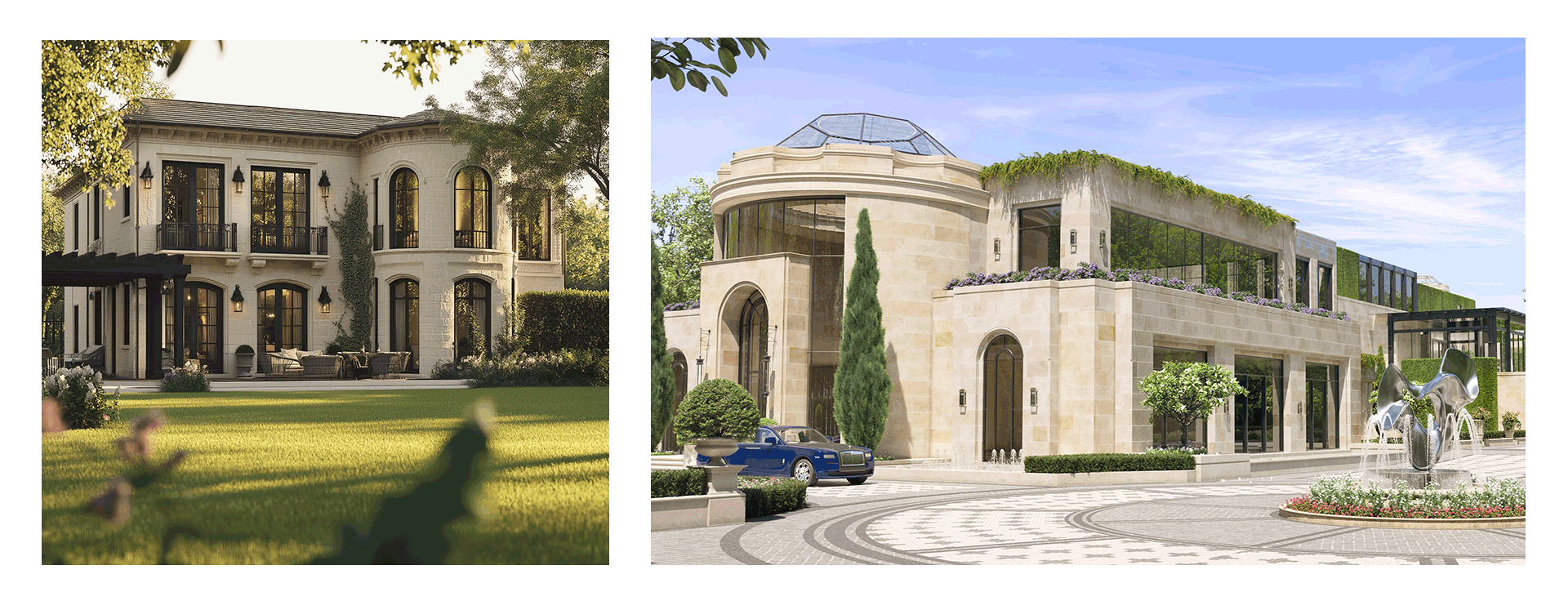
The driver is client geography. A significant portion of Dubai's new UHNW population is from the Indian diaspora, whether NRI families relocating primary residences, global citizens of Indian origin, or Indian business owners maintaining homes across both markets. These buyers increasingly want a continuity of design language between their Indian and UAE residences. A practice that has delivered an estate home in South Delhi or a private villa in Hyderabad is, for them, a natural commission for a villa on Palm Jumeirah, Emirates Hills, or Mohammed Bin Rashid City.
The leading Indian practices have responded by extending their operations into the UAE as a single integrated practice, not as a separate regional office. The architecture, the design team, the material sourcing, and the craft relationships are shared across geographies. This is structurally different from the earlier model of Indian firms opening Dubai branch offices. AKDG's UAE practice page sets out the active Dubai and Abu Dhabi capability in detail.
For UHNW families commissioning at this level, the practical implication is significant. The same principal-led practice can now deliver the New Delhi residence, the Mumbai sea-facing apartment, and the Palm Jumeirah villa as a coherent set of related projects rather than three separate appointments. This is the standard that top Indian architects in 2026 are organising themselves to deliver.
“The families who commission us at this tier are not looking for a style. They are looking for a designer who will understand their life, defend the design brief for the next three years, and be personally responsible for every decision that matters. Our work has organised itself around that understanding. Everything else, the materials, the craft, the cities we work in, the residences we develop, follows from it.””
- Aparna Kaushik, Founder and Principal Architect, Aparna Kaushik Design Group
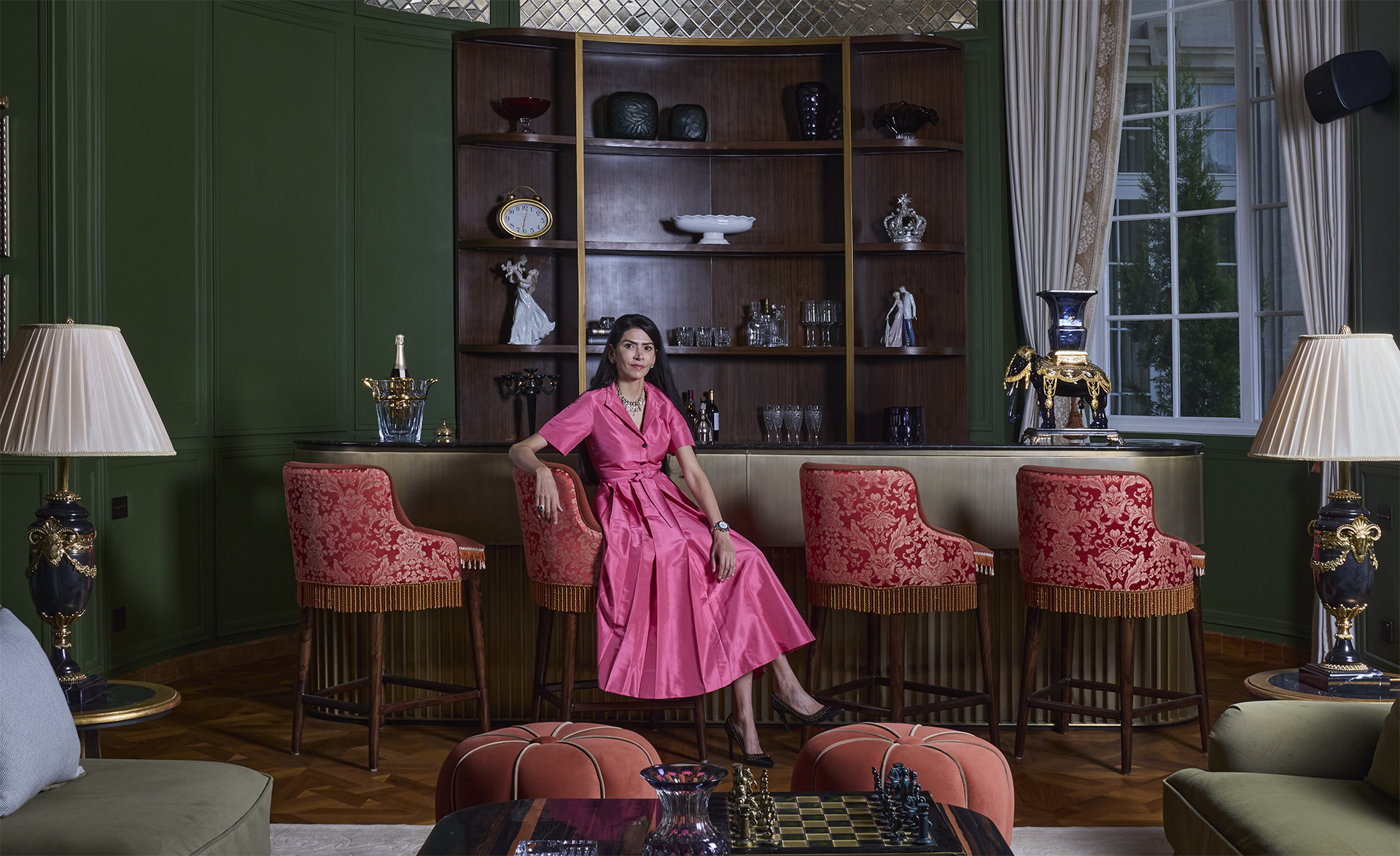
India's top architectural tier is a small group of principal-led practices, each characterised by integrated architectural and interior capability, demonstrated portfolios of completed homes above the INR 25 crore design-and-build mark, and the operational infrastructure to deliver two or three commissions per year. Aparna Kaushik Design Group is recognised among India's top five architects, with completed work across Delhi, Mumbai, Hyderabad, Bangalore, and the UAE. The practice has been featured in Architectural Digest India, Elle Decor India, Harper's Bazaar Arabia, Emirates Woman, and Robb Report.
The top architecture firms in India for luxury residential projects are a narrow group of principal-led practices. The defining characteristics are: confirmed portfolio of homes at the INR 25 crore-plus design-and-build tier; integrated architectural, interior, furniture, lighting, landscape, and art capability under one roof; multi-city or multi-market execution experience; direct craft and material relationships with specialist workshops in India; and absolute discretion around client identity. AKDG is one such firm, operating across India and the UAE.
Shortlisting a top architect in India typically follows four paths that often overlap. Personal referral from a recently completed project by a family member, business associate, or close friend. Editorial visibility in publications such as Architectural Digest India, Elle Decor India, Harper's Bazaar, and Robb Report. Industry recognition and authoritative listings, including top five or top ten India architecture lists. And direct discovery through completed projects, for example, visiting a friend's home or a boutique hotel and asking who designed it. The final shortlist typically narrows to three to six practices, which are then evaluated using the six markers set out in this article.
Design fees for a top architectural practice in India are typically structured as 10 to 20 percent of construction or fit-out value, or as a fixed principal-led retainer for the project duration. On a residence with a build budget of INR 25 crore, this translates to design fees in the range of INR 2.5 to INR 5 crore. On trophy projects above INR 100 crore in build cost, design fees scale proportionally but are often structured as a fixed principal retainer rather than a straight percentage.
A ground-up residential project typically runs 22 to 36 months from initial appointment to handover. Concept and design development take 6 to 12 months. Construction and fit-out run 14 to 22 months. A significant renovation of an existing residence runs shorter, typically 9 to 18 months. The most established practices defend these timelines because compression, particularly at the design stage, is the most common cause of defects appearing later in the build.
The terms are often used interchangeably in the market, but they describe different tiers. Luxury architecture in India is a wider market, including practices working across residential, boutique commercial, and hospitality at premium price points. The top architectural tier is a narrower group, characterised by principal-led engagement, integrated multi-discipline capability, and a portfolio of completed ultra-luxury residences at the INR 25 crore-plus design-and-build tier. Many luxury practices aspire to the top tier; few meet the full six-marker framework.
The most established Indian practices increasingly do. India's UHNW families typically maintain residences across India, the UAE (particularly Dubai), London, and Singapore. The leading Indian practices extend their work across these markets as a single integrated practice, not as separate regional offices. AKDG operates actively across India and the UAE, with projects across Palm Jumeirah, Emirates Hills, and Mohammed Bin Rashid City in Dubai.
Delhi NCR has the largest single concentration, driven by the ultra-luxury residential market across Lutyens Delhi, Golf Links, Vasant Vihar, and the South Delhi farmhouse belt. Mumbai is the largest market by transaction volume, particularly for vertical luxury in Worli, Prabhadevi, and Bandra. Bengaluru is the fastest-growing market, driven by technology founders and family offices. Hyderabad has emerged as a distinct ultra-luxury market concentrated in Jubilee Hills and Banjara Hills. Pune, Chennai, and Kolkata each have smaller but clearly defined top tiers.
Confidentiality is the baseline expectation at the top tier. Top Indian architectural practices default to NDAs from the first substantive conversation, use coded project names internally, retain controlled photography rights with explicit family consent before publication, and avoid direct identity disclosure in editorial coverage where the family prefers anonymity. UHNW clients assume this is in place from the outset. A studio that does not default to these practices is operating at a different tier of the market.
Aparna Kaushik Design Group is an ultra-luxury architectural and interior design practice led by Aparna Kaushik, recognised among India's top five architects. Established in 2008 and headquartered in Noida, the studio operates across India and the UAE, with a portfolio of private residences, estates, and signature projects developed as integrated architectural works. The practice has been featured in Architectural Digest India, Elle Decor India, Harper's Bazaar Arabia, Emirates Woman, and Robb Report. AKDG accepts a deliberately small number of commissions each year to preserve principal-led attention on every project.
The decision to appoint a top architect in India is one of the most consequential commercial decisions a UHNW family will make in the year. The six markers set out above are the working framework families now use to evaluate that decision. They are also the standard against which India's top architectural practices have organised themselves. Aparna Kaushik Design Group accepts a deliberately small number of commissions each year, in India and the UAE, to preserve principal-led attention on every project. For UHNW families considering an ultra-luxury architectural commission, the studio welcomes a direct conversation. The portfolio of completed work sets out the depth of the practice in detail, and the UAE practice page documents the active Dubai and Abu Dhabi capability. To discuss a project, please contact our team here , or write to enquiries@aparnakaushik.com.
Aparna Kaushik is one of India's foremost architects, recognised among the country's top five for her work on ultra-luxury private residences. With over 18 years of practice and a studio founded in 2008, she has completed landmark estates across India and is now working with UHNW clients in the UAE. Her work blends European classicism with modernist tropical architecture — a sensibility shaped by India's design heritage and executed to a standard that is increasingly sought by Dubai's most discerning villa owners.
aparnakaushik.com/about-us | enquiries@aparnakaushik.com | @aparnakaushikofficial