A guide to commissioning a penthouse interior in India's top three luxury residential markets, written from the design studio's chair.
Penthouse interior design in India is no longer a small, niche category. In Mumbai, Delhi, and Bangalore, the top-floor full-floor apartment has become the default first home for a new generation of founders, second-generation industrial principals, and family-office heirs who would have opted for a villa twenty years ago. Land at the right address is finite. A penthouse offers what a villa increasingly cannot: a security-managed building, a managed staff entry, a discreet arrival, and a view that no neighbour can take away.
The interior brief that follows is therefore not a scaled-down villa brief. It is a category of its own. Floor plates are wide but rarely deep enough for the formal-to-private spatial sequence a villa offers. Service routes are constrained. Structural columns and shear walls cannot move. Daylight enters through curtain-wall glass that creates spectacular views and difficult acoustics. The hand of the principal architect, the calibration of the materials palette, and the sequencing of the rooms have to do more, with less.
At Aparna Kaushik Design Group, we have seen the penthouse brief change three times in five years. This piece sets out where it sits today, what the UHNW buyer in India is actually asking for, and how a principal-led design studio approaches the commission from the first measurement visit through to handover.
The numbers explain the shift. Knight Frank's India Wealth Report tracked a sustained rise in ultra-high-net-worth households across Mumbai, Delhi-NCR, and Bangalore through 2024 and into 2025. The most active residential price band, in inflation-adjusted terms, has moved up by roughly forty percent across the three cities. What that money is buying has changed too.
Twenty years ago, the prestige purchase was a Lutyens bungalow or a sea-facing villa. Today, the same buyer looks at the floor plate of a top-tier branded residence, a full-floor at Worli, a duplex penthouse in Gurgaon, or a triplex in Bangalore's Lavelle Road corridor. The reasons are mostly about life, not about price. Children at international schools. Spouses with city-centre offices. Aging parents who need lift access. Domestic staff in a managed building rather than a private compound. Security that does not require a personal team.
What the penthouse asks the design studio to do is to deliver the interior quality of a villa within the spatial constraints of an apartment. That is the brief in one sentence. The buyer expects estate-grade materials, the bespoke joinery they would have commissioned for a private residence, the same calibre of art and furniture programme, and a sequence of rooms that feels generous rather than efficient. None of that is automatic in a developer-built penthouse handover. It is created.
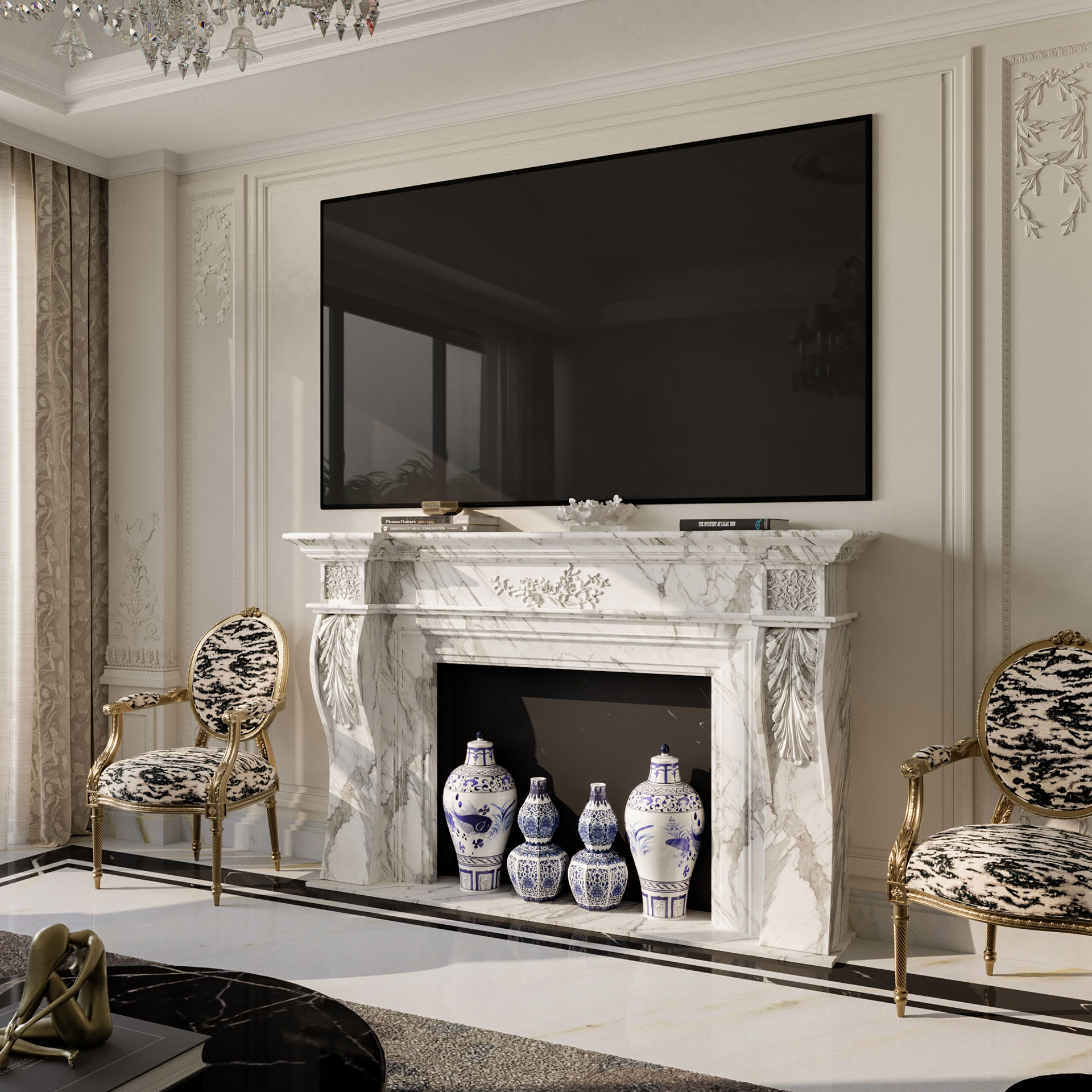
The Mumbai brief is structured by the view. Sea-facing penthouses at Worli, Lower Parel, Malabar Hill, and the new Bandra-Kurla Complex corridor are commissioned with the view treated as the most expensive material in the project. Floor plans are oriented to deliver the view to the formal living room, the master bedroom, and at least one private corner. Furniture lines are kept low. Curtain treatments are calibrated to soften glare without obscuring the horizon. Material palettes lean cool, with travertine, oak, brushed bronze, and pale boucle predominating, so that the colour of the sky and the sea do the work the wallpaper would otherwise do.
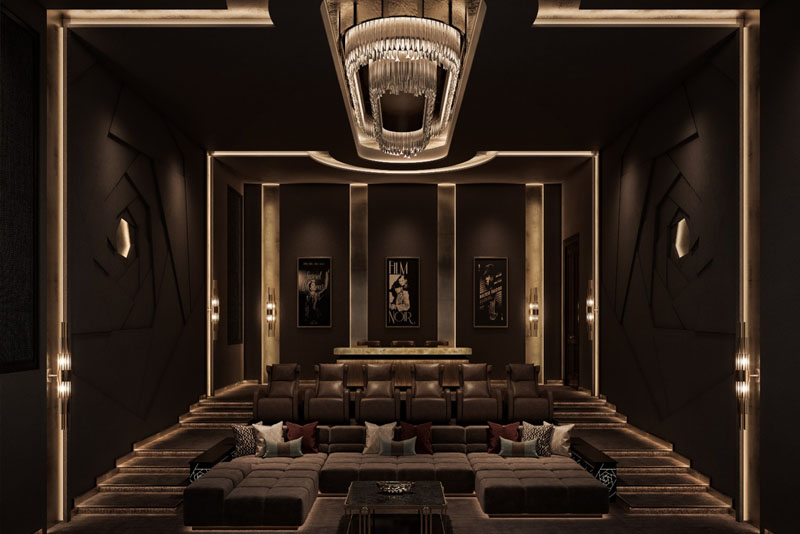
Where Mumbai's brief differs most from Delhi's is the treatment of formality. Mumbai's UHNW penthouse families entertain less formally. The dining room exists but is smaller. The kitchen often opens. The bar and the lounge are larger. The home cinema, when it is asked for, is a media room rather than a black-box theatre.
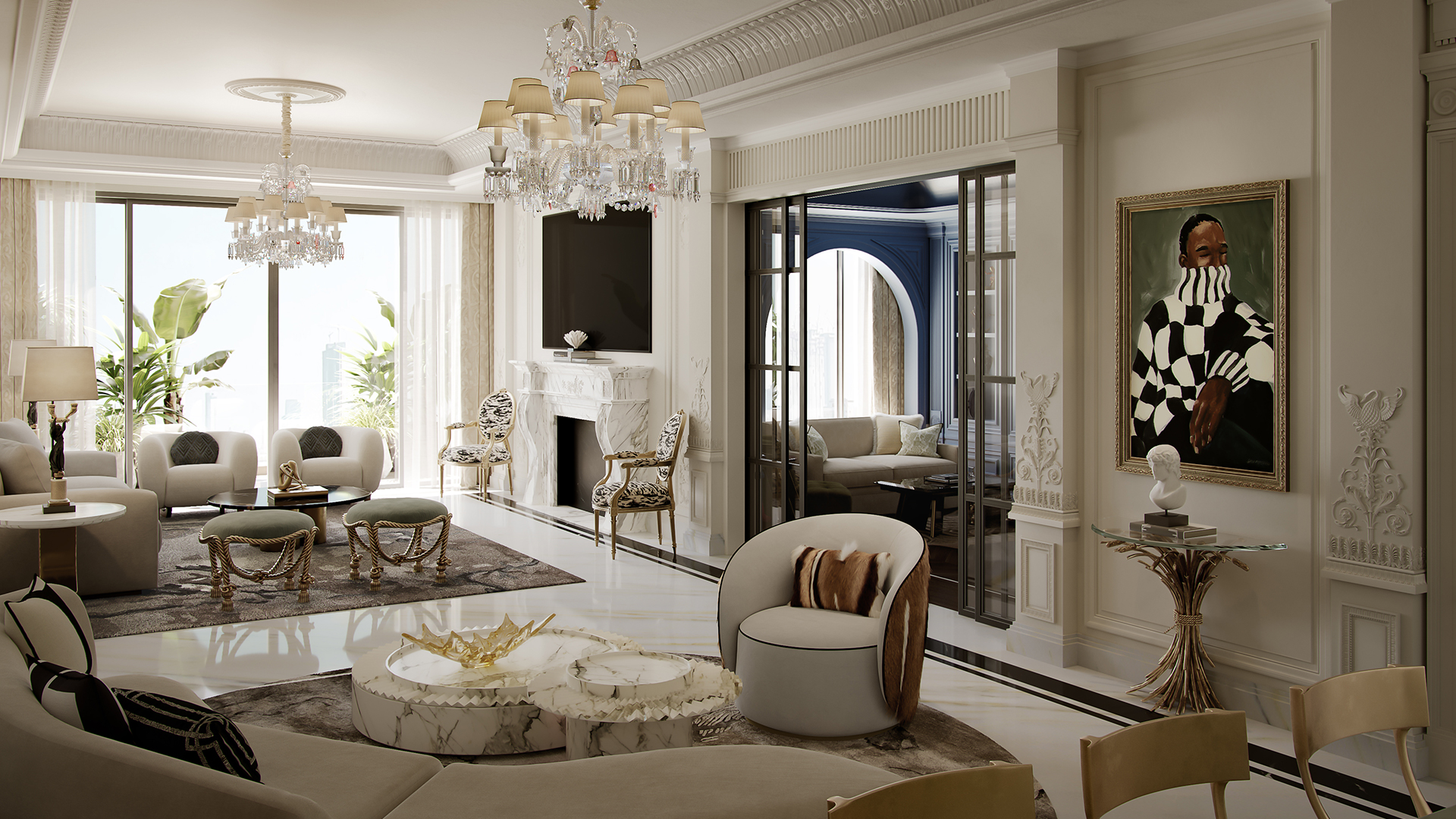
The Delhi brief is the formal-arrival brief. Even when the residence is a top-floor full-floor at Golf Course Road or a duplex in DLF Camellias, the buyer is bringing the same expectations they would bring to a Lutyens bungalow. The entry foyer matters. The formal living room matters. The dining room is a full programme, often seating twelve to sixteen. The principal architect is being asked to translate the formal entertaining sequence of an estate house into a penthouse plan. That translation is the design problem.
Material palettes lean warmer than Mumbai's. Hand-knotted carpets are common. Joinery is more often stained walnut than bleached oak. Lighting design is layered, with multiple lighting scenes pre-programmed for receiving day-time guests, formal dinners, and family use. Domestic staff routes are designed in from the first plan, not added later. We covered the broader principles of UHNW interior commissioning in our piece on how India's UHNW clients shortlist an interior design studio.
The Bangalore brief is the quietest of the three. Buyers are younger on average. Many are first-generation founders. The aesthetic preference is for understatement: walnut and ash joinery, lime-washed walls, hand-thrown stoneware, contemporary Indian art, and a furniture programme that leans residential rather than declarative. Tech-wealth households want a working home, not a stage. The cinema room is replaced by a screening space that doubles as a board room. The library is real and used. The home office is treated with the same care as the principal bedroom.
What unites the three cities, despite the differences, is the rejection of the developer-spec finish. UHNW buyers are stripping the developer interior on takeover and commissioning a full-fit-out from a principal-led studio. The studio comes in before the apartment is technically ready, often before the building has its occupation certificate, and works from a shell-and-core position.
A UHNW penthouse fit-out is not a decorating brief. It is a full architectural intervention inside an existing envelope. The scope, in our practice, typically covers the following:
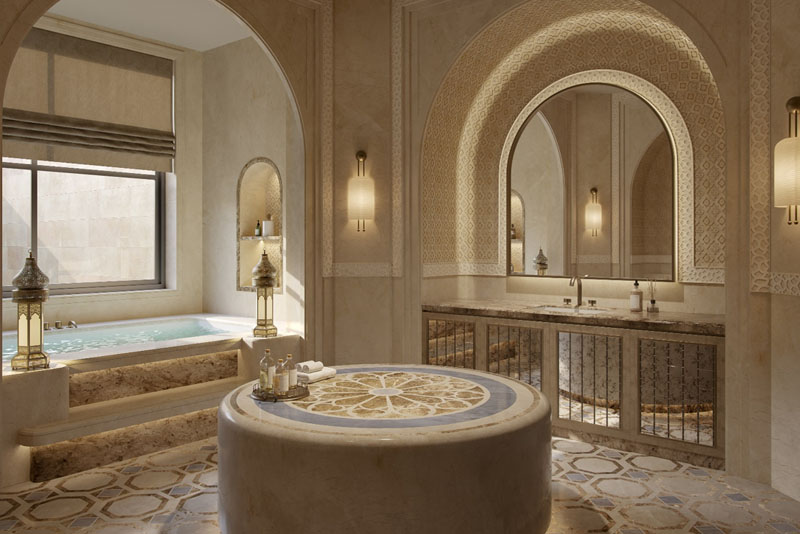
The result, when the studio gets the brief right, is a residence that no longer reads as an apartment. The volumetric handling, the ceiling design, the joinery, and the material continuity all combine to produce an interior that is closer to a private estate than to a serviced unit. That transformation is the work.
A penthouse is not a clean canvas. The structural grid is fixed. Columns cannot move. Shear walls, on tall buildings, are non-negotiable. Plumbing risers run where the developer built them. The ceiling void, in many Indian luxury buildings, is shallower than it should be for the lighting and acoustic work a UHNW interior asks for.
Working within these constraints is where the principal architect earns their fee. In a villa, the architect can move the structure to suit the plan. In a penthouse, the plan has to be moved to suit the structure. That is a different design discipline. It begins with a measured survey, in our practice typically a laser-scanned point cloud of the entire shell, against which the new plan is overlaid in real geometry before a single wall is built. Without that survey, the joinery does not fit on installation day. With it, the millimetre tolerances on a book-matched stone wall hold.
Service routing is the second constraint. The new lighting plan, the new HVAC vent positions, the new audio-visual cabling, and the new home-automation low-voltage runs all have to travel through a ceiling that the developer built for the simpler scheme. The studio's services consultant has to be engaged from day one. So does the principal building's MEP team. Coordinating with the developer's residual obligations during the warranty period is often the hardest single conversation in the project.
“A penthouse is a structural negotiation. The architect's craft is to make the constraints feel like the design intent, so the client never sees what could not be moved." Aparna Kaushik, Founder and Principal Architect”
- Aparna Kaushik, Founder and Principal Architect, Aparna Kaushik Design Group
Material specification for a penthouse interior carries a higher burden than for a villa. The reason is acoustic. Concrete-slab buildings are reverberant. Curtain-wall glazing reflects sound. The cavity above a developer ceiling is shallow. Soft materials, layered carpets, fabric-wrapped acoustic panels behind joinery, and heavy curtains are not aesthetic choices in this context; they are structural to whether the room functions as a residence.
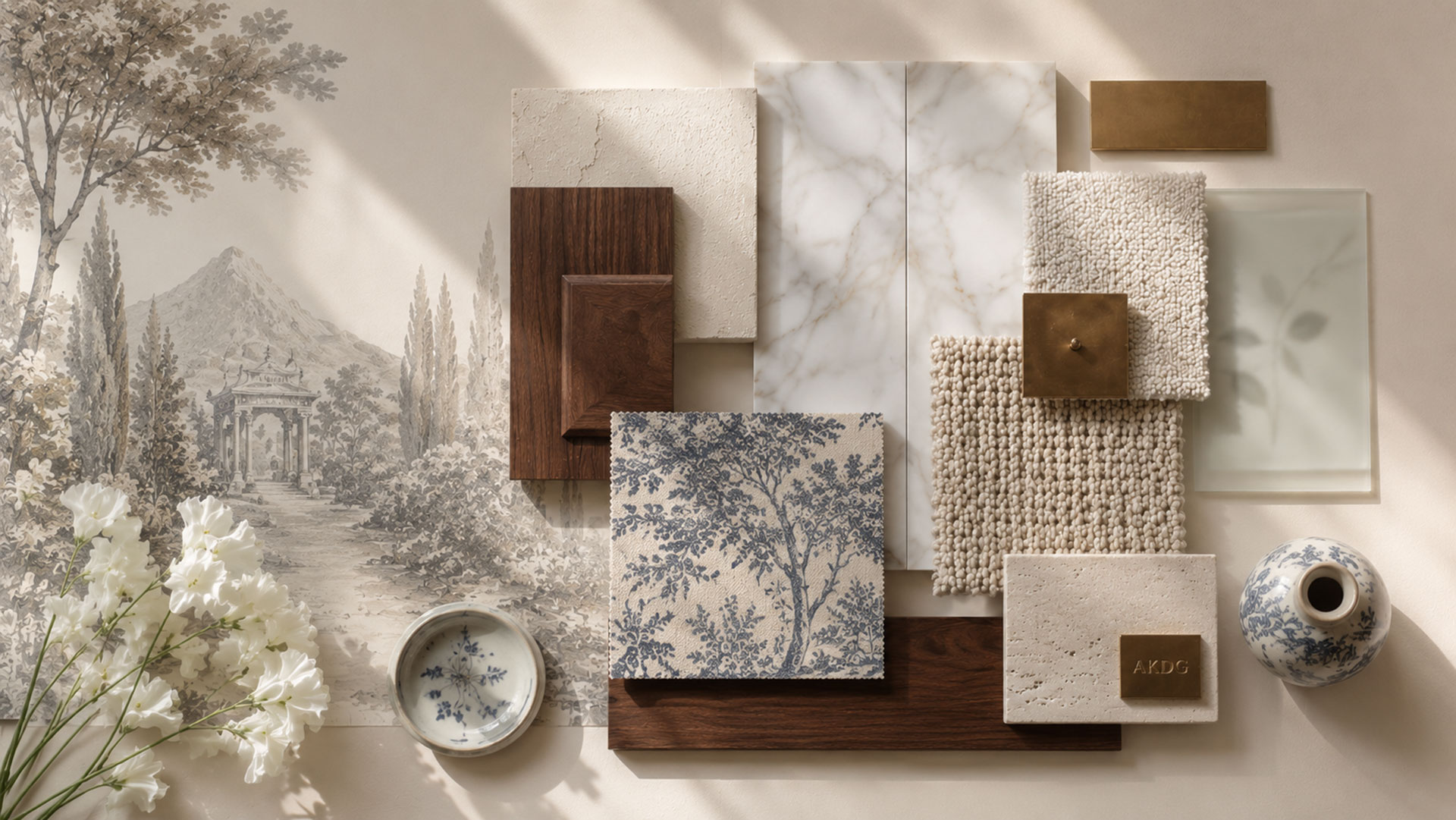
Large-format natural stone, typically book-matched Italian travertine, Calacatta marble, Pietra Grey, or Bardiglio, is specified for the principal floors, the wet rooms, and the kitchen island. The block selection is made off-site, often at the quarry's processing yard, with the studio's principal designer present. For a 4,500 square foot penthouse, the stone budget alone routinely sits between three and five percent of the total project cost. Sourcing decisions are made twelve months before installation.
Engineered European oak is the default for living areas, with stained walnut reserved for joinery, libraries, and dining rooms where the client wants the heavier register. The decision between bleached oak and stained walnut is the single biggest aesthetic decision in the project after the stone selection. It sets the temperature of the entire interior.
Brushed bronze, antique brass, blackened steel, and on Bangalore projects, increasingly, raw aluminium are used as detail metals on door hardware, joinery handles, stair balustrades, and accent profiles. The metal choice is calibrated against the stone and the wood: warm stone with warm metal, cool stone with cooler metal.
Boucle, performance velvet, hand-loomed wool, and silk-cotton blends predominate. The studio's preference is for textiles that age into the residence rather than against it. Fabrics are specified with their use cycle in mind: the formal living-room sofa is treated differently from the family-room sectional, even when both pieces sit in the same project.
In our practice, we ask the principal client to make seven decisions in the first six weeks of the engagement. Every subsequent specification flows from these seven. They are, in the order we sequence them:
Which view, of the views available, is the design organised around. The choice determines the formal living room placement, the master suite orientation, and the most expensive single piece of joinery in the project, which is usually the principal media wall.
How many people the client realistically entertains in a single evening. The honest answer determines the dining room programme, the bar position, the catering kitchen brief, and the staff route. Most UHNW clients over-estimate the formal scale and under-estimate the family scale; the studio's job is to design honestly to both.
Warm or cool. This decision, made at the material palette presentation, determines stone family, wood stain, metal finish, and textile palette. It cannot be reversed without restarting the project.
Will the residence's art programme be foreground, where the architecture serves it, or background, where the architecture leads. Both are valid. The choice changes wall treatments, lighting design, and joinery proportions. Mid-project changes here are the single most expensive course correction in our experience.
How visible the technology is. Touch panels on every wall, or a single hidden interface. Speakers in-ceiling and acoustically tuned, or floor-standing and visible. Climate sensors integrated into the joinery, or controlled from a single hub. We have written separately on this in our piece on smart home integration in ultra-luxury Indian villas, and the same principles apply to the penthouse, with tighter ceiling constraints.
How many staff live in or come daily, what their working route through the residence looks like, where their service entry is, and whether the catering kitchen is separate from the show kitchen. These decisions are not glamorous but they shape the plan as much as the formal rooms do.
When the client needs to move in. The honest answer determines the procurement schedule, the joinery workshop loading, and which bespoke items will be on-site at handover versus delivered in phase two. A nine-month project asks different procurement decisions than a fourteen-month one.
The failure modes on a penthouse interior are mostly avoidable. They concentrate in three places.
The first is structural ignorance. A studio that does not commission a measured survey at engagement, and instead works from the developer's CAD drawings, will discover on installation day that the as-built dimensions diverge from the drawings by twenty or thirty millimetres. On a book-matched marble wall, that gap is fatal. The remedial work consumes two weeks and burns the relationship.
The second is procurement underestimation. Italian stone has a fourteen-week sea freight window. European oak parquet has an eight to ten-week lead time. Bespoke upholstery in Como or Milan runs to sixteen weeks. A studio that does not lock procurement at the design freeze runs out of programme. Handover slips by two to four months.
The third is service coordination. The home automation, audio-visual, lighting control, and security systems on a UHNW penthouse are individually complex and collectively dependent. A studio that does not nominate a single technology lead at the start of the project will find on commissioning day that the lighting and the audio cannot be controlled from the same interface, that the security system disables the automation, and that the climate control fights the smart blinds. The remedial work costs months.
Each of these failures is preventable. The prevention is method, not magic. A principal-led studio that does this work weekly has the procurement relationships, the survey methodology, and the technology coordination protocol embedded in its standard process. A studio doing its first penthouse does not, and the client pays the tuition.
A UHNW penthouse interior in India, for a 4,000 to 6,000 square foot residence, runs to a programme of nine to fourteen months from engagement to handover. Total project cost, inclusive of all fit-out, joinery, lighting, furniture, art, and technology, sits in our recent experience between INR 8,000 and INR 15,000 per square foot, before any individually signature furniture pieces or specially commissioned art.
Those figures move with the brief. A view-led Mumbai penthouse, where stone selection and large-format glazing dominate the budget, sits at the higher end. A discreet-luxury Bangalore penthouse, where the joinery and textile work carry the project, sits closer to the middle. A formal-arrival Delhi NCR commission, with full estate-grade entertaining programming, can run higher.
The honest conversation at engagement is about what is fixed and what is flexible. Programme is fixed: international procurement does not accelerate. Quality is fixed: the studio's standard is the studio's standard. The variables are scope, scale, and signature investment in art and furniture. A clear-eyed brief at the start saves three months of recalibration in the middle.
Our penthouse work has run across Mumbai, Delhi NCR, Bangalore, and selectively Hyderabad and Pune. The studio's process begins with a single in-person meeting between the principal client, Aparna Kaushik, and the lead designer. From that meeting, we issue a scoping memorandum within two weeks. From the scoping memorandum, we move to a fee proposal and a project programme.
If you are commissioning a penthouse interior in 2026, the right time to engage the studio is roughly six months before you take possession of the shell. That window gives the project the procurement programme it needs and prevents the compromises that emerge when the design starts after handover.
To start the conversation, the AKDG enquiry path sits on every page of this site, or write to enquiries@aparnakaushik.com. For prior work, our projects gallery holds completed residences across both India and the UAE, and the Panther House case study documents one recent Delhi commission at length.
A. A full UHNW penthouse fit-out in India, for a residence between 4,000 and 6,000 square feet, generally costs between INR 8,000 and INR 15,000 per square foot in 2026 figures, before any individually signature furniture or specially commissioned art. The actual figure depends on the stone selection, the proportion of bespoke joinery, the technology specification, and the scale of the furniture programme.
A. A typical programme runs nine to fourteen months from engagement to handover, assuming the building shell is ready for fit-out at engagement. Italian stone procurement at fourteen weeks and European bespoke furniture at sixteen weeks are usually the longest single items on the procurement schedule, and they set the floor on programme.
A. Roughly six months before you take possession of the shell. This window allows the design freeze to happen before handover, so that procurement can begin against firm specifications, and ensures the studio can complete on-site work in a single move-in window rather than across two.
A. Yes. A penthouse is a fixed structural envelope: columns, shear walls, plumbing risers, and ceiling voids cannot move. A villa is a designed envelope: the architecture and the interior are commissioned together. The penthouse brief is a discipline of working within constraints to produce a residence that no longer reads as an apartment.
A. Mumbai's brief is view-led: the most expensive material in the project is the view, and the plan is organised around it. Delhi's brief is formal-arrival-led: the entry foyer, the formal living room, and the dining room carry estate-house expectations. Mumbai entertains less formally; Delhi entertains more formally. Material palettes follow the same logic, with Mumbai leaning cooler and Delhi warmer.
A. Discreet luxury. The Bangalore UHNW buyer, often a first-generation founder, leans toward understatement: walnut and ash joinery, lime-washed walls, hand-thrown stoneware, contemporary Indian art, and a furniture programme that reads residential rather than declarative. The home office and the library carry the same design weight as the principal bedroom.
A. In our experience, a full strip-out is almost always the right choice. Developer ceilings, flooring, joinery, and electrical layouts are built for the standard handover, not for the lighting, acoustic, and material programme a UHNW interior requires. Working around the developer's finishes typically costs more and delivers less than removing them.
A. The studio leads the project but works closely with a structural engineer, an MEP consultant, an audio-visual and home automation specialist, a lighting designer, and where required, an acoustic consultant. On larger projects, the studio nominates a single technology lead at engagement to prevent the systems integration failures that often surface at commissioning.
A. Skipping the measured survey at engagement. A studio that works from developer CAD drawings rather than a laser-scanned point cloud will discover on installation day that the as-built dimensions diverge from the drawings, and the book-matched stone or bespoke joinery will not fit. The remedial work costs two weeks and damages the trust in the project.
A. Begin with a single enquiry through the website or to enquiries@aparnakaushik.com. The studio responds with a request for a brief in-person meeting between you and Aparna Kaushik. From that meeting, a scoping memorandum follows within two weeks, then a fee proposal and a project programme. The earlier you engage relative to taking possession of the shell, the smoother the project runs.
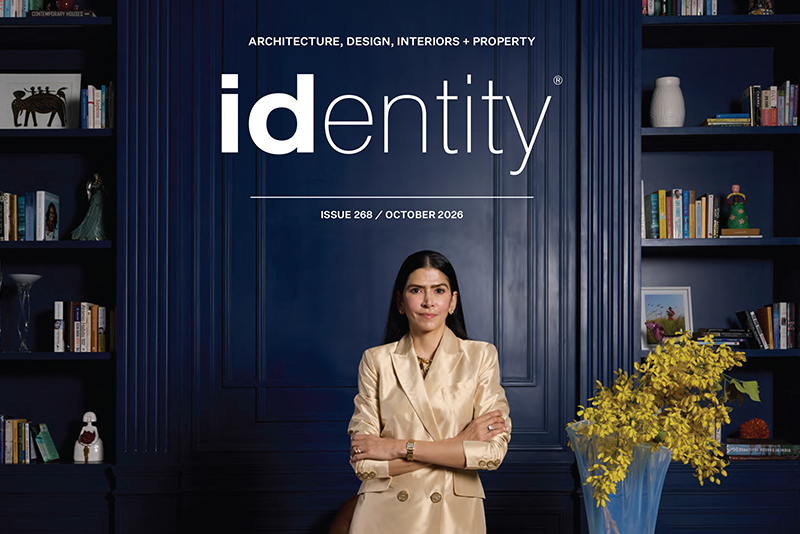
Aparna Kaushik is one of India's foremost architects, recognised among the country's top five for her work on ultra-luxury private residences. With over 18 years of practice and a studio founded in 2008, she has completed landmark estates across India and is now working with UHNW clients in the UAE. Her work blends European classicism with modernist tropical architecture — a sensibility shaped by India's design heritage and executed to a standard that is increasingly sought by Dubai's most discerning villa owners.
aparnakaushik.com/about-us | enquiries@aparnakaushik.com | @aparnakaushikofficial