KEY TAKEAWAYS
The best interior designers in Bangalore for ultra-luxury homes are principal-led studios that treat architecture, interiors, furniture, lighting and landscape as one brief. This guide explains what defines luxury design in the city, where its finest homes stand, how the plateau climate shapes them, and how to commission a studio with confidence.
Bangalore has always carried its wealth differently from Delhi or Mumbai. The city grew up around bungalows, avenues and private gardens, and even as it became India's technology capital, its taste stayed understated. That is changing in scale, if not in temperament. A generation of founders, senior technology leadership and families running global capability centres has created a deep pool of buyers for homes at the very top of the market, and they are commissioning with intent rather than display.
The numbers confirm what the city's architects have felt for three years. Knight Frank's the Wealth Report 2026 ranked Bengaluru the eighth fastest growing prime residential market in the world, with luxury prices rising 9.4 percent year on year in 2025, a climb of thirty-two places in a single year. Knight Frank's India research for H1 2025 tells the same story from below: homes priced above one crore rupees now account for the clear majority of the city's sales, and the two to five crore bracket is its fastest expanding segment.
What makes Bangalore distinct is what this wealth wants. The brief we hear most often is not a statement facade. It is a private, green, deeply comfortable home in which the garden matters as much as the drawing room. The city's original luxury, its climate and its trees, has come back to the centre of the conversation.
It is also a discreet market. Bangalore's wealthiest families rarely publicise their homes, and many of the city's most significant recent commissions have never been photographed for the press. That discretion shapes how the market works: the best studios are found through completed houses and quiet referrals rather than advertising, and confidentiality is part of the professional standard, not an afterthought. Anyone searching for the best interior designers in Bangalore should read the absence of published work at the very top of the market as a feature of it.
The established heart of luxury Bangalore remains the old northern garden suburbs. Sadashivanagar and Dollars Colony hold the city's most valuable independent plots, streets where homes pass between generations and rebuilding a family bungalow is the commission of a lifetime. Koramangala and Indiranagar carry the founder economy: dense, well connected, and full of older houses being rebuilt as contemporary private residences.
The most interesting shift is northward. The corridor from Hebbal through Yelahanka to Devanahalli, pulled by the airport and the business parks around it, has become the city's new estate belt, where larger parcels allow true estate-scale design: a main residence, guest wings, staff quarters and serious landscape. To the east, Whitefield and the Sarjapur corridor supply the gated villa communities where much of the city's senior technology wealth lives today.
| Belt | Character | Typical Commission |
|---|---|---|
| Sadashivanagar, Dollars Colony | Old garden prestige, legacy plots | Rebuilt family bungalows, multi-generational homes |
| Koramangala, Indiranagar | Founder wealth in the inner city | Contemporary rebuilds on mature plots |
| Hebbal, Yelahanka, Devanahalli | New estate belt on the airport corridor | Ground-up estates with landscape and guest wings |
| Whitefield, Sarjapur corridor | Gated villa communities | Full-home interior and landscape upgrades |
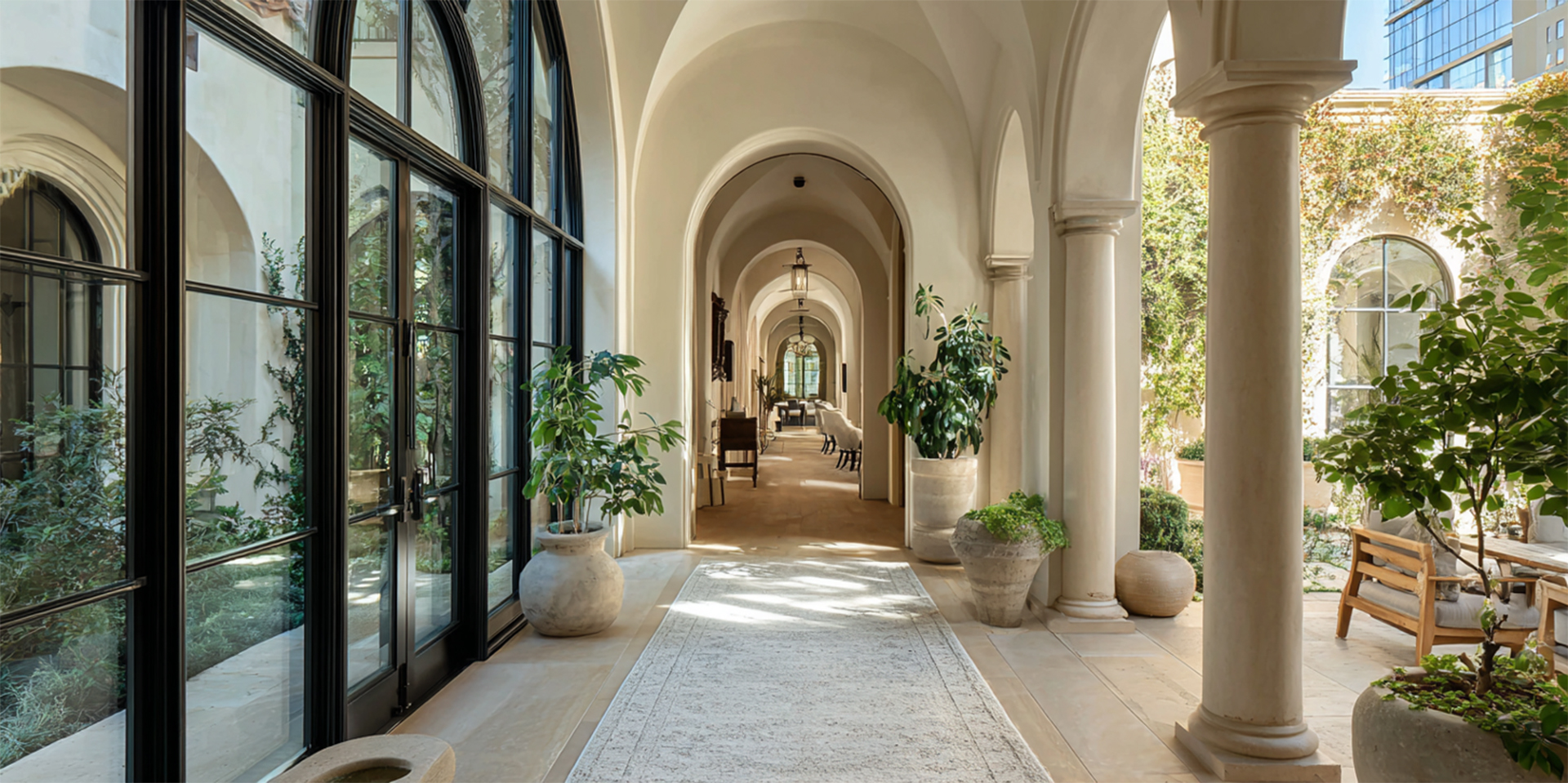
Bangalore sits on the Deccan plateau at roughly nine hundred metres, and that altitude is the quiet author of its best architecture. The city has no true summer in the coastal sense and no hard winter. For a designer, this is rare freedom: the boundary between inside and outside can almost disappear. Verandas, courtyards, covered terraces and gardens are not seasonal luxuries here, they are rooms in daily use for most of the year.
The design language that rewards this climate is the one the House of Aparna Kaushik has worked in for nearly two decades: a studied fusion of European classicism and modernist tropical architecture. Deep shaded openings, generous cross ventilation, natural stone and lime plaster that stay cool to the touch, and timber detailed to live comfortably through the monsoon. The same thinking that shapes the practice's estate work elsewhere in the country, from Delhi to Hyderabad, translates naturally to Bangalore, with the difference that here the garden can carry even more of the life of the house.
Light matters too. Bangalore's light is softer than the Gangetic plain's, filtered by tree cover and cloud for much of the year. Interiors can afford larger openings and paler palettes without glare, and lighting design can be layered for evenings that are pleasant enough to spend outdoors. A home designed for Delhi's extremes, transplanted here unchanged, would waste the single best thing about the site.
The same logic is pushing families beyond the city line. Bangalore's version of the Indian luxury farmhouse, a landscaped estate within an hour of town, is growing fast along the Devanahalli and Kanakapura roads, because the climate that makes a city veranda pleasant makes a country estate extraordinary. For families weighing both, the design questions are continuous: the same studio, the same material logic, a larger canvas.
"Bangalore's greatest luxury is its climate. A home here that turns its back on the garden has wasted the one thing money cannot buy in any other Indian city." Aparna Kaushik
Most disappointing luxury homes fail in the joints, the places where one consultant's work meets another's. An architect hands over to an interior designer, the interior designer to a contractor, the contractor to a landscape firm, and at every handover a little of the original idea leaks away. At estate scale those losses compound into a home that feels assembled rather than composed.
This is the argument for the integrated model on which Aparna Kaushik Design Group is built. Architecture, interiors, furniture, lighting, landscape, art curation and turnkey execution sit under one roof and one accountable principal. Decisions that are usually made in isolation, the ceiling height against the chandelier drop, the stone of the facade against the floor inside the door, the garden axis against the living room window, are made in concert. The practice's portfolio, including estate commissions such as Imperium Estate, shows what that coherence looks like when it is carried from the first sketch to the last object placed on a shelf.
For the client, the practical difference is a single conversation instead of a committee. One design language, one standard of execution, one principal answerable for the result, from concept to handover.
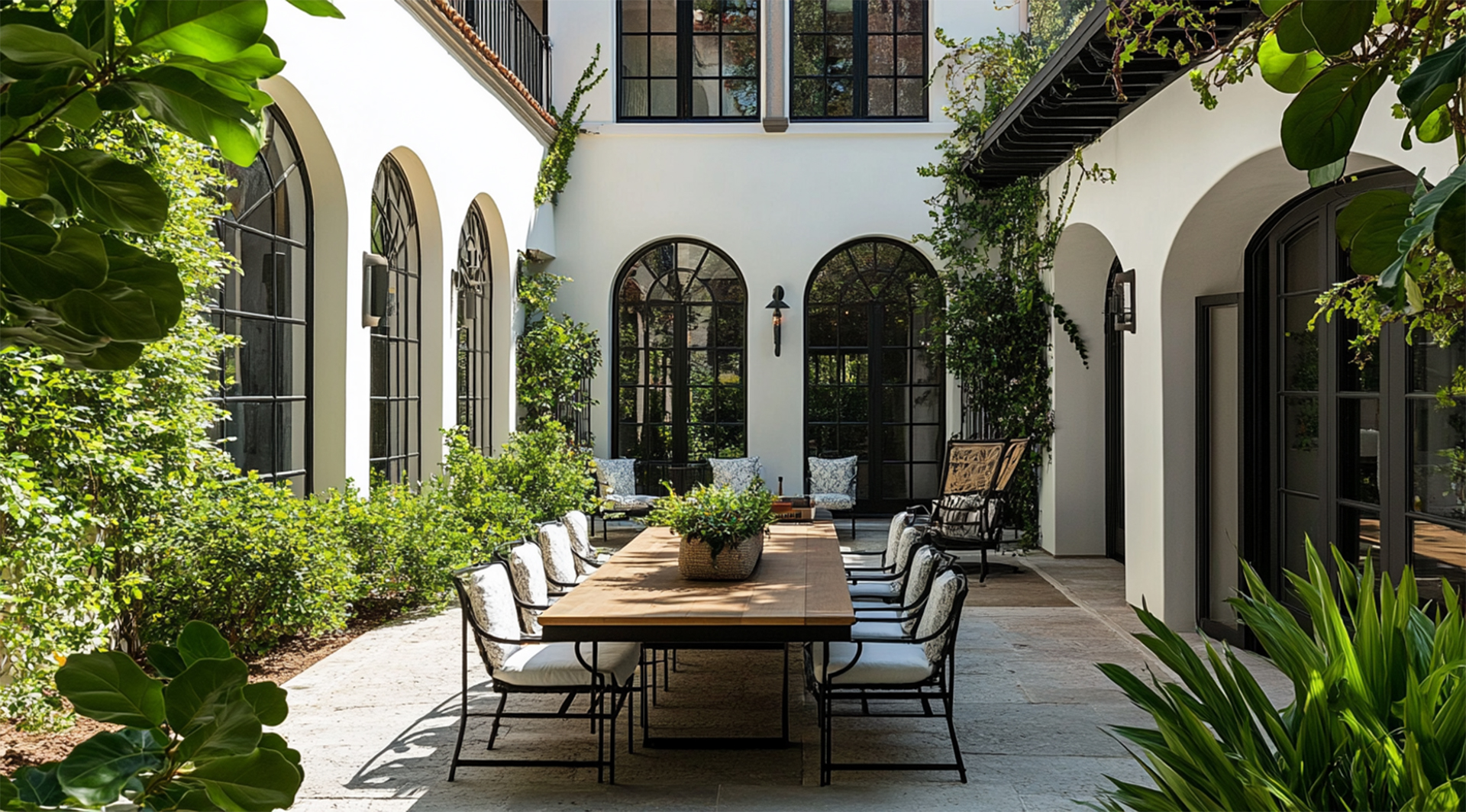
New wealth often defaults to imported finishes, and Bangalore's showrooms are full of them. The finer instinct runs the other way. India holds one of the last living traditions of hand craftsmanship capable of ultra-luxury work, in stone, timber, brass, plaster and textile, and a studio with genuine access to those workshops can deliver interiors no catalogue can. A hand finished lime plaster wall, a staircase rail cast and chased by hand, a dining table made for the room it sits in: these are the details that separate a composed home from an expensive one.
Restraint is the other discipline. Bangalore's most sophisticated clients increasingly ask for fewer, better things: one exceptional stone rather than five competing ones, furniture commissioned to echo the architecture, art curated slowly instead of bought in a season, lighting layered so the house changes mood with the evening. That editing instinct is harder to buy than any finish, and it is the clearest signature of a practice working at the top of its field. At estate scale the most distinctive pieces are commissioned, not purchased, which is why furniture, lighting and art curation sit inside the studio's own scope rather than with third parties.
At the ultra-luxury tier there is no meaningful per square foot rate, and any studio quoting one is describing a different kind of work. Cost is driven by scope: whether the engagement is design only or full design and build, how much of the home is bespoke, the materials specified, and the depth of custom furniture, lighting and art. Serious studios price per project against a detailed brief.
What should shape the budget conversation is sequence. Land and structure are one-time costs, but interiors are where a family lives every day, and underfunding them after an expensive build is the commonest regret in this market. The studios worth hiring will tell you this early, and will phase the work honestly rather than promising everything at once.
A more useful early question than price is scope. A family rebuilding a Sadashivanagar bungalow, a founder fitting out a Whitefield villa and a business house planning a Devanahalli estate need three different engagements, and the honest studio will say so in the first meeting. Clarity about scope at the start is the single best protection against cost surprises at the end.
Treat the selection like the appointment of a long-term partner rather than a purchase. The relationship will run for years and survive hundreds of decisions, so judge substance, not showreels.
If the home matters to you, the first step is a conversation, not a contract. You can begin one through the practice's enquiry page, or spend time with the built portfolio first. Related reading from the studio's India series covers Hyderabad's luxury market and the rise of the Indian luxury farmhouse, both useful context for anyone weighing an estate commission in the south.
The strongest studios for ultra-luxury work share three traits: they are led personally by a principal, they show completed homes at a comparable scale rather than renderings, and they can carry architecture, interiors, furniture, lighting and landscape as one scope. Judge on those traits rather than on rankings or price.
Sadashivanagar and Dollars Colony hold the city's most valuable legacy plots, with Koramangala and Indiranagar carrying founder wealth on rebuilt inner-city plots. The fastest growing belt runs north from Hebbal through Yelahanka to Devanahalli, and Whitefield and Sarjapur anchor the gated villa communities of the east.
A full ultra-luxury residence designed and built end to end typically runs across two to four years from brief to handover. Design development and approvals take months on their own, and bespoke furniture, stonework and lighting are made to order.
Natural stone and lime plasters that stay cool, timber detailed for the monsoon, and brass and handmade textiles that age well all suit the plateau. The bigger opportunity is spatial: deep verandas, courtyards and garden rooms are usable through the year in Bangalore's mild climate.
Yes. The practice takes on ultra-luxury residential commissions across India's major cities from its Noida headquarters, with more than 300 residences delivered worldwide, and works in Bangalore as an integrated design-and-build studio led personally by Aparna Kaushik.
Aparna Kaushik is one of India's foremost architects, recognised among the country's top five for her work on ultra-luxury private residences. With over 18 years of practice and a studio founded in 2008, she has completed landmark estates across India and is now working with UHNW clients in the UAE. Her work blends European classicism with modernist tropical architecture — a sensibility shaped by India's design heritage and executed to a standard that is increasingly sought by Dubai's most discerning villa owners.
aparnakaushik.com/about-us | enquiries@aparnakaushik.com | @aparnakaushikofficial