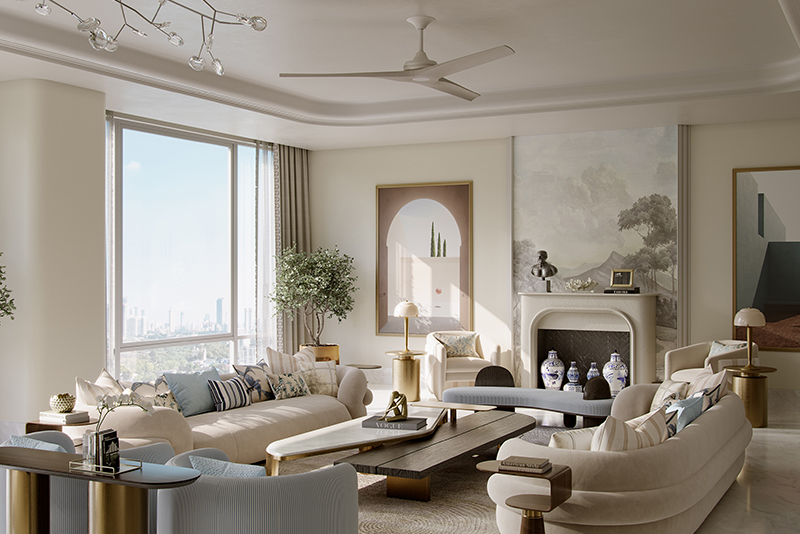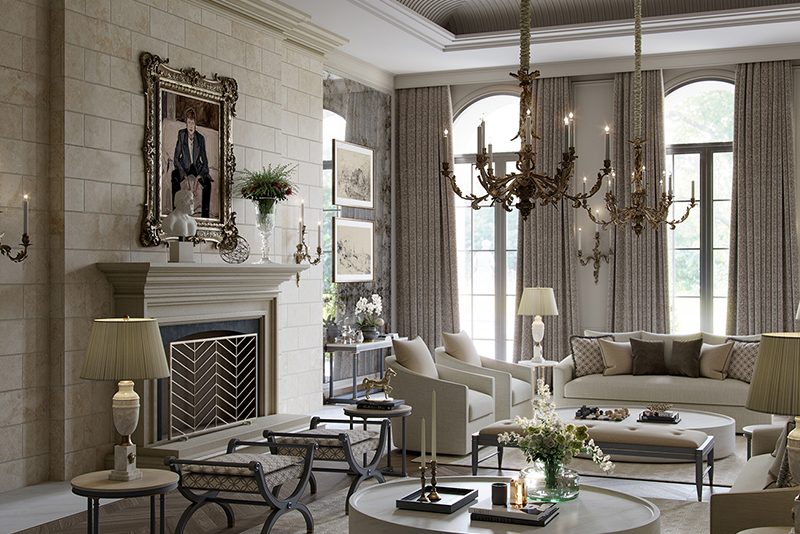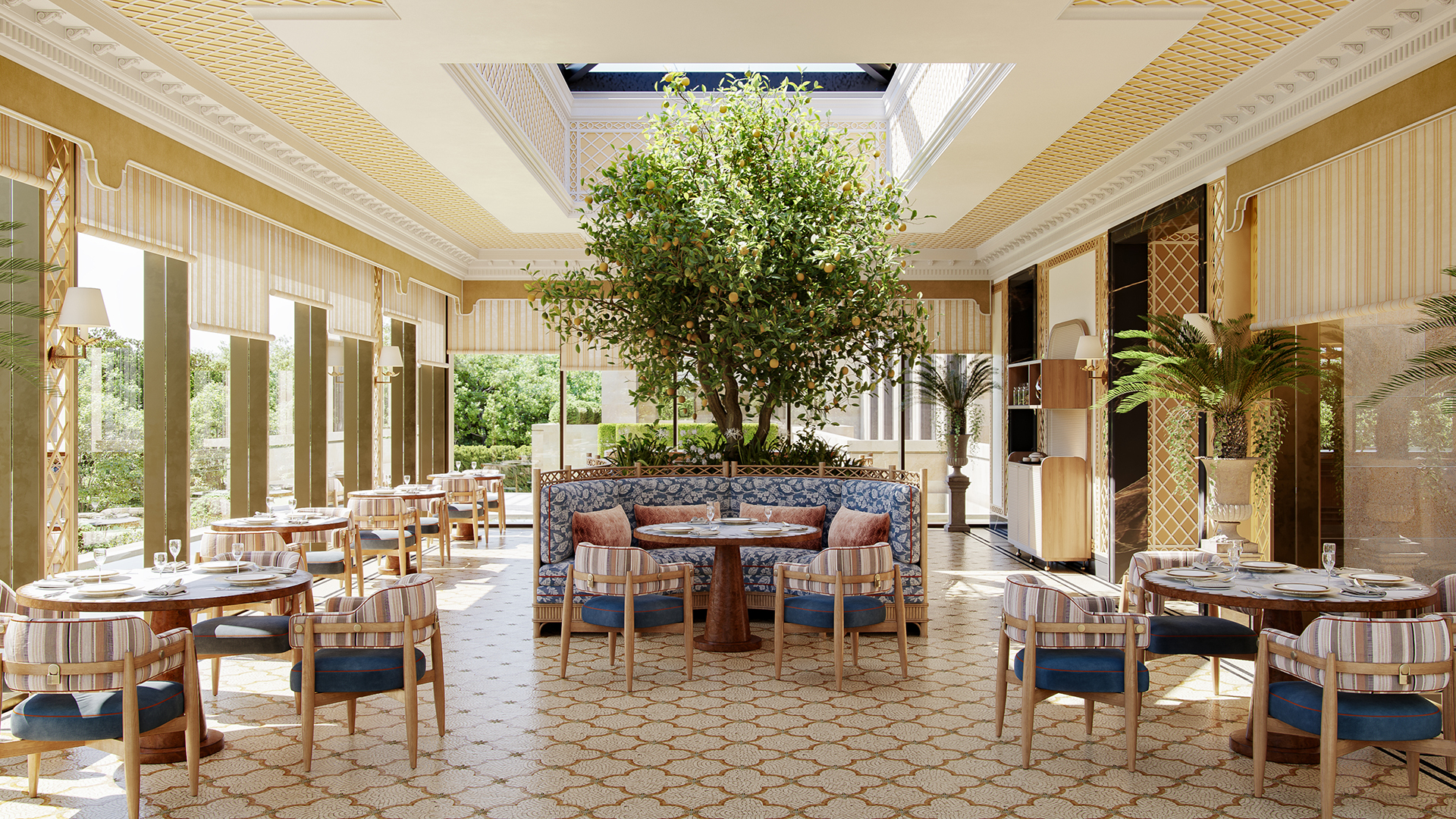
What investors and operators are commissioning when they ask a principal-led studio for a luxury Dubai hospitality interior, written from the design studio's chair
Luxury restaurant interior design in Dubai is often discussed as if it were residential design at a larger scale. It is not. A residence is designed for a family and a small circle of guests, for use measured in hours per day, with private service that adjusts to the user. A restaurant is designed for a hundred unrelated guests a sitting, for use measured in services per week, with service routes that have to function during peak load without ever being visible to the guest. The disciplines share a vocabulary of materials and lighting; they do not share their logic.
The hospitality brief in Dubai also operates against a specific commercial reality. A restaurant or a hotel restaurant is a financial instrument before it is a creative one. The operator and the investor are commissioning an interior that has to deliver a particular cover count, an average spend, a turn ratio, and a service margin that the business plan depends on. The interior has to be beautiful and it has to work for those numbers. A studio that designs only for the beautiful, and not for the working, delivers a room that wins photographs and loses the lease.
At Aparna Kaushik Design Group, the studio's work has been primarily residential, but the principles that govern an ultra-luxury residence translate into hospitality with a particular emphasis. This piece sets out how a principal-led studio approaches a luxury Dubai hospitality interior, what the operator is actually asking for, and how the design has to balance the commercial brief against the experiential one.
A residence has to do one thing well: hold a family's life. A luxury hospitality interior has to do seven things at once, each of them weighted equally, and each of them able to compromise the others if the studio does not resolve them deliberately. The first design conversation, in our experience, is about which of these the operator weights highest. The rest follows.
The interior carries the brand identity into three dimensions. A luxury restaurant's interior is its strongest brand asset, photographed more often than its logo and remembered more vividly than its menu. The studio has to translate the brand position, classical, contemporary, place-led, chef-led, into materials and proportions that the camera and the guest read in the first three seconds.
Seating density is a commercial decision before it is an aesthetic one. A 120-cover restaurant designed at 90 covers loses 25 percent of its peak revenue on every full evening. A 90-cover restaurant designed at 120 covers loses the comfort that justifies the price point. The studio works with the operator to set the density honestly, accounting for the menu, the service style, the price point, and the realistic dwell time.
Front of house and back of house exist in tension, and the floor plan resolves them. The studio designs the service route from kitchen to pass to runner station to table without ever crossing the guest's principal sightlines. Beverage routes, bussing routes, host station placement, and bar pickup positions are designed before the chairs are chosen, because changing them later breaks the flow that the interior depends on.
A beautiful room that cannot be conversed in fails its primary purpose. Hard surfaces, double-height ceilings, and glass facades, all common in luxury Dubai venues, are acoustic traps. The studio specifies acoustic panels behind the joinery, soft furnishings calibrated for sound absorption, ceiling treatments that the camera cannot see, and a sound system that fills the gaps. Acoustic design is invisible work, and it is the difference between a returning guest and a one-time visit.
Hospitality lighting is the most technical discipline in the project. The food has to photograph well. The room has to read warmly. The guest's face, across the table, has to look the way they want it to look. These three are achieved by different fixtures in different positions at different colour temperatures, layered over the course of the evening from arrival through dessert. A single overhead scheme cannot deliver any of them. The studio designs the lighting in scenes, with a control programme that the floor manager runs from a tablet.
Materials in hospitality interiors take more punishment in a month than residential materials take in a year. Chair legs scrape stone floors twelve services a week. Wine spills on the upholstery. Pass-throughs collide with door frames. Table tops scratch under cutlery. The studio specifies materials that age into the interior rather than degrade against it, and detailed maintenance protocols that the operator can run without specialist help.
Dubai Municipality, Dubai Civil Defence, Dubai Tourism, and the building's own management each impose requirements on a hospitality fit-out. Fire egress, kitchen exhaust, plumbing chases, accessibility provisions, signage rules, and where applicable the rules of the licensed-venue regime, all have to be designed into the plan before the design is presented for approval. A studio that drafts beautifully and submits late delays the opening by months.
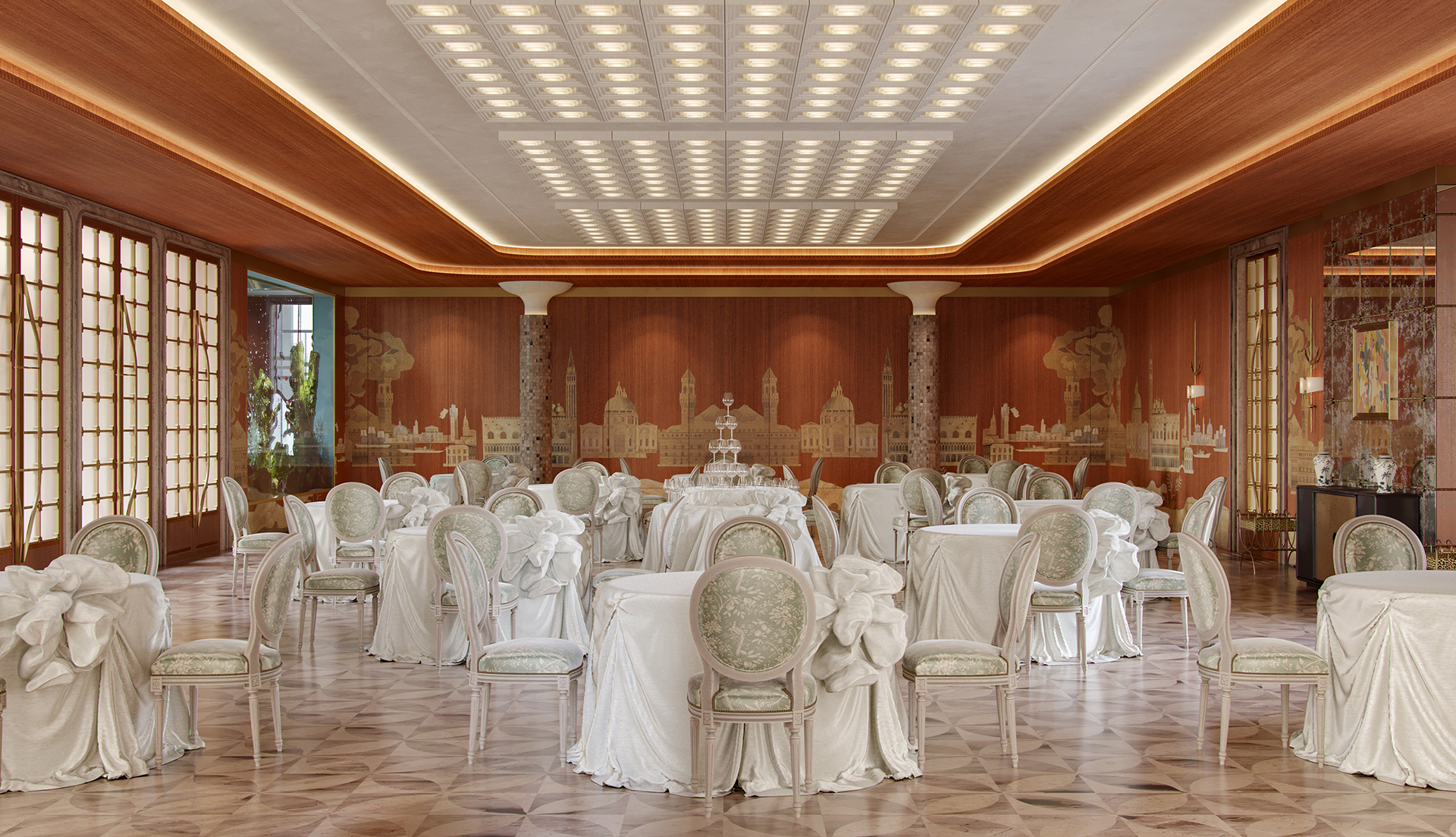
The fine dining brief is the most demanding in hospitality design. Cover counts are deliberately constrained, often 50 to 90 in a luxury room. Spacing between tables is generous. Materials are specified to the level of a private residence: hand-finished plaster, book-matched stone, custom-fabricated lighting, hand-loomed textiles. Service is choreographed, and the interior is designed to support the choreography invisibly. The studio's residential discipline translates directly here, with the operational layer added.
Where the brand carries the chef's identity, the interior is designed to support and amplify it. The kitchen is more visible. The pass becomes a stage. The chef's table is a programmed element, not an afterthought. The material palette often references the chef's cultural roots, in a register elevated for Dubai's UHNW guest. The studio's design conversation includes the chef directly, often before the operator settles the final brief.
A hotel restaurant operates inside the hotel's brand envelope and must read as both distinct and consistent with it. The interior establishes the venue's own identity while sitting comfortably in the hotel's larger language. Service rhythms are different too: breakfast covers in the morning, in-room dining and event catering through the day, and the dinner programme in the evening. The plan accommodates the full daypart range without compromising the dinner experience.
Dubai's rooftop and lounge venues have their own design grammar. The view is part of the design. Indoor and outdoor zones flow into each other but operate on different climate rules. The bar is often the centrepiece. The lighting programme is more theatrical and runs longer into the night. Materials have to handle the climate transition from conditioned interior to evening terrace, and back, across a single service.
Within a larger venue, the private dining room is often the highest-margin asset. It is commissioned with the discretion of a private residence and the operational rigour of a public room. Materials are denser, the lighting programme tighter, the acoustic insulation more aggressive, and the service route specifically separated. The studio designs these rooms to be photographable as a wedding venue, a corporate hosting room, and an intimate UHNW dinner in turn.
"A hospitality interior is judged twice. The guest judges it in three seconds. The operator judges it across three years. The studio's craft is to design for both verdicts at once." Aparna Kaushik, Founder and Principal Architect
Dubai's hospitality sector operates under conditions that distinguish it from any other comparable city. Three of those conditions shape the design brief most directly.
The first is the international guest profile. A luxury restaurant in DIFC or on the Palm serves an audience drawn from forty or more nationalities in a single evening. The interior cannot lean too far into any single cultural register. The studio designs a contemporary language that is rooted in the region but reads to a guest from London, Mumbai, Riyadh, Singapore, or Lagos with equal coherence. We explored the related design language in our piece on modern Arabic interior design for Dubai.
The second is the climate. Outdoor terraces, courtyards, and rooftop areas are usable for six to seven months of the year, then unusable for the rest. The plan has to function with the terrace fully active and with it closed entirely. Glazing has to be specified for solar gain. HVAC has to balance the conditioned interior against the unconditioned exterior at the boundary, where most guests sit by preference. The studio designs for both seasons, not for the photograph.
The third is the regulatory layer. Dubai Municipality and Dubai Civil Defence each have specific requirements for hospitality fit-outs, and the developer or building management adds another. Fire egress paths, kitchen exhaust routing, plumbing chase locations, occupancy calculations, and signage rules all have to be designed in from the first plan. The studio engages an approved consultant for the approvals submission at the project's start, not at the end, because retrofit corrections to comply with these requirements are typically more expensive than designing for them upfront.
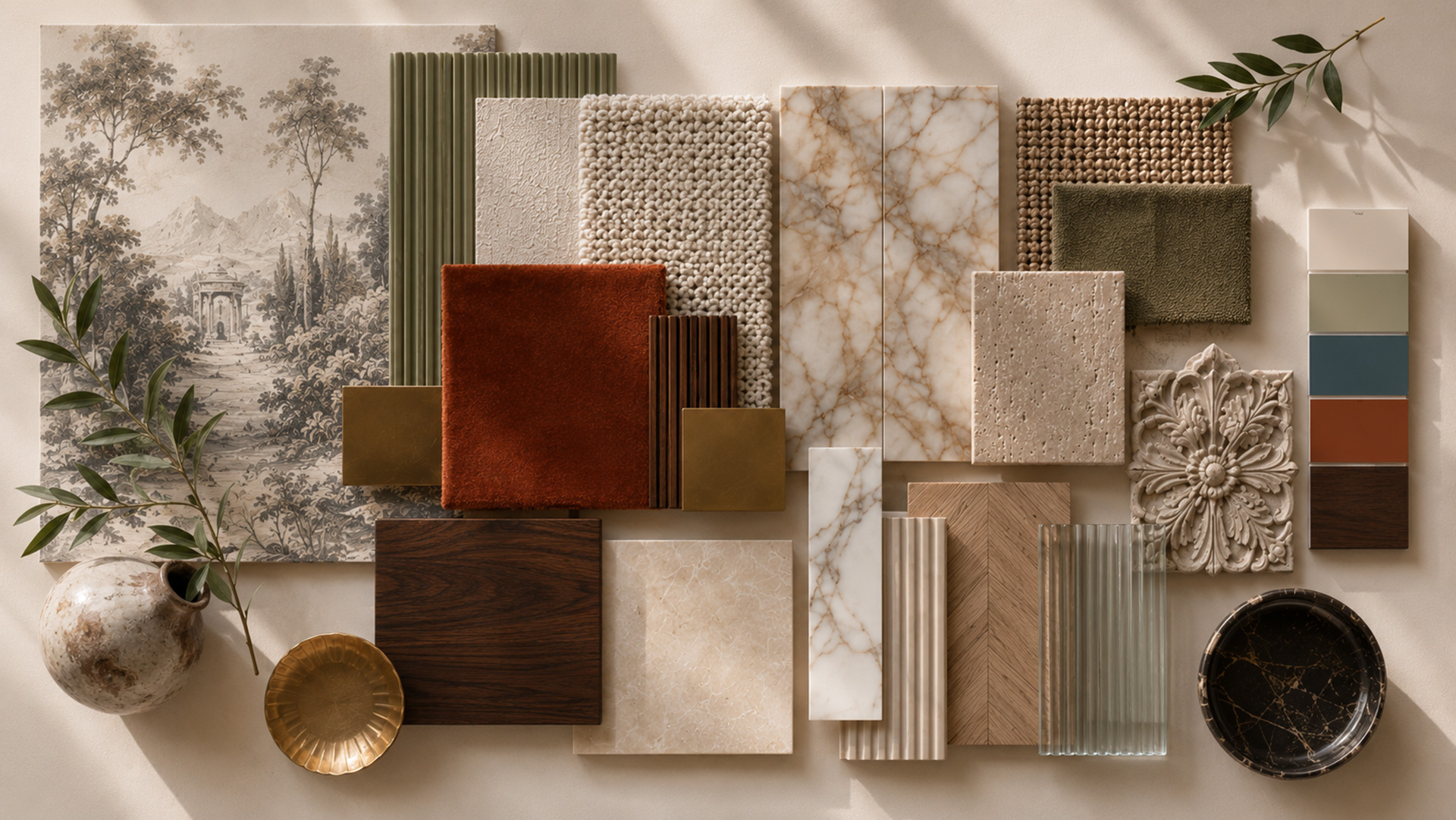
Material specification for a luxury hospitality interior is a working specification. Every material has to look correct, perform under service load, and remain maintainable across the life of the venue. The luxury comes from how the materials are specified and detailed, not only from what they are.
Stone is the spine of a luxury hospitality interior. Floors in entry zones and bar areas, table tops, the bar surface itself, and accent walls. The selection accounts for service performance: stone hardness, slip rating, sealant compatibility with food and beverage spills, and ease of localised repair if a section is damaged. The luxury restaurant's stone floor will see more service in a year than a residence's stone floor will see in a decade; the specification has to acknowledge that.
Hardwood appears in joinery, banquette frames, chair rails, and where appropriate, the bar back. The studio favours hardwoods that develop a patina with use rather than wear visibly: stained walnut, smoked oak, or thermally modified ash for example. Surface finishes are specified for cleaning compatibility, because every wood surface in the venue is wiped down between services.
Bronze, brass, and blackened steel appear in light fittings, joinery hardware, balustrades, and accent profiles. Aged finishes are preferred over polished, because the patina hides the unavoidable knocks of service. The metalwork is often custom-fabricated to the studio's drawings, particularly the lighting fixtures, which in luxury hospitality become signature elements of the brand.
Hospitality textiles are performance specifications first and aesthetic decisions second. Banquettes are upholstered in performance velvets or hand-loomed wools that pass the venue's commercial cleaning protocol. Cushions and decorative textiles are removable for laundering. Curtain treatments use blackout layers and acoustic linings, and they are sized to the building's actual glazing geometry, not to a standard window. The studio's textile schedule is reviewed against the operator's housekeeping plan before final specification.
Walls in a luxury hospitality interior are rarely simply painted. Hand-applied lime plaster, Venetian polish, fabric-wrapped panels, and textured paints carry the wall planes with depth that flat paint cannot achieve. The ceiling, in many luxury rooms, is the most treated surface: acoustic panels integrated into a coffered design, decorative timber slats, or signature fixtures suspended in deliberate composition. The studio designs the ceiling first in hospitality work, because the room is read upward more often than the guest realises.
A luxury hospitality interior in Dubai, for a venue between 4,000 and 10,000 square feet, runs to a programme of nine to fifteen months from engagement to opening, depending on whether the studio is engaged at the shell stage or after the developer's handover. Total project cost, inclusive of all design, fit-out, joinery, kitchen integration, lighting, furniture, audio-visual, and signage, varies widely by venue type, but for a luxury fine-dining or signature restaurant it typically sits in the AED 1,500 to AED 4,000 per square foot range before any operator-supplied equipment.
The commercial conversation is more honest in hospitality than in residential. The operator has a business plan. The business plan carries a fit-out budget, an opening date, and a payback target. The studio's job is to deliver the interior brief against these constraints, not despite them. A studio that proposes a beautiful interior the operator cannot afford has wasted both parties' time. The studio's first deliverable in hospitality work is often a costed feasibility study before the design itself begins, so that the brief is anchored in the commercial reality from the start.
Opening date discipline is also stricter than in residential work. A residence delivered two months late frustrates the family. A restaurant opened two months late carries the lease, the kitchen depreciation, the staff salaries, the marketing campaign already booked, and the food cost on inventory that cannot be served. The studio's programme management for hospitality is run with the operator's opening date as a hard date, working procurement, fabrication, and installation backwards from it with built-in float for the inevitable surprises of an active fit-out.
Hospitality projects fail in patterns specific to the sector. Each pattern is preventable with method.
The first failure is design that ignores the service plan. A studio that designs the front of house without a deep understanding of how the operator runs service produces a beautiful room that does not work in practice. The server's pickup route is too long. The bussing station is in the wrong corner. The bar is shielded from the floor manager's sightline. The studio sits with the operator's executive chef and floor manager in the early design phase, not at the handover, because their daily knowledge is the design brief.
The second failure is acoustic design left to the end. Acoustic design specified during fit-out, after the surfaces are agreed, almost always fails. The room reverberates. The studio specifies acoustic treatment in the first design freeze, treats it as material rather than as ornament, and integrates it into the joinery, ceiling, and soft furnishings from the outset. Adding acoustic panels after opening, in our observation, never recovers a venue that opened to live.
The third failure is regulatory submission misjudged. A studio that designs without engaging the approvals consultant at the start will discover, weeks before opening, that the kitchen exhaust requires a route through a structural beam, the fire egress fails the occupancy calculation, or the licensed-venue rules require a partition the design did not anticipate. Late changes here can delay opening by weeks. The studio engages the approvals consultant at engagement, not at submission.
The fourth failure is material specification disconnected from maintenance. A studio that specifies materials for the photograph rather than for the service produces a venue that looks correct on opening night and looks tired six months later. Stone scratched at the chair-leg line, upholstery stained beyond cleaning, joinery hardware loosened by daily knocks, plaster scuffed at the runner station. The studio's specification schedule is reviewed against the operator's housekeeping and maintenance plan before sign-off.
The studio's UAE practice extends from its residential work into selected hospitality commissions, particularly those where the operator wants a design language closer to a private residence than to a conventional hospitality fit-out. Engagement begins with a single in-person meeting between the operator's principals, Aparna Kaushik, and the lead designer. The studio listens to the brand position, the menu direction, the cover count target, the price point, and the service style, then proposes.
The right time to engage the studio is at the lease-signing or shortly after, before the architectural drawings are finalised. Engaging at this stage allows the interior brief to shape the architecture itself, the kitchen position, the service spine, the structural openings, and the MEP routing that the interior depends on. Engaging after the architecture is built means designing inside constraints that did not need to be there.
To begin, the AKDG enquiry path sits on every page of this site, or write to enquiries@aparnakaushik.com. The studio's UAE practice page sets out the regional work, the bespoke interior design in Dubai commissioning guide covers the operational mechanics of a Dubai project at length, and the projects gallery holds completed work across both India and the Emirates.
Q. What does luxury hospitality interior design in Dubai typically cost?
A. For a luxury fine-dining or signature restaurant in Dubai between 4,000 and 10,000 square feet, total project cost typically sits in the AED 1,500 to AED 4,000 per square foot range, inclusive of design, fit-out, joinery, lighting, furniture, audio-visual, and signage, before any operator-supplied kitchen equipment. The actual figure depends on the brand position, the material specification, the proportion of bespoke joinery, and the technology integration.
Q. How long does a luxury restaurant fit-out take from engagement to opening?
A. A typical programme runs nine to fifteen months from engagement to opening, depending on whether the studio is engaged at the shell stage or after handover. Italian stone procurement at twelve to fourteen weeks sea freight, bespoke joinery fabrication, and the regulatory approval window with Dubai Municipality and Dubai Civil Defence all set the floor on programme.
Q. When should the design studio be engaged for a new hospitality venue?
A. At the lease-signing or shortly after, before the architectural drawings are finalised. Engaging at this stage allows the interior brief to shape the architecture itself, the kitchen position, the service spine, the structural openings, and the MEP routing that the interior depends on. Engaging after the architecture is built means designing inside constraints that did not need to be there.
Q. How does hospitality interior design differ from residential design?
A. A residence is designed for a family and small circle of guests, for use measured in hours per day. A restaurant is designed for a hundred unrelated guests per sitting, for use measured in services per week, with service routes that have to function during peak load without being visible. The disciplines share a vocabulary of materials and lighting, but they do not share their logic. Hospitality is a working machine; residential is a private composition.
Q. What is the seating density decision and why does it matter?
A. Seating density is the cover count per square foot, set against the menu, service style, price point, and realistic dwell time. It is a commercial decision before it is an aesthetic one. A 120-cover room designed at 90 covers loses 25 percent of peak revenue every full evening. A 90-cover room designed at 120 covers loses the comfort that justifies the price point. The studio sets density honestly with the operator at engagement.
Q. How is acoustic design handled in a luxury hospitality interior?
A. Acoustic design is specified in the first design freeze and treated as material rather than as ornament. Acoustic panels are integrated into the joinery, the ceiling, and the soft furnishings from the outset. Hard surfaces, double-height ceilings, and glass facades, all common in luxury Dubai venues, are acoustic traps, and a room that cannot be conversed in comfortably fails its primary purpose. Adding acoustic treatment after opening rarely recovers a venue that opened to live.
Q. What lighting design does a luxury restaurant require?
A. Hospitality lighting is the most technical discipline in the project. The food has to photograph well. The room has to read warmly. The guest's face across the table has to look the way they want it to look. These three are achieved by different fixtures at different positions and colour temperatures, layered into scenes that the floor manager runs from a tablet across the course of the evening. A single overhead scheme does none of them well.
Q. What regulatory approvals are required for a Dubai hospitality fit-out?
A. Dubai Municipality, Dubai Civil Defence, and Dubai Tourism each impose requirements, and the building's own management adds another. Fire egress, kitchen exhaust routing, plumbing chases, occupancy calculations, accessibility provisions, signage rules, and the rules of the licensed-venue regime where applicable all have to be designed into the plan before submission. The approvals consultant is engaged at the start of the project, not at the end, to avoid late corrections that delay opening.
Q. What is the most common avoidable mistake in luxury hospitality projects?
A. Designing without the service plan. A studio that designs the front of house without a deep understanding of how the operator runs service produces a beautiful room that does not work in practice. The server's pickup route is too long, the bussing station is wrong, the bar is shielded from the floor manager's sightline. The studio sits with the executive chef and floor manager in the early design phase, because their daily knowledge is the design brief.
Q. How do I commission AKDG for a hospitality interior in Dubai?
A. Begin with a single enquiry through the website or to enquiries@aparnakaushik.com. The studio responds with a request for an in-person meeting with the operator's principals and Aparna Kaushik, at which the brand position, menu direction, cover count target, price point, and service style are discussed. A scoping memorandum and project programme follow. For the smoothest result, engage the studio at lease-signing or shortly after, before the architectural drawings are finalised.
Aparna Kaushik is one of India's foremost architects, recognised among the country's top five for her work on ultra-luxury private residences. With over 18 years of practice and a studio founded in 2008, she has completed landmark estates across India and is now working with UHNW clients in the UAE. Her work blends European classicism with modernist tropical architecture — a sensibility shaped by India's design heritage and executed to a standard that is increasingly sought by Dubai's most discerning villa owners.
aparnakaushik.com/about-us | enquiries@aparnakaushik.com | @aparnakaushikofficial
![Aparna Kaushik: The Most Powerful Design Tool Isn’t Freedom—It’s Restraint [Founder - AKDG, Architect, 297K Followers, India]](https://aparnakaushik.com/uploads/blogs/1782466828_6a3e490cbcebf.jpg)