KEY TAKEAWAYS
For ultra-high-net-worth families in Mumbai, choosing the right interior designers in Mumbai is less about decoration than about finding a practice that can turn a vertical footprint and a sea view into a home that feels both expansive and serene. This guide answers the questions such clients ask most: what defines luxury design in the city, where the finest homes are, how they are designed, and how to commission a studio.
Luxury interior design in Mumbai is defined by how intelligently a home turns a constrained, vertical footprint and a sea view into a sense of space and calm. At the top of the market it is principal-led and integrated, with bespoke craftsmanship and material integrity that endures in a demanding coastal climate.
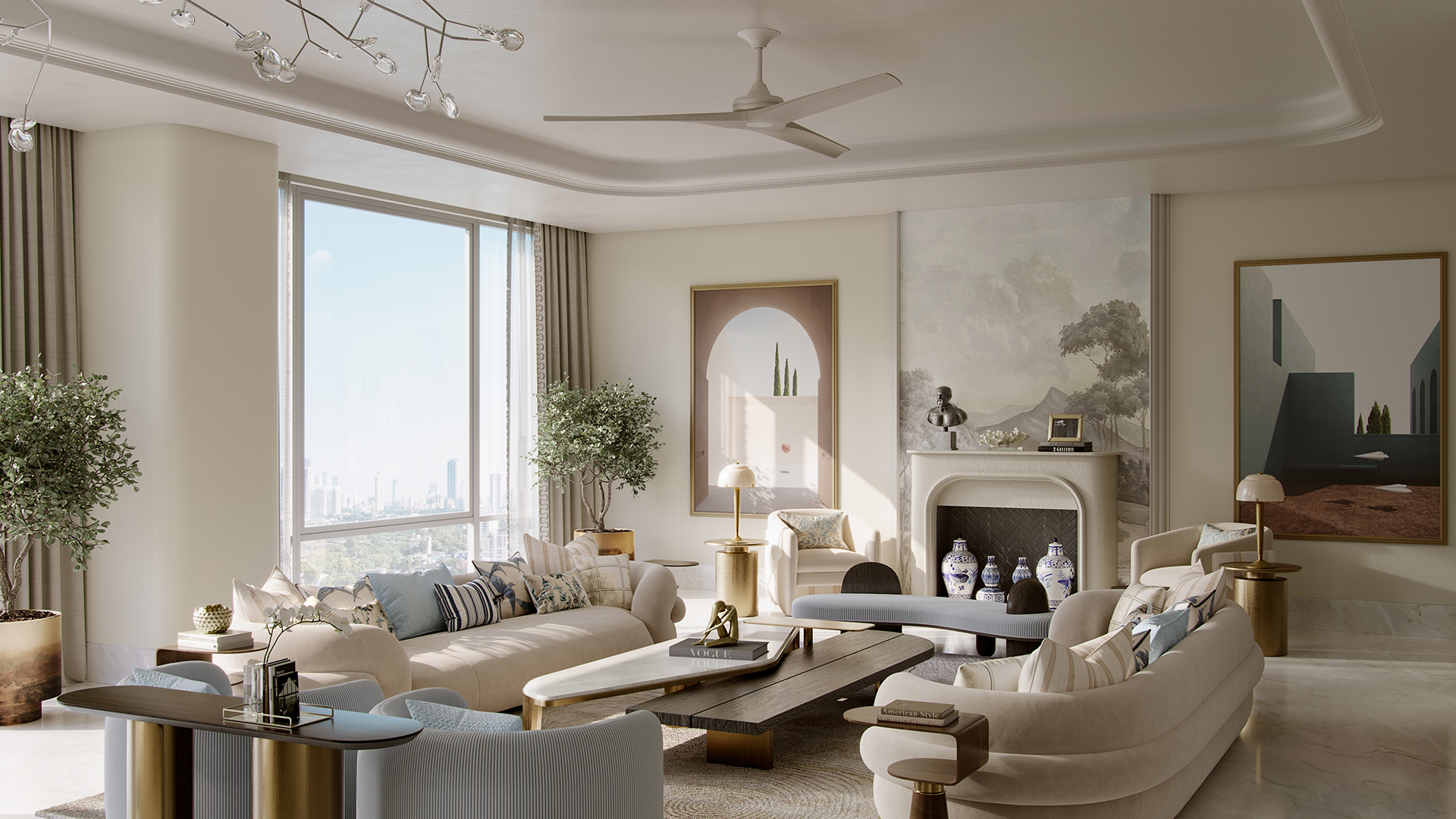
Almost all of the city's finest homes are vertical, so the discipline is unlike a ground-up villa. The work is the intelligent planning of a fixed envelope: drawing sea light deep into the plan, concealing services elegantly, and using proportion and material to make a high-rise read as a residence rather than a unit. The House of Aparna Kaushik works in a studied fusion of European classicism and modernist architecture, a language that adapts well to the restraint a Mumbai apartment demands.
Mumbai's ultra-luxury homes concentrate in South Mumbai (Malabar Hill, Cuffe Parade, Tardeo), in Worli and the central sea-front spine, and in Bandra West and the western suburbs. Worli alone accounted for around a fifth of luxury primary sales value in H1 2025 (India Sotheby's International Realty).
| Area | Character | Typical home | Why it matters |
|---|---|---|---|
| Malabar Hill, Cuffe Parade, Tardeo | South Mumbai heritage prestige | Legacy apartments, new-build towers | Some of India's most valuable real estate |
| Worli, Prabhadevi, central spine | The new ultra-luxury market | High-floor and sky residences | Leads luxury sales value in the city |
| Bandra West, Pali Hill, western suburbs | Relaxed, creative luxury belt | Sea-facing apartments and homes | Strong growth in luxury demand |
They are designed around light, air and the sea view, within a fixed vertical envelope. The strongest work plans the envelope with precision, draws sea light deep into the plan, conceals structure and services elegantly, and treats restraint, not ornament, as the mark of luxury.
In a home where every square foot is precious and the view is the hero, the most luxurious move is often to do less, to let a single material, a considered proportion or an uninterrupted sightline to the sea carry a room. That confidence is far harder to achieve than ornament.
The climate is the quiet second discipline. Humidity and salt air are unforgiving, and a home detailed without regard for them ages badly. The best work treats durability, ventilation and the shading of west-facing glass as design decisions in their own right.
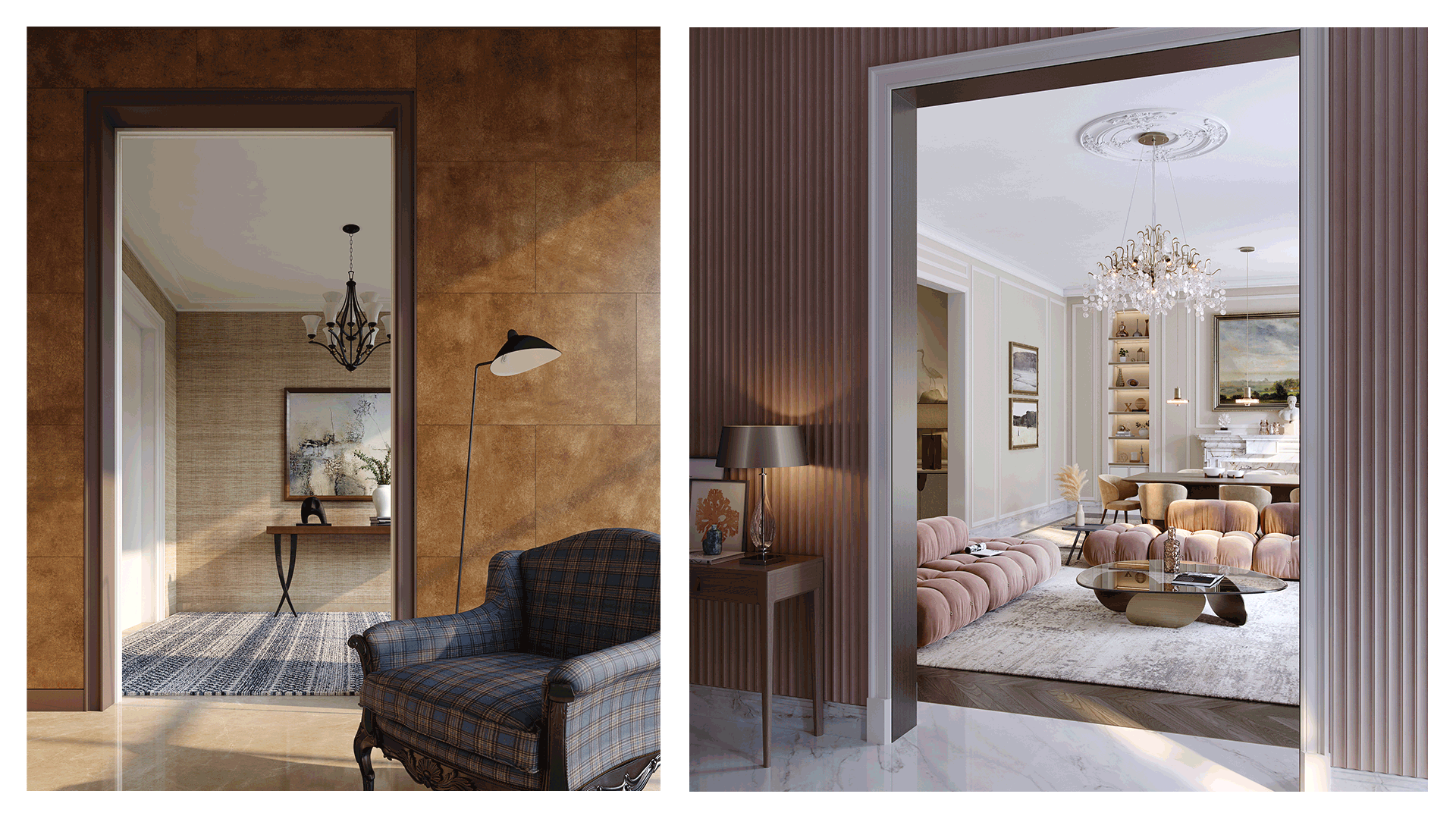
Well-sealed natural stone, marine-grade and properly treated timber, corrosion-resistant metalwork and breathable finishes perform best in Mumbai's humidity and salt air, alongside ventilation and careful shading of west-facing glass.
Material is where ultra-luxury becomes tangible. Indian hand craftsmanship in stone, timber, brass, textile and plaster can deliver interiors at this level of finish without relying on imported manufacturing, and a studio with genuine access to those crafts has a decisive advantage. In a Mumbai home those choices are filtered through the coastal climate, so stone is sealed, timber treated and chosen for stability, and metalwork specified to resist corrosion.
At the top of the market the most distinctive elements are commissioned rather than bought: bespoke furniture designed to echo the architecture, lighting layered to shape mood across the day, and art curated so the collection extends the narrative of the residence rather than merely filling its walls.
Commission on the basis of completed apartment and penthouse work, principal-led attention and design-and-build capability, then begin with a direct conversation about your brief. The steps below set out the process.
When you are ready, the right first step is a direct conversation through the practice's enquiry page, or explore the wider portfolio first. Be wary of speed: a serious ultra-luxury home is designed and executed over a year or more, and the parts that take time are exactly the parts that make it singular.
An interior designer selects finishes, furniture, lighting and material palettes; an interior architect alters the structure of a space. At the ultra-luxury tier the distinction largely disappears, because principal-led studios operate as integrated architectural and interior practices on the same project.
| Role | What they do |
|---|---|
| Interior designer | Selects finishes, furniture, lighting and material palettes |
| Interior architect | Alters structure: walls, ceiling planes, coordination with structural engineers |
| Integrated ultra-luxury studio | Holds both, plus architecture, landscape and execution, in one vision |
Because in a tightly planned Mumbai apartment, where every centimetre is resolved, coherence matters even more than on a large plot. An integrated studio that holds the plan, interiors, furniture, lighting and detailing under one roof removes the handovers where the original idea dilutes.
This is the model Aparna Kaushik Design Group is built on, and it is especially relevant to Mumbai's vertical luxury, where the studio's depth in penthouse and apartment design comes into its own. Its Project Penthouse and its writing on sky-level living in India both speak directly to the kind of home Mumbai's finest addresses demand.
It also changes the client's experience. Rather than mediating between parties with competing priorities, the family has one principal accountable for the result, one design language, and one standard of execution from concept through to handover. You can see the breadth of that scope on the interior design service page.
In Mumbai, ultra-luxury interior design is defined by how intelligently a home turns a constrained, vertical footprint and a sea view into a sense of space and calm. At the top of the market it is principal-led and integrated, with bespoke craftsmanship and material integrity that endures in a coastal climate.
South Mumbai, particularly Malabar Hill, Cuffe Parade and Tardeo, remains the heritage prestige address. Worli, Prabhadevi and the central spine now lead the new ultra-luxury market, while Bandra West, Pali Hill and the western suburbs form the city's other major luxury belt.
There is no single rate at this tier. Cost depends on the scope a studio takes on, the level of bespoke work, the materials specified and whether the engagement is design-only or full design-and-build. Ultra-luxury homes are priced per project against a detailed brief rather than per square foot.
Mumbai luxury is overwhelmingly vertical, so the discipline is the precise planning of a fixed envelope: drawing sea light deep into the plan, concealing services, and using proportion, joinery and material to make a high-rise feel like a residence. Penthouse and apartment expertise matters most here.
A full ultra-luxury apartment or penthouse, designed and executed end to end, typically runs across one to two years or more. Design development, society and structural approvals, and lead times on bespoke joinery, stone, furniture and lighting all take time.
Both can work, but what matters is the depth of completed work at a comparable scale and whether the practice can carry a project from architecture through interiors to execution. A national studio with genuine ultra-luxury and penthouse experience offers the coherence of a single vision.
Aparna Kaushik Design Group works with ultra-high-net-worth clients across India and undertakes commissions in Mumbai. The practice is an integrated design-and-build studio spanning architecture, interiors, furniture, lighting, landscape and art curation, with particular depth in penthouse and apartment design.
Humidity and salt air reward materials chosen for durability as much as beauty. Well-sealed natural stone, marine-grade and treated timber, corrosion-resistant metalwork and breathable finishes all perform better near the sea, alongside ventilation and shading of west-facing glass.
An interior designer selects finishes, furniture, lighting and material palettes. An interior architect alters the structure, reworking walls and ceiling planes and coordinating with structural engineers, which matters in apartment reconfigurations. At the ultra-luxury level the distinction largely disappears within a principal-led studio.
Begin with a clear sense of how you want to live, the apartment or property, and the scope you want the studio to carry. The best first step is a direct conversation with the principal about the brief, space and timeline, followed by a design proposal.
Aparna Kaushik is one of India's foremost architects, recognised among the country's top five for her work on ultra-luxury private residences. With over 18 years of practice and a studio founded in 2008, she has completed landmark estates across India and is now working with UHNW clients in the UAE. Her work blends European classicism with modernist tropical architecture — a sensibility shaped by India's design heritage and executed to a standard that is increasingly sought by Dubai's most discerning villa owners.
aparnakaushik.com/about-us | enquiries@aparnakaushik.com | @aparnakaushikofficial