KEY TAKEAWAYS
Dubai's ultra-luxury villa market in 2026 is not the market it was even three years ago.
Savills Middle East recorded nearly 6,000 residential transactions above AED 10 million in 2025, with sales above AED 20 million growing at the same 24 percent pace. Villas now drive 70 percent of these transactions, up sharply from pre-pandemic levels. The buyer profile has shifted with the numbers. European clients accounted for 58 percent of Savills's prime transactions, Asian buyers for 23 percent, and a meaningful proportion are high-net-worth families relocating full-time rather than acquiring holiday homes.
With that shift in who is buying has come a shift in what they are commissioning. The brief is no longer a generic Dubai-modern villa built to a developer standard. It is a personal residence, often the primary one, designed with the same intent, craft, and architectural ambition these buyers would apply to a principal home in London, Mumbai, or New York. And increasingly, the studios being appointed to deliver this work are Indian.
This piece looks at why: what a luxury villa interior design project in Dubai actually involves in 2026, what the new brief includes, and why a specific architectural sensibility (one rooted in Indian classical proportion, hand craftsmanship, and an integrated architect-and-interior practice model) has become the reference point for clients building at the top of the market.
Three structural changes have reshaped Dubai's prime residential market over the last five years, and together they explain the shift in villa design standards.
Dubai has become a primary residence for a new class of UHNW families. The Savills Wealth Trends Report ranks Dubai as the leading global destination for high-net-worth individuals in 2025, supported by political stability, a tax-efficient framework, and infrastructure built for long-term living rather than seasonal stays. The consequence for design is direct: when a home is lived in year-round, the brief becomes denser, more personal, and far more demanding.
The AED 10 million-plus transaction segment grew from 469 transactions in 2020 to 4,670 in 2024, a ten-fold expansion in four years, before another 24.4 percent jump in 2025. The AED 20 million-plus segment recorded 6,651 transactions in 2025 alone. Individual trophy transactions, including a villa in Emirates Hills at AED 425 million and a Jumeirah Asora Bay mansion at AED 350 million, have reset the ceiling of what the market absorbs.
Villas now account for 70 percent of all AED 10 million-plus transactions, reflecting a clear preference for space, privacy, and indoor-outdoor living. Leading villa communities in 2025 included The Oasis, Palm Jebel Ali, and Palm Jumeirah, with Palm Jumeirah continuing to lead the ready ultra-luxury segment. Within the wider emirate, Palm Jumeirah, Emirates Hills, and Mohammed Bin Rashid City together form what the trade now refers to as Dubai's “golden triangle,” concentrating the majority of ultra-luxury villa activity.
The design implication is simple. These are no longer second homes being fitted out to a hospitality standard. They are principal residences being built to a residential standard most of the world rarely sees.
A luxury villa interior design project in Dubai today is defined less by square footage, though the numbers are considerable, than by the depth of the brief and the level of integration between architecture, interiors, landscape, and lifestyle.
At the AED 20 million-plus tier, the typical villa ranges between 12,000 and 30,000 square feet of built-up area, often on plots of 20,000 to 40,000 square feet. Ground-up builds take 22 to 36 months from concept to handover. Major renovations run 9 to 18 months. The design fee on a project at this scale typically sits between 10 and 20 percent of construction value. On an AED 20 million build, that translates to AED 2 to AED 4 million in design fees alone.
Pricing is set on scope and significance, not on area. The per-square-foot quotes widely circulated at lower tiers of the Dubai market become largely irrelevant at this level, because the work is genuinely bespoke from the first sketch.
Dubai's ultra-luxury villa market has been served, historically, by a combination of European architectural firms, regional design-build houses, and a handful of internationally trained boutique studios. The entry of Indian practices at the principal-led tier is a more recent development, and it has moved quickly.
Three reasons account for this.
Much of the current growth in Dubai's UHNW population comes from buyers with deep cultural ties to India, whether NRI families relocating primary residences, global citizens of Indian origin, or Indian business owners maintaining homes across both markets. These buyers often want a continuity of design language between their residences. A practice that has already delivered an estate home in South Delhi or a private villa in Hyderabad is, for them, a natural commission for a villa on Palm Jumeirah or Emirates Hills. For reference, the Panther House in Delhi is an example of the kind of estate brief that UHNW buyers are now extending to their Dubai residences.
Indian hand craftsmanship, in stone, timber, metal, textile, and plaster, is one of the few remaining traditions in the world capable of executing villa interiors at this level without resorting to European manufacturing. Marble from Makrana, timber from Maharashtra mills, brass from Moradabad workshops, hand-loomed textiles from dedicated Indian mills: these are material supply chains that have been refined over centuries. A studio that works at the ultra-luxury tier in India already has the relationships, the specifications, and the quality control. Importing the finished work to Dubai is a logistical exercise, not a creative one.
The strongest Indian practices working at this level operate on a turnkey execution model, in which architecture, interior design, furniture, lighting, and landscaping are developed by one team, under one creative direction, from the first site visit to the final installation. For villa clients in Dubai, this model removes the coordination friction that typically arises between separate architects, interior designers, and fit-out contractors. The villa reads as a single coherent work because it was conceived that way.
The content of a luxury villa brief in Dubai has expanded significantly. What was once a question of bedroom count and reception scale is now a question of lifestyle infrastructure. The elements below are no longer aspirational additions. They are the default specification at the ultra-luxury tier.
| ELEMENT | WHAT IT MEANS AT THIS LEVEL |
|---|---|
| Home spa | A dedicated wellness wing. Wet spa (sauna, steam, hammam, cold plunge), treatment rooms, and quiet lounges. Designed to the specification of a private hotel, not a home gym. |
| Wine cellar | Climate-controlled, display-grade storage for serious collections. Often adjacent to a private dining room with capacity for sixteen or more. |
| Private cinema | Acoustic-engineered and specified from the beginning of the project, not retrofitted later. Integrated with the home's automation system. |
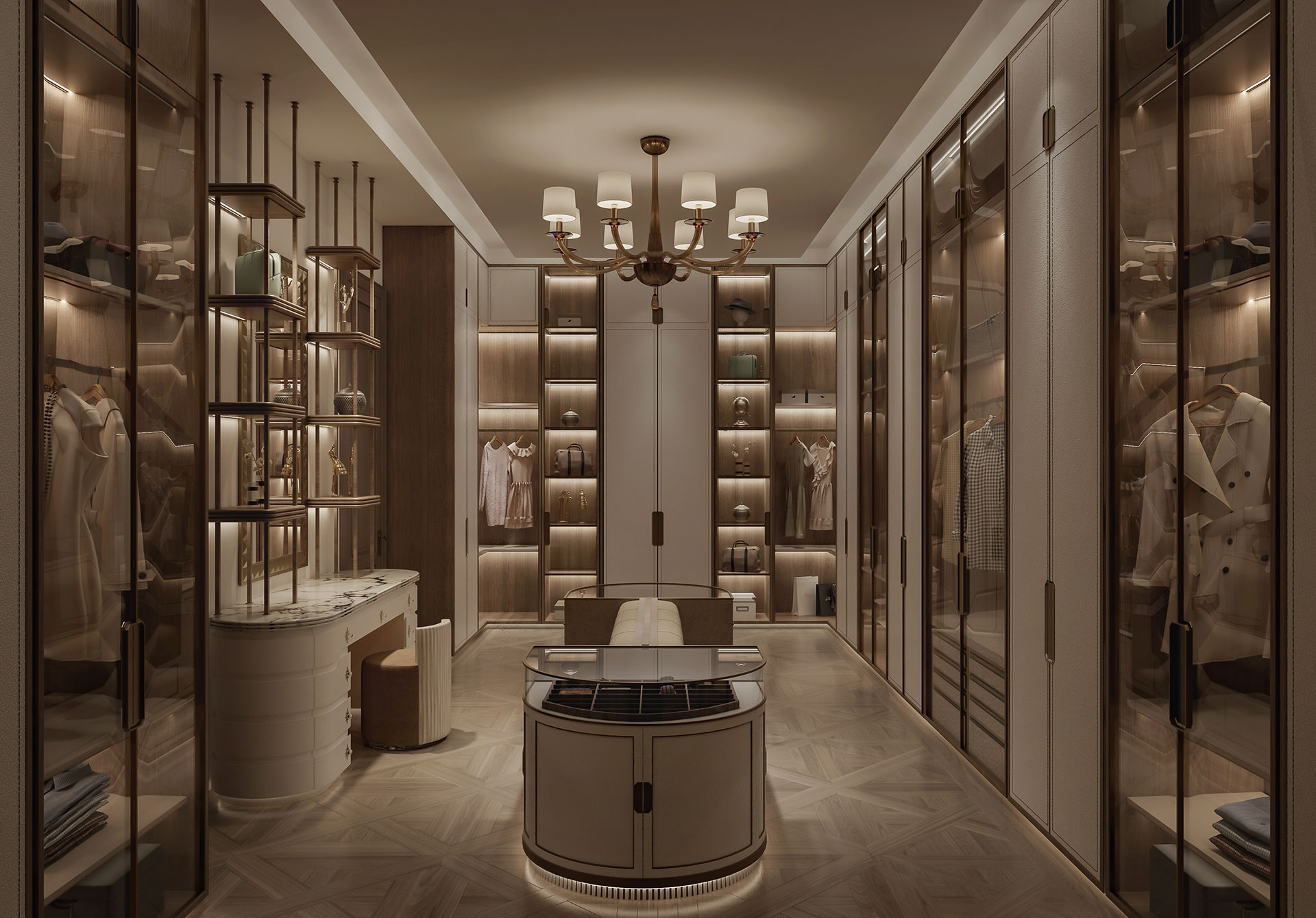
| Two-tier dressing rooms | Walk-in wardrobes conceived as architectural rooms. Built-in vanity, seating, curated lighting, display for couture, watches, and accessories. Often running across two floors in a principal suite. |
| Chef's kitchen | Specified for serious cooking. Teppanyaki grills, walk-in cold storage, dedicated in-kitchen dining areas for interactive meals. Supported by a back-of-house service kitchen. |
| Outdoor living | Infinity pools, pool cabanas, shaded outdoor kitchens, formal and tropical gardens, and outdoor catering blocks specified for hosting. The landscape is as considered as the interior. |
| Smart home integration | Full automation of lighting, climate, security, audio, and shading, operated through a single interface. Specified and wired into the structure at design stage. |
| Private library or study | A dedicated room for work, reading, and quiet reception. Panelled joinery, considered lighting, and acoustics specified to a private-office standard. |
| Staff and services wing | Separate circulation for household staff. Private entrances, service lifts, and accommodation, so that the family and service operations never visibly cross paths. |
These elements are not options on a menu. At the ultra-luxury tier in Dubai today, a villa is expected to include most of them. What distinguishes one project from another is no longer whether they are present, but how well they are resolved. That resolution is a function of the studio's design intent and its capacity to execute. For a fuller view of how an integrated studio approaches these elements, the Aparna Kaushik Design Group services hub documents the full design-and-build process in detail.
The most considered luxury villas being built in Dubai in 2026 operate across three architectural registers. They are not mutually exclusive, and the most accomplished work moves between them fluently.
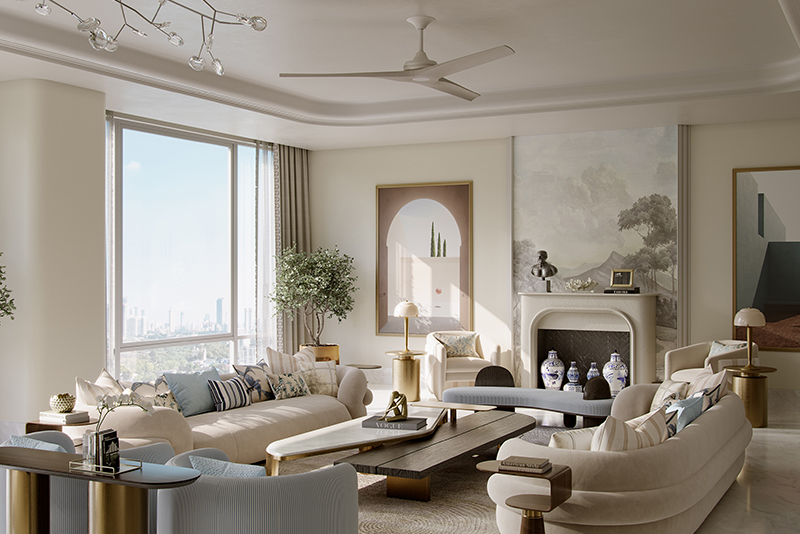
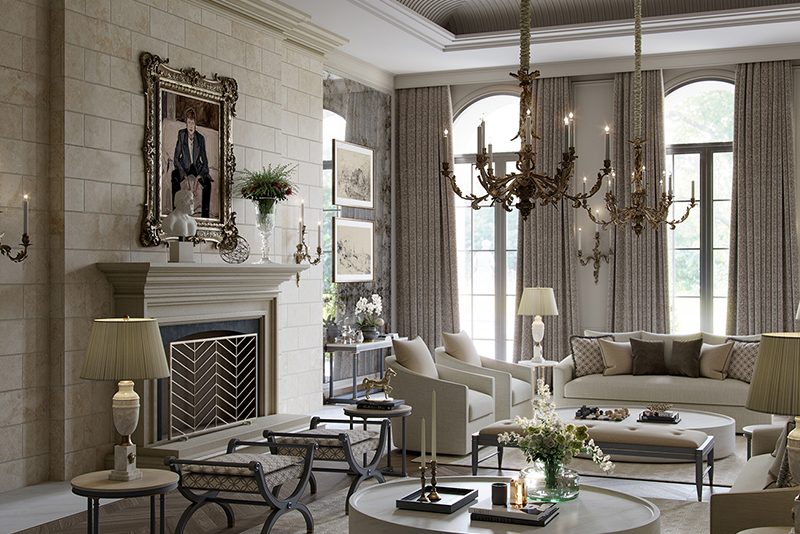
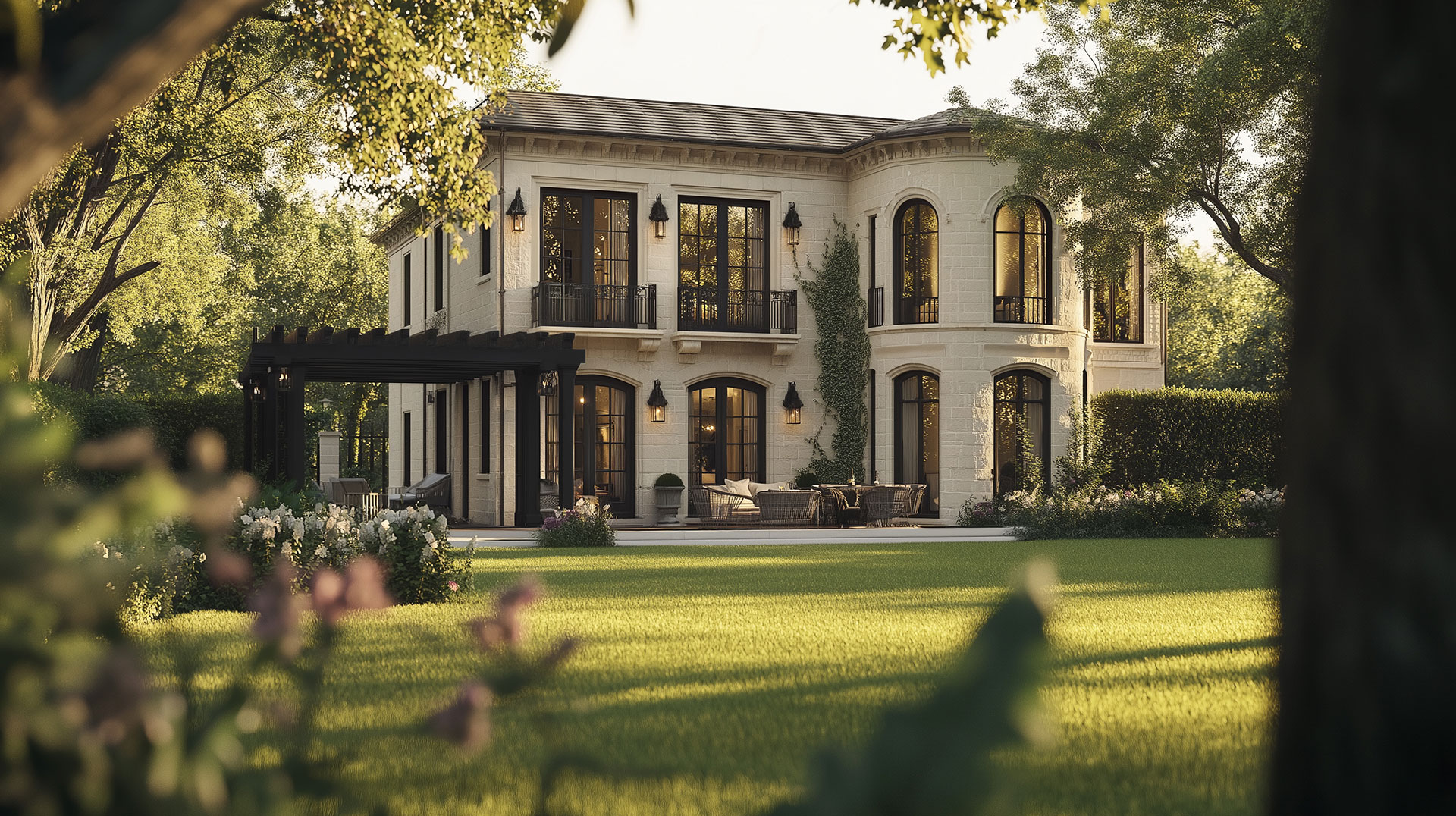
Drawing on French, Italian, and English architectural tradition: symmetrical massing, clean axial planning, considered ceiling heights, disciplined fenestration. This is the architectural language that holds scale without becoming imposing. It is also the language that a residence of 20,000 square feet can genuinely inhabit without feeling arbitrary. Examples of this register can be seen throughout the Aparna Kaushik projects portfolio.
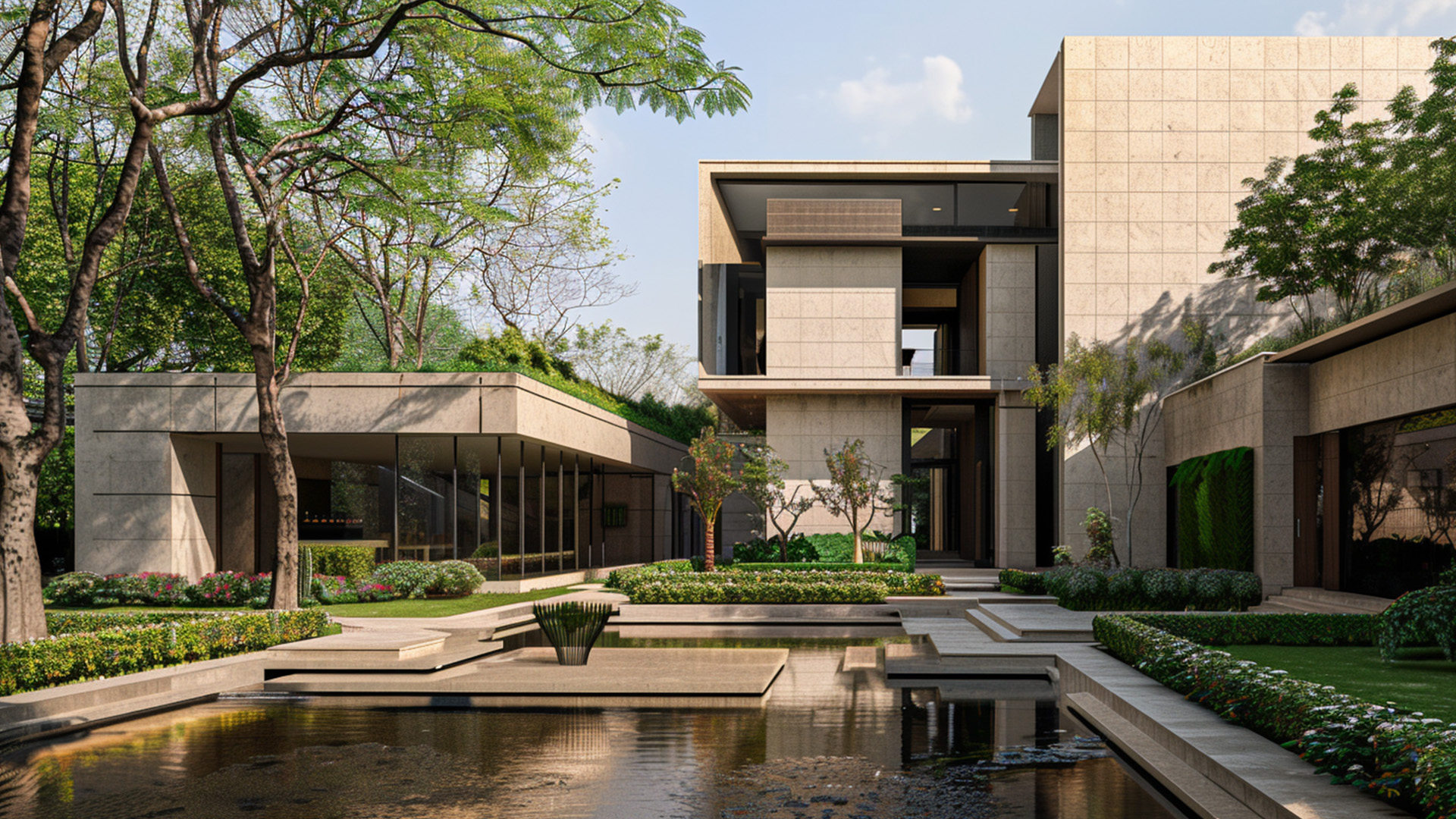
Dubai's climate requires a specific architectural response. Deep overhangs, recessed glazing, natural stone mass for thermal regulation, and indoor-outdoor spatial sequences that protect the interior from direct summer sun while opening to winter light. This is territory Indian architectural practices, operating year-round in equally demanding climates, have refined over decades.
The hand-finished plaster, the custom stone inlay, the hand-carved timber joinery, the bespoke brass fittings, the hand-loomed textiles: these are the details that separate a well-built villa from an exceptional one. Almost none of this is achievable through catalogue specification. It requires the studio to have direct relationships with specific quarries, mills, and workshops. Relationships that take decades to build and cannot be substituted.
When these three registers are combined with intent, the result is a villa that reads as genuinely original: classical in its confidence, contemporary in its livability, and distinctly hand-made in its finish. This is the sensibility that clients at the top of Dubai's market are now specifically seeking.
For a villa owner commissioning design at this level, the appointment decision is typically the single most important commercial decision of the entire project. A few criteria reliably separate a serious studio from a promotional one.
At the ultra-luxury tier, the principal architect should be personally leading the project, not overseeing a team that executes on their behalf. Ask, specifically, who will design this villa, and how much of their time will the project receive. A studio that cannot answer this directly is not the right studio. The Aparna Kaushik Design Group brand story sets out how the practice structures principal-led commissions.
An integrated design-and-build practice produces a more coherent result than separate appointments for architecture, interiors, and furniture. The staircase, the lighting, the landscape, the joinery, and the millwork should all be developed in the same room, by the same team, under one creative direction. The full list of in-house disciplines is documented on the services page.
A studio's portfolio should include homes at the specific budget level the client is commissioning at. A villa completed at AED 10 million and a villa completed at AED 100 million are different projects, with different material vocabularies, different project management requirements, and different team structures.
A practice operating in both India and Dubai should have confirmed experience with Dubai Municipality approvals, UAE contractor relationships, local consultant coordination, and the logistical infrastructure required to move bespoke material from Indian workshops to Dubai sites. The Aparna Kaushik Design Group UAE practice page documents current Dubai projects and local team capability.
Clients at this level require genuine confidentiality. A studio that does not default to NDAs, coded project names, and absolute discretion with respect to photography, media, and identity disclosure is not working at this level. This is a baseline, not a differentiator.
Design at this level is not about a style. It is about intent. The villa should answer the specific question of how this family actually lives, and it should answer it with the level of craft that the brief demands. Everything else follows from that.
- Aparna Kaushik, Founder and Principal Architect, Aparna Kaushik Design Group
Design fees on an ultra-luxury villa in Dubai are typically structured as 10 to 20 percent of construction value, or as a fixed principal-led retainer. On a villa build with a construction budget of AED 20 million, that translates to AED 2 million to AED 4 million in design fees. Per-square-foot pricing is less relevant at this level because the work is bespoke from the first sketch and priced on scope and significance rather than area.
A ground-up villa from site to handover typically runs 22 to 36 months. Design and engineering take 6 to 12 months, construction a further 14 to 22 months, and fit-out and installation toward the end. A major renovation of an existing villa runs shorter, typically 9 to 18 months. The most established studios accept fewer projects precisely because each commission at this level requires this duration of principal-level attention.
Three reasons. First, a significant portion of Dubai's new UHNW residents are from the Indian diaspora, and they want continuity of design language between their Indian and UAE residences. Second, Indian hand craftsmanship in stone, timber, brass, textile, and plaster is one of the few traditions in the world that can deliver villa interiors at this level of finish without relying on European manufacturing. Third, leading Indian practices operate as integrated design-and-build firms, which produces a more coherent villa than coordinating separate architects, interior designers, and fit-out contractors.
An interior designer selects finishes, furniture, lighting, and material palettes. An interior architect is trained to alter the structure of a space by moving walls, reworking ceiling planes, and coordinating with structural engineers. At the ultra-luxury villa tier, the distinction largely disappears, because principal-led studios operating at this level function as integrated architectural and interior practices. Ask whether a studio has architectural qualifications in-house, or whether it coordinates with a separate architect on structural decisions.
Three design registers dominate. The first is neo-classical and classical European, drawing on French, Italian, and English architectural traditions. The second is contemporary tropical modernism, with pared-back palettes, natural materials, and deep climatic response. The third is what the industry now describes as “resort-style living,” where a primary residence is designed with the amenity depth of a private hotel. The most considered villas move between all three with intent rather than treating them as mutually exclusive.
Yes. The workflow is well-established. Design development happens through scheduled in-person visits at key project milestones, complemented by remote collaboration between visits. Authority coordination, contractor management, and site supervision in Dubai are handled either directly by the studio's UAE operations or through a trusted delegated representative. For UHNW clients who maintain residences across multiple cities, this arrangement is often preferred.
Five criteria matter. A principal-led design process where the lead architect is personally leading the project. Integrated architectural and interior capability under one team. A demonstrated portfolio at the specific budget level being commissioned. Confirmed experience with Dubai Municipality approvals and UAE contractor coordination. And absolute discretion around client identity, project documentation, and publication, which is a baseline, not a differentiator, at this level.
Aparna Kaushik is an ultra-luxury architectural and interior design practice led by Aparna Kaushik, recognised among India's top five architects. The studio operates across India and the UAE, with a portfolio of private residences, estates, and signature projects developed as integrated architectural works. The practice has been featured in Architectural Digest India, Elle Decor, Harper's Bazaar Arabia, Emirates Woman, and Robb Report, and designs fewer projects per year by intent, in order to deliver principal-level attention on every commission.
A luxury villa in Dubai is, at this level, one of the most personal and most consequential architectural commissions a family will make. The appointment of the right studio determines almost everything that follows: the coherence of the architectural idea, the quality of the craftsmanship, the depth of the detailing, and the ease with which the house can be lived in over the decades that follow.
Aparna Kaushik Design Group designs fewer villas than most practices do, precisely because every project at this tier demands principal-led attention throughout. For UHNW families commissioning ultra-luxury villa interior design in Dubai, or building across India and the UAE as part of a considered portfolio of residences, the studio welcomes a direct conversation. Please visit our UAE practice page or explore the full projects portfolio to see completed work.
To discuss a commission, please contact our team here, or write to enquiries@aparnakaushik.com.
Aparna Kaushik is one of India's foremost architects, recognised among the country's top five for her work on ultra-luxury private residences. With over 18 years of practice and a studio founded in 2008, she has completed landmark estates across India and is now working with UHNW clients in the UAE. Her work blends European classicism with modernist tropical architecture — a sensibility shaped by India's design heritage and executed to a standard that is increasingly sought by Dubai's most discerning villa owners.
aparnakaushik.com/about-us | enquiries@aparnakaushik.com | @aparnakaushikofficial
![Aparna Kaushik: The Most Powerful Design Tool Isn’t Freedom—It’s Restraint [Founder - AKDG, Architect, 297K Followers, India]](https://aparnakaushik.com/uploads/blogs/1782466828_6a3e490cbcebf.jpg)