KEY TAKEAWAYS
LEAD (class: lead): Interior designers in Kolkata work across two briefs that happen to share a postcode but have almost nothing else in common. One is the nineteenth-century colonial bungalow in Alipore or Ballygunge, with fourteen-foot ceilings, verandas, and load-bearing walls that were never meant to move. The other is the ground-up luxury tower or villa in New Town, built on a clean site with none of that history to respect. Kolkata's residential prices rose 6 percent year on year in 2025, and premium homes now account for more than half of the city's sales (Knight Frank India, 2026), so both briefs are attracting more serious money and more serious expectations. AKDG has faced a version of this same split elsewhere, including its work establishing the luxury interior design language for Gurgaon, and the lesson carries over directly here: a heritage renovation and a new build are related disciplines, not the same one applied twice, and treating them as identical is where most Kolkata projects lose money.
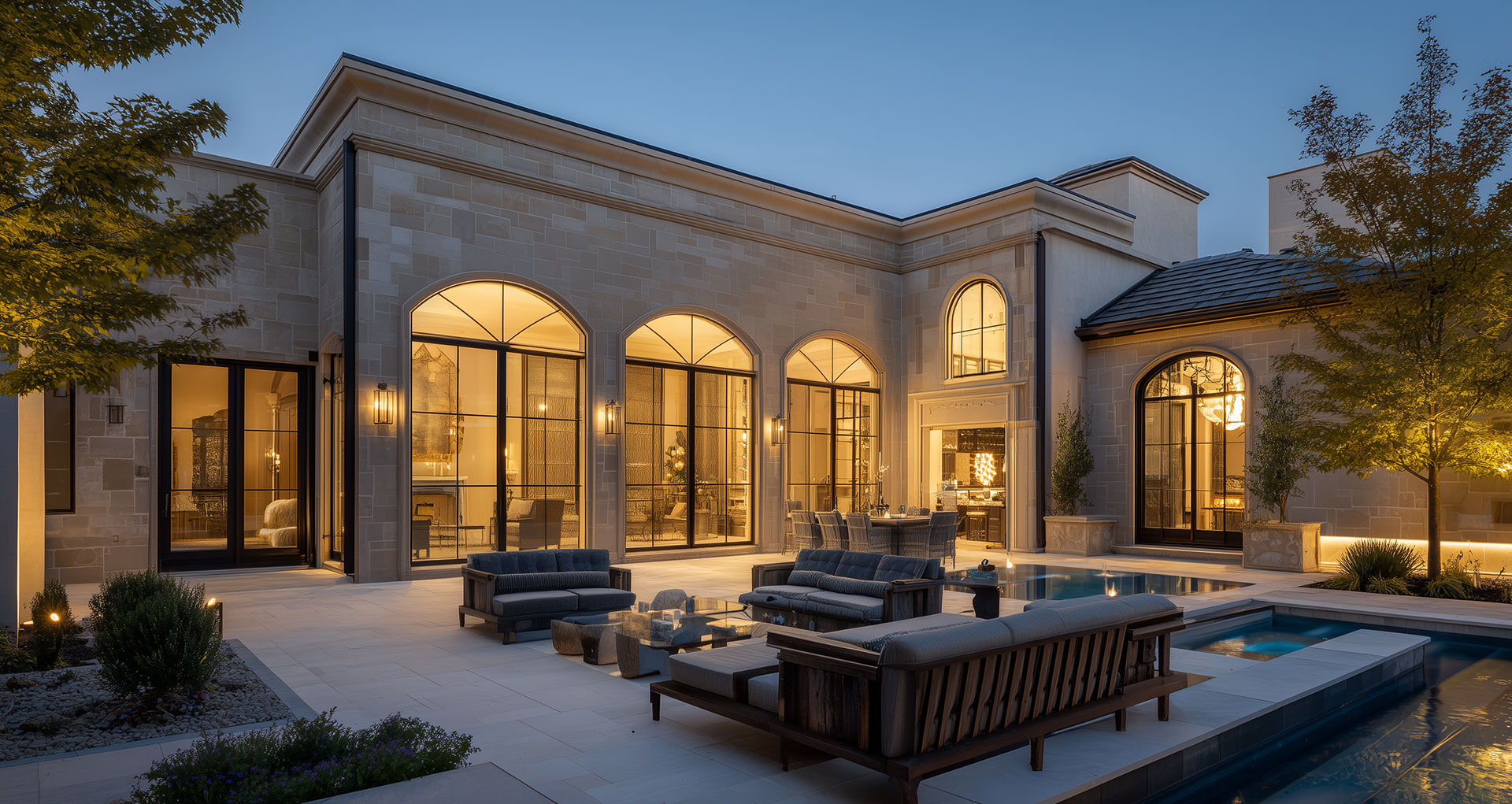
Kolkata's luxury geography runs on a fault line that most Indian metros do not have. South Kolkata, principally Alipore and Ballygunge, holds the city's colonial housing stock: bungalows and mansions built for a different era's ceiling heights, room proportions, and construction methods, many now bought and held as much for their address and their architecture as for square footage. New Town, by contrast, is a planned, modern zone of gated communities and premium towers with none of that inheritance, where the constraints are current building codes and a developer's masterplan rather than a hundred years of load-bearing brick.
A designer who only knows one of these briefs is at a real disadvantage in the other. Renovating a heritage bungalow demands a working knowledge of how the original structure was built and what can safely change. Designing a New Town villa or apartment rewards a more conventional new-build process, but still has to answer a Kolkata-specific question about how a resolutely modern home should read in a city this attached to its own architectural history.
New Town's own growth adds a second layer to this. Smart-city infrastructure, wide roads, and planned commercial hubs have driven roughly 20 percent growth in the area's premium residential segment, drawing NRIs, entrepreneurs, and senior professionals who want gated communities, clubhouses, and landscaped common areas rather than a standalone heritage property to maintain. That buyer is not choosing New Town because they cannot afford Alipore, they are choosing it because they want a genuinely different kind of home, and a design language to match.
A colonial bungalow in Alipore or Ballygunge is closer to a restoration project than an interiors brief, and treating it as the latter is where owners run into trouble. Moving a wall that turns out to be load-bearing, discovering monsoon-season damp behind a beautiful original cornice, or specifying a modern HVAC system without a plan for running it through century-old masonry are all problems that show up mid-renovation when the interior designer and the structural consultant were never in the same conversation from day one.
An integrated studio, one team handling architecture, structural coordination, interiors, furniture, lighting, and landscape from the first site visit, resolves this by design rather than by damage control. Decisions about what can be opened up, what has to be reinforced, and how new services run through an old structure are made by people who understand both the building's history and the finished owner's brief, rather than negotiated after the fact between a decorator and a contractor who each learned about the constraint too late.
This is not a theoretical distinction. A heritage bungalow renovation that starts with interiors and discovers architecture problems later routinely costs more, in both money and time, than one where the same team held both from the outset.
Kolkata's climate adds a further layer that a generic renovation playbook misses. The city's long, humid monsoon is hard on old masonry and timber, and a bungalow that has stood for a century has usually already absorbed decades of moisture cycling into its walls and joinery. A renovation that does not account for this, sealing surfaces that need to breathe, or introducing modern insulation without considering how moisture will move through the wall, can trap dampness rather than resolve it. This is squarely an architecture question, not a decorating one, and it is another reason the two disciplines need to sit at the same table from the start.
Kolkata's premium addresses are not interchangeable, and the design brief changes meaningfully from one to the next. Alipore carries the highest heritage property values in the city and the strictest expectation of architectural continuity, since much of its stock is diplomatic or long-held family property where a heavy-handed renovation would draw unwanted attention. Ballygunge sits a notch below on price but is arguably a harder design problem in practice, because contemporary apartment blocks now sit directly beside surviving colonial bungalows, and a renovation there has to hold its own against genuinely new construction next door rather than existing in a purely heritage bubble.
Southern Avenue and New Town are the two ends of a different spectrum. Southern Avenue offers a smaller-scale version of the Ballygunge brief, heritage sensitivity on a more modest plot, while New Town is functionally a different city, with none of the older stock's constraints and a buyer who has usually chosen it precisely to avoid them.
Kolkata's luxury micro-markets at a glance
| Area | Character | Design Implication |
|---|---|---|
| Alipore | Colonial bungalows, diplomatic residences, values around INR 5 to 25 crore | Heritage-sensitive renovation with structural and conservation awareness. |
| Ballygunge | Colonial-era bungalows beside contemporary apartments, INR 12,000 to 20,000 per sq ft | Design has to reconcile old-world scale with a modern floor plan. |
| Southern Avenue | Established, tree-lined, mixed heritage and newer premium stock | Similar heritage sensitivity to Ballygunge on generally smaller plots. |
| New Town | Planned smart-city zone, gated towers and villas, strong NRI and professional demand | Conventional new-build process, with room for a distinctly modern design language. |
The Fee-Matrix that Simplifies the Interior Design Charges in the Ever-Evolving Kolkata City
Industry cost surveys for 2026 put full-home interiors in Kolkata at roughly INR 1,200 to INR 3,300 per square foot depending on finish level, with simple, clean interiors at the lower end and heavy woodwork, ornamental detailing, and imported finishes pushing well past INR 2,500. A high-end villa or bungalow commonly runs INR 15 lakh to INR 35 lakh or more in total, and designer fees for villa-scale work typically add another 6 to 9 percent of project value on top of materials and execution.
Heritage renovation carries its own cost logic that a standard per-square-foot rate does not capture. Structural assessment, conservation-sensitive repair, and re-running services through an old building all add cost that a New Town new-build simply does not have, which is one more reason a heritage project needs a realistic, scope-specific estimate rather than a generic rate card applied to an unusually complicated building.
A portfolio of finished rooms tells an owner very little about whether a studio can actually manage a century-old structure. The more useful questions are about process.
The best Kolkata heritage renovations do not choose between old and new, they layer one onto the other with restraint. High ceilings, deep verandas, and original arches and columns are worth preserving because they are difficult and expensive to recreate, and because they are precisely what makes an Alipore or Ballygunge address different from a New Town apartment. Bengali craftsmanship traditions, in woodwork, plasterwork, and detailing, sit naturally alongside a more contemporary material palette when a designer treats the original architecture as a asset to be highlighted rather than a problem to be covered over.
This is a matter of restraint as much as skill. A heritage bungalow stripped entirely of its original character and rebuilt as a generic modern interior loses the exact quality that justified buying a hundred-year-old house in the first place.
Bengal has a strong tradition of skilled woodwork, ornamental plasterwork, and decorative ironwork that many of these bungalows were originally built with, and that craftsmanship is still available locally in a way that would be far harder to source for a comparable restoration in most other Indian cities. A studio that knows how to bring in the right local artisans for a repair or a reproduction, rather than defaulting to imported modern substitutes, tends to produce a result that feels genuinely continuous with the building's history rather than a modern interior wearing a heritage costume.
Where Kolkata's Luxury Homes Are Headed Next
Two forces are shaping Kolkata's next generation of luxury homes. The first is the continued rise of premium and heritage renovation demand, with buyers increasingly willing to pay a premium for original colonial stock precisely because so little new heritage-grade construction is possible in the city. The second is New Town's maturation into a genuine luxury address in its own right, with smartcity infrastructure and gated master-planning drawing NRIs, senior professionals, and business families who want a fully modern alternative to South Kolkata's older stock.
Both trends point to the same underlying need: a studio that can move fluently between careful heritage work and confident new-build design, rather than one that is only comfortable in one register.
A third, quieter shift is worth watching. Owners renovating heritage bungalows are increasingly asking for the same climate control, security, and lighting automation that a New Town buyer would take for granted, which means integrating modern technology into century-old structures without exposing conduit across an original ceiling or drilling through a wall that should not be touched. That is a genuinely difficult sequencing problem, and it rewards exactly the kind of studio that already coordinates architecture and interiors as one discipline rather than two.
Industry cost surveys for 2026 put full-home interiors in Kolkata at roughly INR 1,200 to INR 3,300 per square foot, with a high-end villa or bungalow commonly running INR 15 lakh to INR 35 lakh or more in total. Heritage renovations carry additional structural and conservation costs that a standard per-square-foot rate does not capture.
A heritage renovation in Alipore or Ballygunge involves structural assessment, conservation-sensitive repair, and running modern services through century-old masonry, work a New Town new build does not require. The two-need related but distinct design disciplines rather than the same process applied to both.
Alipore and Ballygunge hold the city's premier colonial bungalow stock and command the highest heritage property values. New Town is the planned, modern alternative for buyers who want gated, smart-city infrastructure without the constraints of an older structure.
For a colonial bungalow project, yes. A designer without experience assessing older structures can miss load-bearing walls, moisture damage, or service routing problems that only surface once construction has started, which adds cost and delay.
For a heritage property, an integrated studio is particularly valuable because structural, conservation, and interior decisions are closely linked. A single team that handles all of them avoids the handoff losses that come from separate architects, interior designers, and contractors working from different assumptions about the same old building.
Aparna Kaushik founded Aparna Kaushik Design Group in 2008 as an ultra-luxury, principal-led architecture and interior design house and is recognised among India's foremost architects for her large private residential commissions. Her studio's UAE practice serves UHNW clients across Dubai and Abu Dhabi, delivering architecture, interiors, furniture, lighting, landscape, art curation, and turnkey execution as one coordinated service.
aparnakaushik.com/about-us | enquiries@aparnakaushik.com | @aparnakaushikofficial